Institute of Research and Biotechnology of Strasbourg, Centre national de la recherche scientifique, UMR7242, University of Strasbourg, Medalis/Labex, Drug Discovery Center, Illkirch, France.
PLoS One. 2013 Dec 4;8(12):e81175. doi: 10.1371/journal.pone.0081175. eCollection 2013.
Adipocyte renewal from preadipocytes occurs throughout the lifetime and contributes to obesity. To date, little is known about the mechanisms that control preadipocyte proliferation and differentiation. Prokineticin-2 is an angiogenic and anorexigenic hormone that activate two G protein-coupled receptors (GPCRs): PKR1 and PKR2. Prokineticin-2 regulates food intake and energy metabolism via central mechanisms (PKR2). The peripheral effect of prokineticin-2 on adipocytes/preadipocytes has not been studied yet.
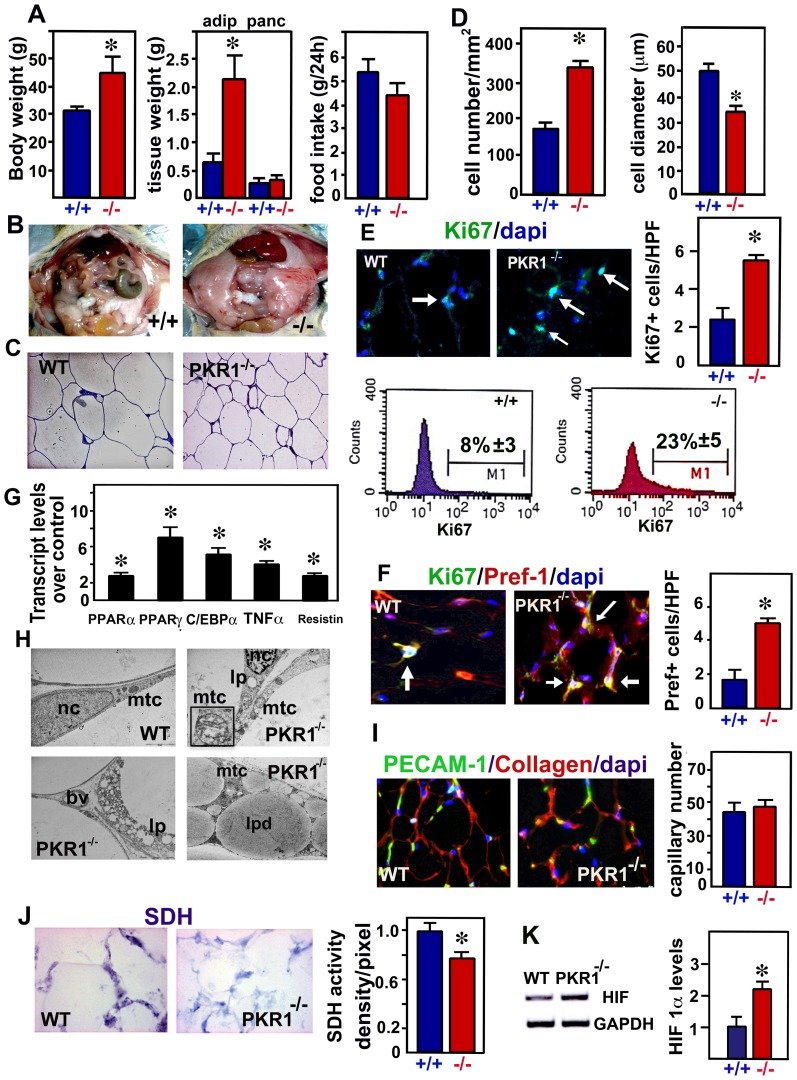
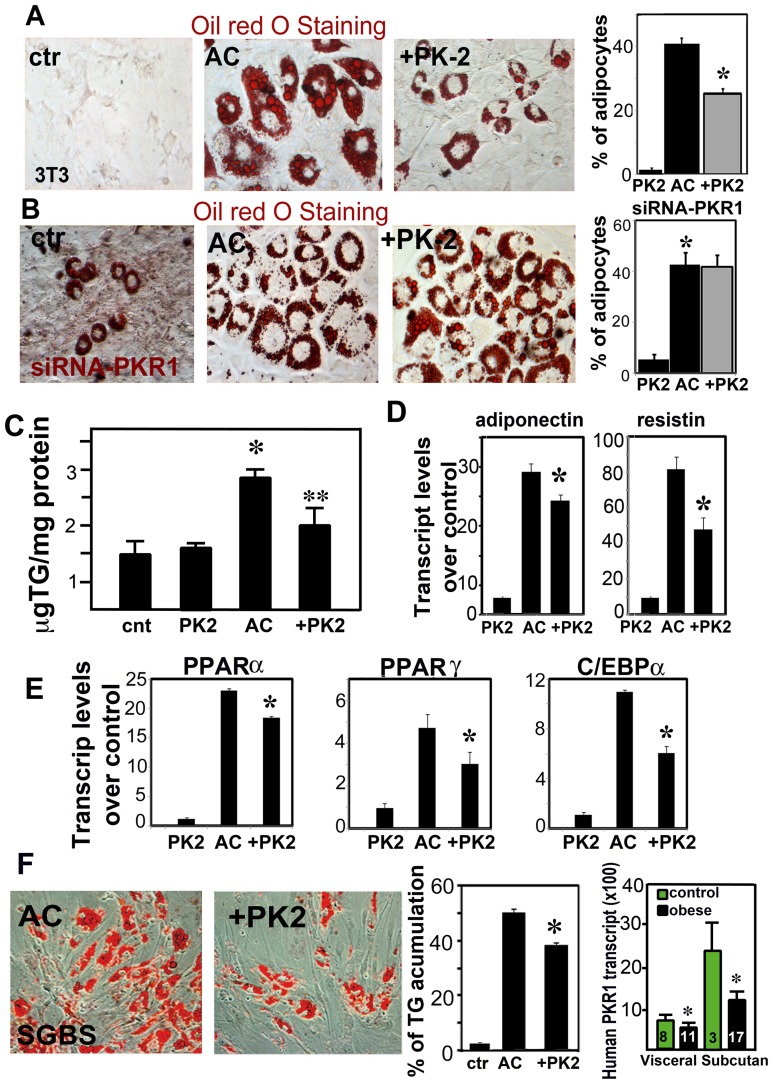
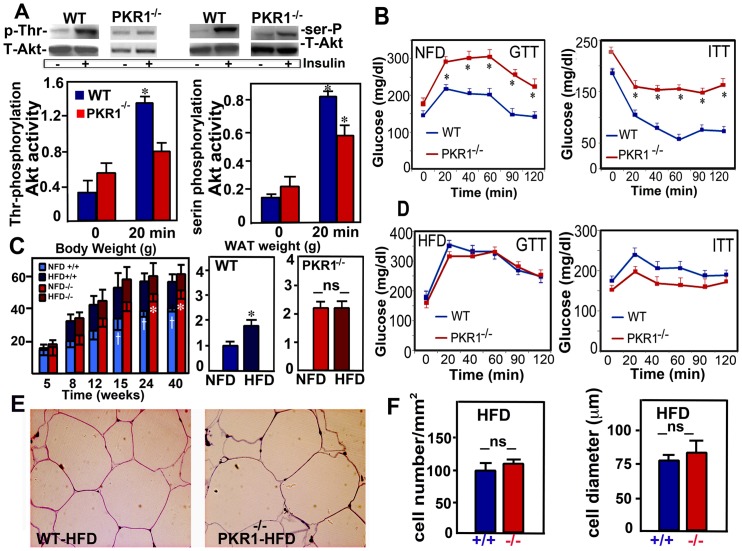
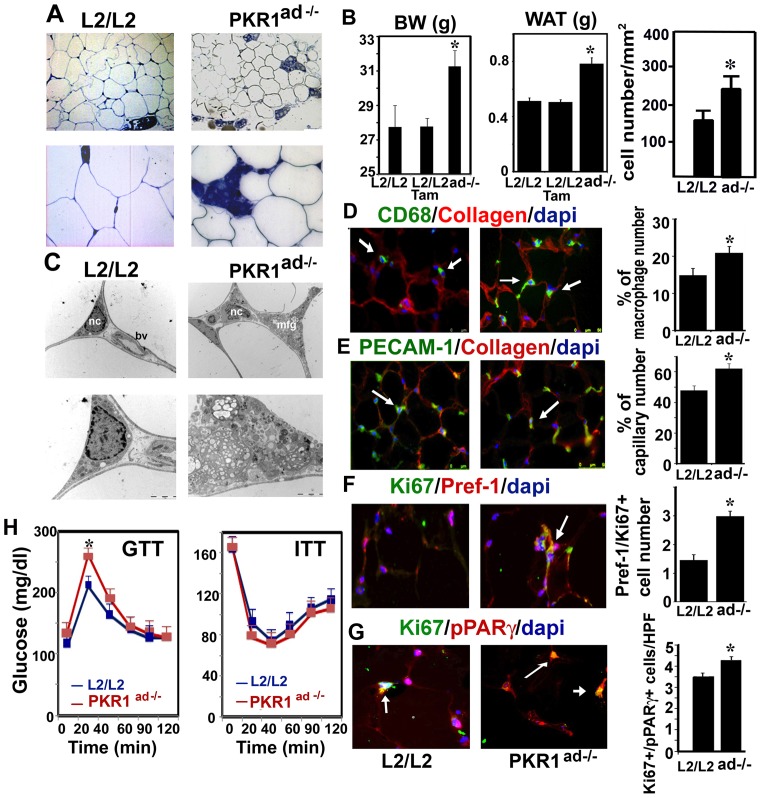
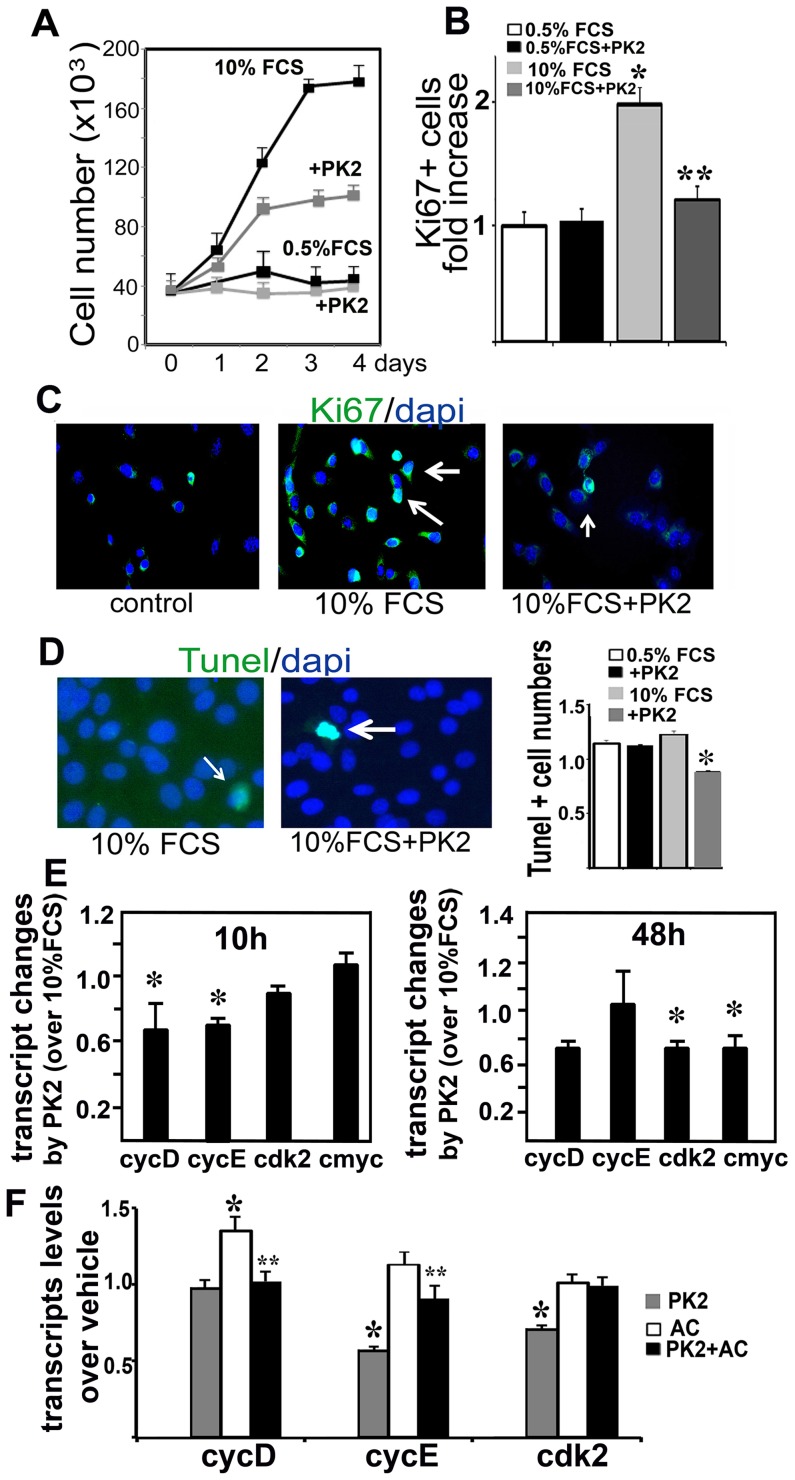
METHODOLOGY/PRINCIPAL FINDINGS: Since adipocytes and preadipocytes express mainly prokineticin receptor-1 (PKR1), here, we explored the role of PKR1 in adipose tissue expansion, generating PKR1-null (PKR1(-/-)) and adipocyte-specific (PKR1(ad-/-)) mutant mice, and using murine and human preadipocyte cell lines. Both PKR1(-/-) and PKR1(ad-/-) had excessive abdominal adipose tissue, but only PKR1(-/-) mice showed severe obesity and diabetes-like syndrome. PKR1(ad-/-)) mice had increased proliferating preadipocytes and newly formed adipocyte levels, leading to expansion of adipose tissue. Using PKR1-knockdown in 3T3-L1 preadipocytes, we show that PKR1 directly inhibits preadipocyte proliferation and differentiation. These PKR1 cell autonomous actions appear targeted at preadipocyte cell cycle regulatory pathways, through reducing cyclin D, E, cdk2, c-Myc levels.
CONCLUSIONS/SIGNIFICANCE: These results suggest PKR1 to be a crucial player in the preadipocyte proliferation and differentiation. Our data should facilitate studies of both the pathogenesis and therapy of obesity in humans.
脂肪细胞从前脂肪细胞中更新发生在整个生命周期中,并有助于肥胖。迄今为止,人们对控制前脂肪细胞增殖和分化的机制知之甚少。促动力素 2 是一种血管生成和厌食激素,它激活两种 G 蛋白偶联受体(GPCR):PKR1 和 PKR2。促动力素 2 通过中枢机制(PKR2)调节食物摄入和能量代谢。促动力素 2 对脂肪细胞/前脂肪细胞的外周作用尚未得到研究。
方法/主要发现:由于脂肪细胞和前脂肪细胞主要表达促动力素受体 1(PKR1),因此,我们在此探索了 PKR1 在脂肪组织扩张中的作用,生成了 PKR1 基因敲除(PKR1(-/-))和脂肪细胞特异性(PKR1(ad-/-))突变小鼠,并使用了鼠和人前脂肪细胞系。PKR1(-/-)和 PKR1(ad-/-)均具有过多的腹部脂肪组织,但只有 PKR1(-/-)小鼠表现出严重肥胖和糖尿病样综合征。PKR1(ad-/-)小鼠的增殖前脂肪细胞和新形成的脂肪细胞水平增加,导致脂肪组织扩张。使用 3T3-L1 前脂肪细胞中的 PKR1 敲低,我们表明 PKR1 直接抑制前脂肪细胞的增殖和分化。这些 PKR1 细胞自主作用似乎针对前脂肪细胞细胞周期调节途径,通过降低细胞周期蛋白 D、E、cdk2、c-Myc 水平。
结论/意义:这些结果表明 PKR1 是前脂肪细胞增殖和分化的关键因素。我们的数据应有助于研究人类肥胖的发病机制和治疗方法。