Department of Pediatrics, University of California San Diego, School of Medicine, La Jolla, California, United States of America.
PLoS One. 2013 Dec 6;8(12):e81448. doi: 10.1371/journal.pone.0081448. eCollection 2013.
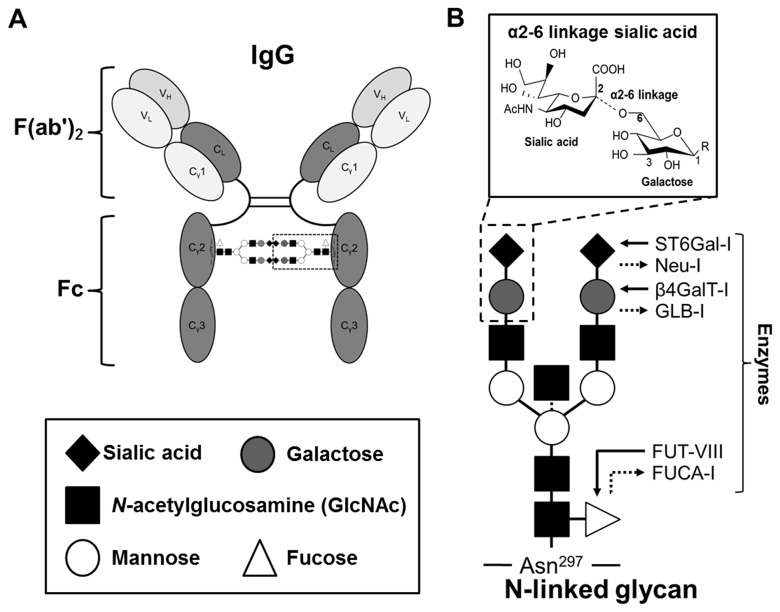
Although intravenous immunoglobulin (IVIG) is highly effective in Kawasaki disease (KD), mechanisms are not understood and 10-20% of patients are treatment-resistant, manifesting a higher rate of coronary artery aneurysms. Murine models suggest that α2-6-linked sialic acid (α2-6Sia) content of IVIG is critical for suppressing inflammation. However, pro-inflammatory states also up-regulate endogenous levels of β-galactoside:α2-6 sialyltransferase-I (ST6Gal-I), the enzyme that catalyzes addition of α2-6Sias to N-glycans. We asked whether IVIG failures correlated with levels of α2-6Sia on infused IVIG or on the patient's own endogenous IgG.
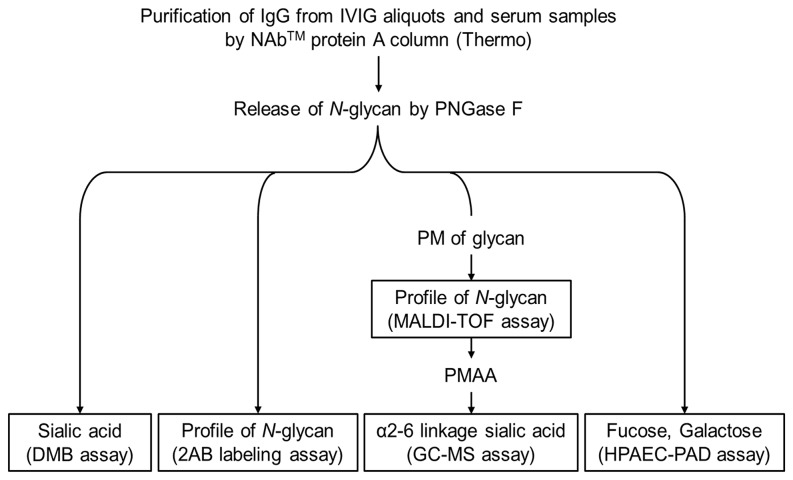
We quantified levels of α2-6Sia in infused IVIG and endogenous IgG from 10 IVIG-responsive and 10 resistant KD subjects using multiple approaches. Transcript levels of ST6GAL1, in patient whole blood and B cell lines were evaluated by RT-PCR. Plasma soluble (s)ST6Gal-I levels were measured by ELISA.
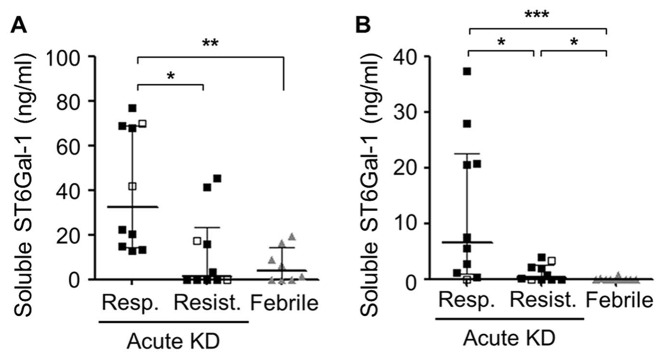
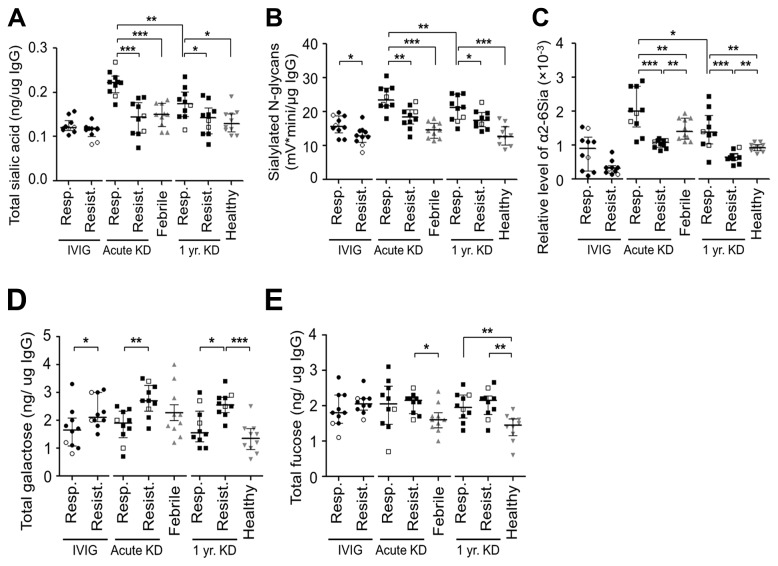
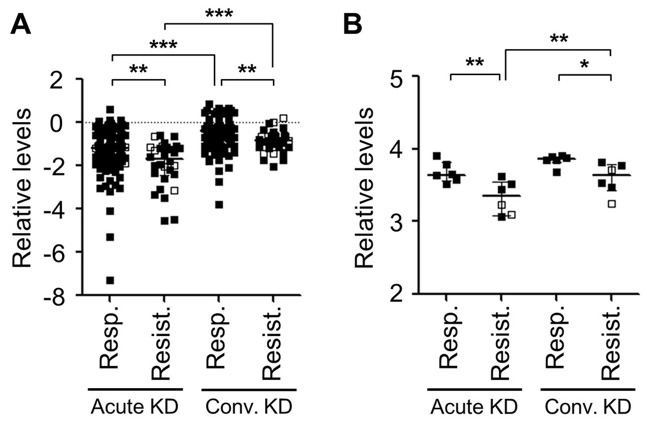
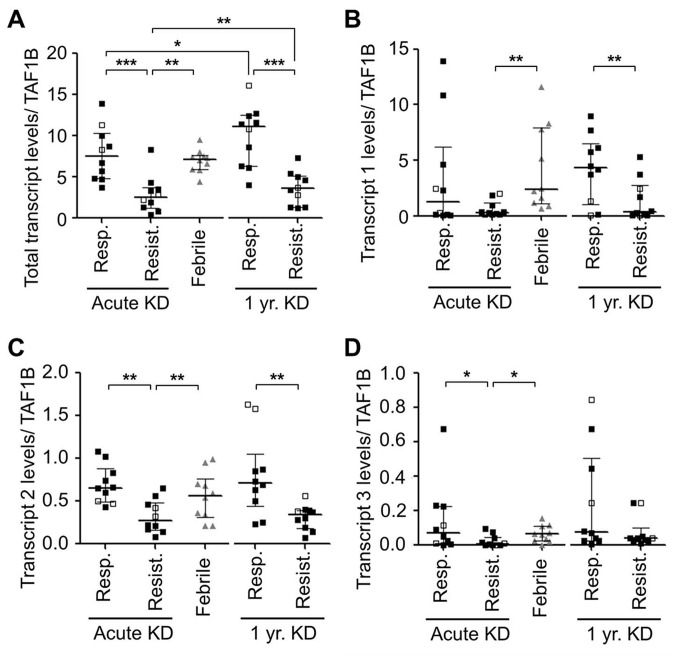
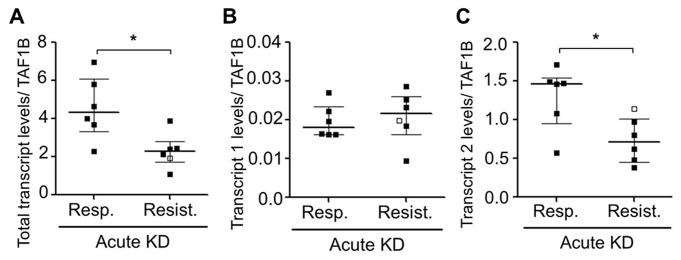
There was no consistent difference in median sialylation levels of infused IVIG between groups. However, α2-6Sia levels in endogenous IgG, ST6GAL1 transcript levels, and ST6Gal-I protein in serum from IVIG-resistant KD subjects were lower than in responsive subjects at both pre-treatment and one-year time points (p <0.001, respectively).
Our data indicate sialylation levels of therapeutic IVIG are unrelated to treatment response in KD. Rather, lower sialylation of endogenous IgG and lower blood levels of ST6GALI mRNA and ST6Gal-I enzyme predict therapy resistance. These differences were stable over time, suggesting a genetic basis. Because IVIG-resistance increases risk of coronary artery aneurysms, our findings have important implications for the identification and treatment of such individuals.
虽然静脉注射免疫球蛋白(IVIG)在川崎病(KD)中非常有效,但机制尚不清楚,10-20%的患者对治疗无反应,表现出更高的冠状动脉瘤发生率。小鼠模型表明,IVIG 中α2-6 连接唾液酸(α2-6Sia)的含量对于抑制炎症至关重要。然而,促炎状态也会上调内源性β-半乳糖苷:α2-6 唾液酸转移酶-I(ST6Gal-I)的水平,该酶催化α2-6Sias 添加到 N-糖链上。我们想知道 IVIG 治疗失败是否与输注的 IVIG 或患者自身内源性 IgG 上的α2-6Sia 水平相关。
我们使用多种方法在 10 名 IVIG 反应性和 10 名 IVIG 抵抗性 KD 患者的输注 IVIG 和内源性 IgG 中定量了α2-6Sia 的水平。通过 RT-PCR 评估患者全血和 B 细胞系中 ST6GAL1 的转录水平。通过 ELISA 测量血清中可溶性(s)ST6Gal-I 的水平。
两组之间输注 IVIG 的平均唾液酸化水平没有一致差异。然而,IVIG 抵抗性 KD 患者的内源性 IgG、ST6GAL1 转录水平和血清中 ST6Gal-I 蛋白的α2-6Sia 水平在治疗前和一年时均低于反应性患者(分别为 p <0.001)。
我们的数据表明,KD 患者治疗性 IVIG 的唾液酸化水平与治疗反应无关。相反,内源性 IgG 的唾液酸化程度较低,血液中 ST6GAL1 mRNA 和 ST6Gal-I 酶的水平较低,预示着治疗抵抗。这些差异随时间保持稳定,表明存在遗传基础。由于 IVIG 抵抗增加了发生冠状动脉瘤的风险,因此我们的发现对识别和治疗此类患者具有重要意义。