Redpath Museum and Department of Biology, McGill University 859 Sherbrooke St. W., Montreal, Quebec, H3A 0C4, Canada ; Faculty of Biology, Department of Evolutionary Biology and Animal Ecology, University of Freiburg Hauptstrasse 1a, 79104, Freiburg, Germany.
Ecol Evol. 2013 Oct;3(12):4278-89. doi: 10.1002/ece3.825. Epub 2013 Oct 1.
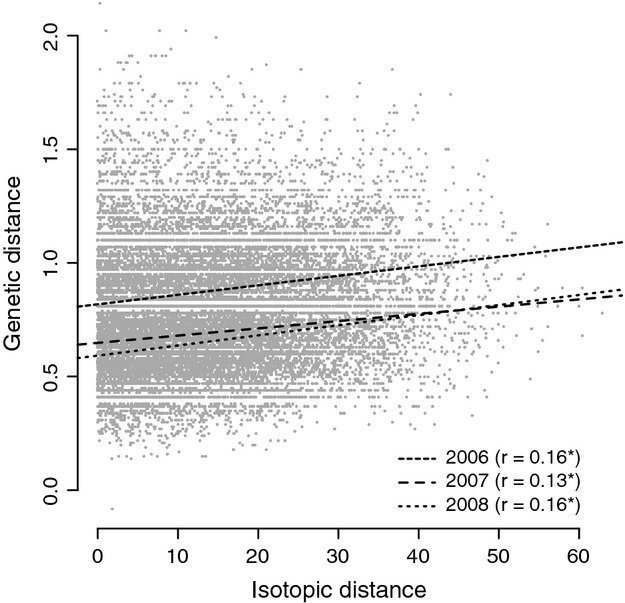
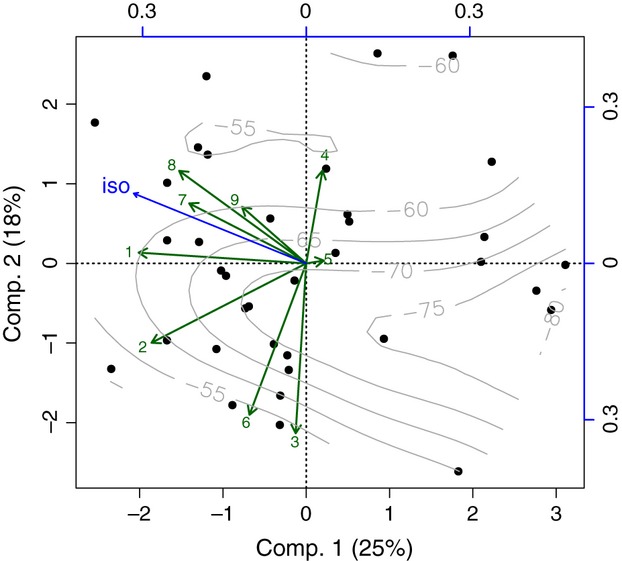
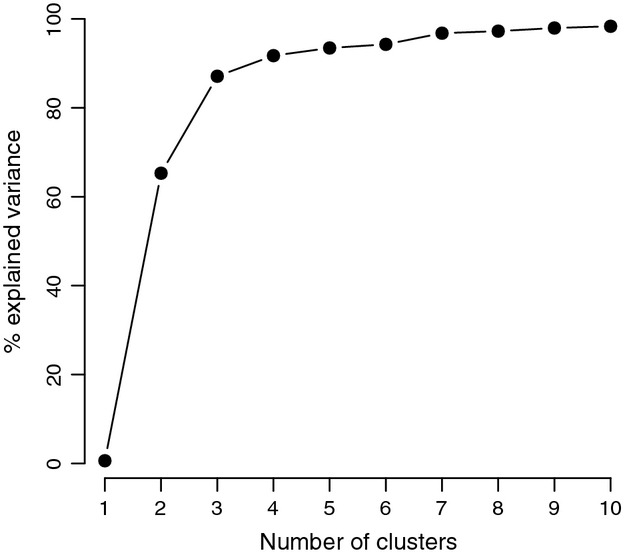
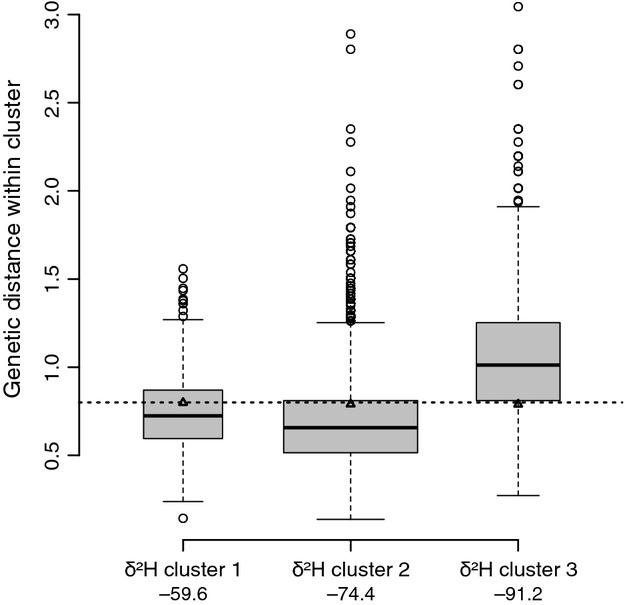
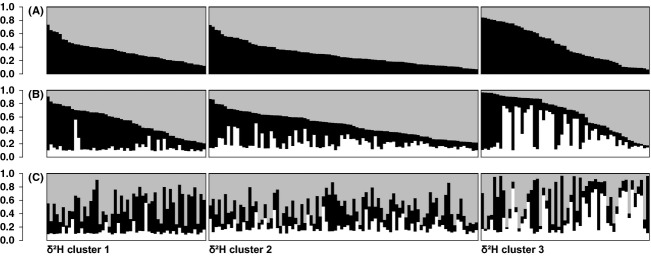
In migratory birds, traits such as orientation and distance are known to have a strong genetic background, and they often exhibit considerable within-population variation. How this variation relates to evolutionary responses to ongoing selection is unknown because the underlying mechanisms that translate environmental changes into population genetic changes are unclear. We show that within-population genetic structure in southern German blackcaps (Sylvia atricapilla) is related to individual differences in migratory behavior. Our 3-year study revealed a positive correlation between individual migratory origins, denoted via isotope (δ (2)H) values, and genetic distances. Genetic diversity and admixture differed not only across a recently established migratory polymorphism with NW- and SW-migrating birds but also across δ (2)H clusters within the same migratory route. Our results suggest assortment based on individual migratory origins which would facilitate evolutionary responses. We scrutinized arrival times and microhabitat choice as potential mechanisms mediating between individual variation in migratory behavior and assortment. We found significant support that microhabitat choice, rather than timing of arrival, is associated with individual variation in migratory origins. Moreover, examining genetic diversity across the migratory divide, we found migrants following the NW route to be genetically more distinct from each other compared with migrants following the traditional SW route. Our study suggests that migratory behavior shapes population genetic structure in blackcaps not only across the migratory divide but also on an individual level independent of the divide. Thus, within-population variation in migratory behavior might play an important role in translating environmental change into genetic change.
在候鸟中,定向和距离等特征已知具有很强的遗传背景,它们通常表现出相当大的种群内变异。这种变异与对持续选择的进化反应有何关系尚不清楚,因为将环境变化转化为种群遗传变化的潜在机制尚不清楚。我们表明,德国南部黑鹂(Sylvia atricapilla)种群内的遗传结构与候鸟行为的个体差异有关。我们的 3 年研究表明,个体候鸟起源(通过同位素(δ(2)H)值表示)与遗传距离之间存在正相关。遗传多样性和混合不仅在最近建立的具有西北和西南迁徙鸟类的迁徙多态性之间存在差异,而且在同一迁徙路线内的 δ(2)H 群之间也存在差异。我们的研究结果表明,基于个体迁徙起源的交配选择会促进进化反应。我们仔细研究了到达时间和微生境选择作为在候鸟行为的个体变异和交配选择之间起中介作用的潜在机制。我们发现,微生境选择而不是到达时间与候鸟起源的个体变异显著相关。此外,在迁徙分水岭处检查遗传多样性时,我们发现沿西北路线迁徙的鸟类彼此之间在遗传上比传统的西南路线迁徙的鸟类更为独特。我们的研究表明,候鸟行为不仅在迁徙分水岭处,而且在个体水平上独立于分水岭,塑造了黑鹂的种群遗传结构。因此,候鸟行为的种群内变异可能在将环境变化转化为遗传变化方面发挥重要作用。