Hong Seok Hoon, Ntai Ioanna, Haimovich Adrian D, Kelleher Neil L, Isaacs Farren J, Jewett Michael C
Department of Chemical and Biological Engineering, ‡Chemistry of Life Processes Institute, §Department of Chemistry, and ∥Department of Molecular Biosciences, Northwestern University , Evanston, Illinois 60208, United States of America.
ACS Synth Biol. 2014 Jun 20;3(6):398-409. doi: 10.1021/sb400140t. Epub 2014 Jan 2.
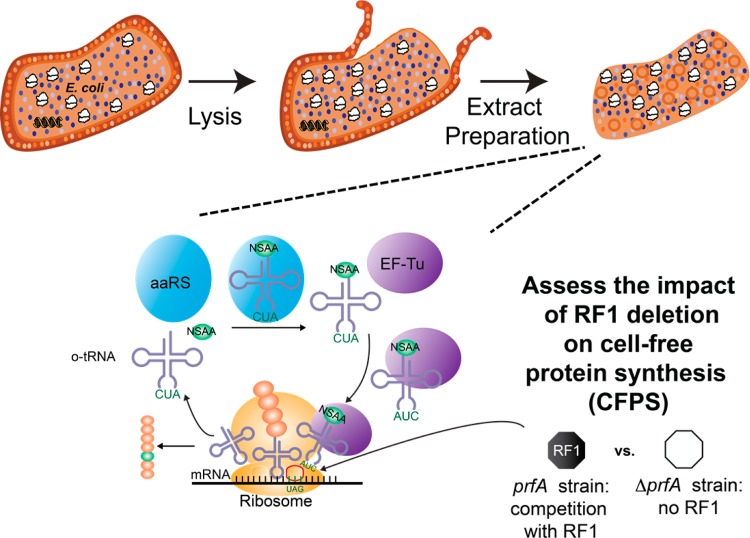
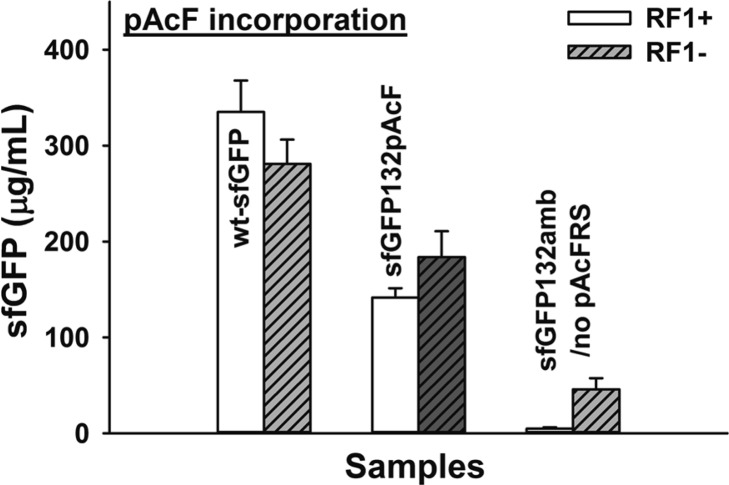
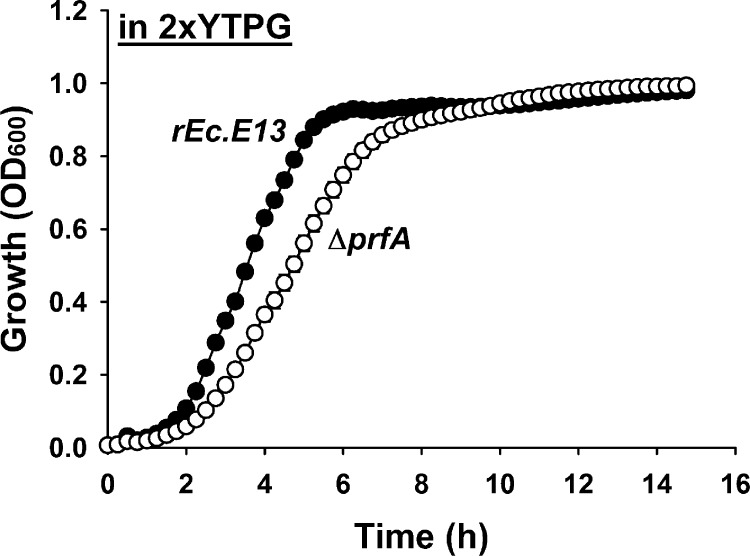
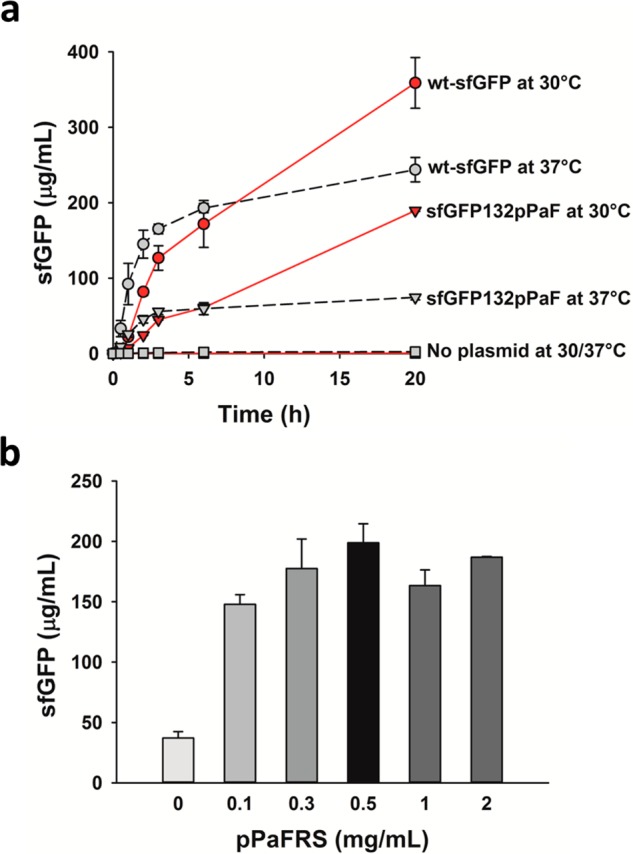
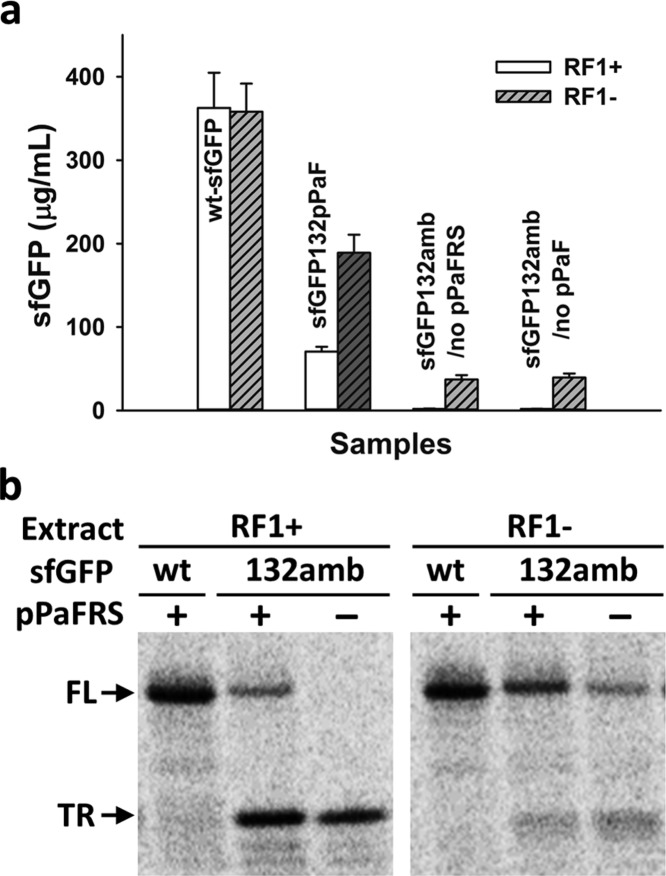
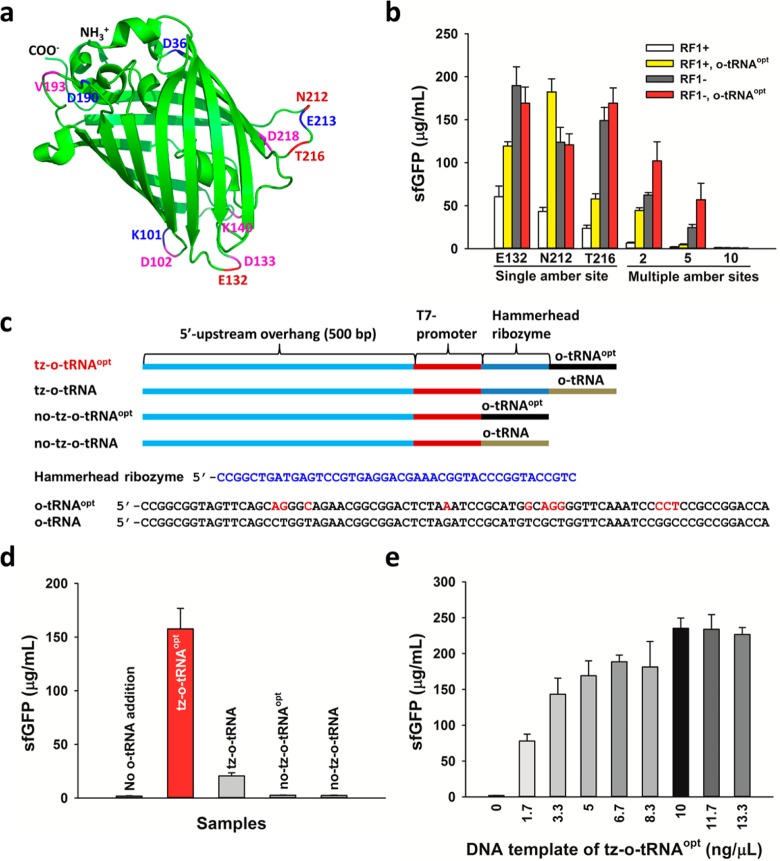
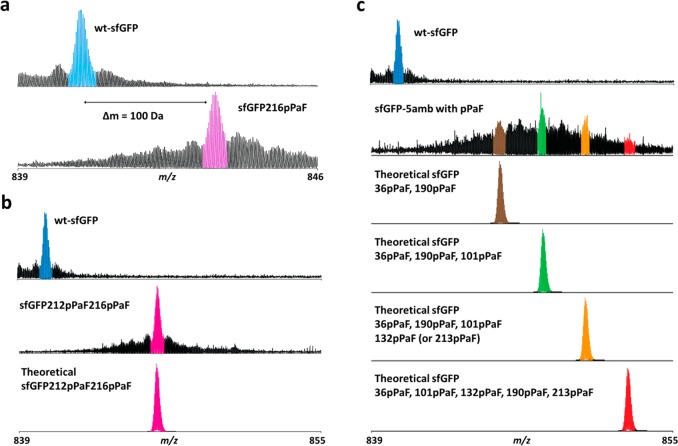
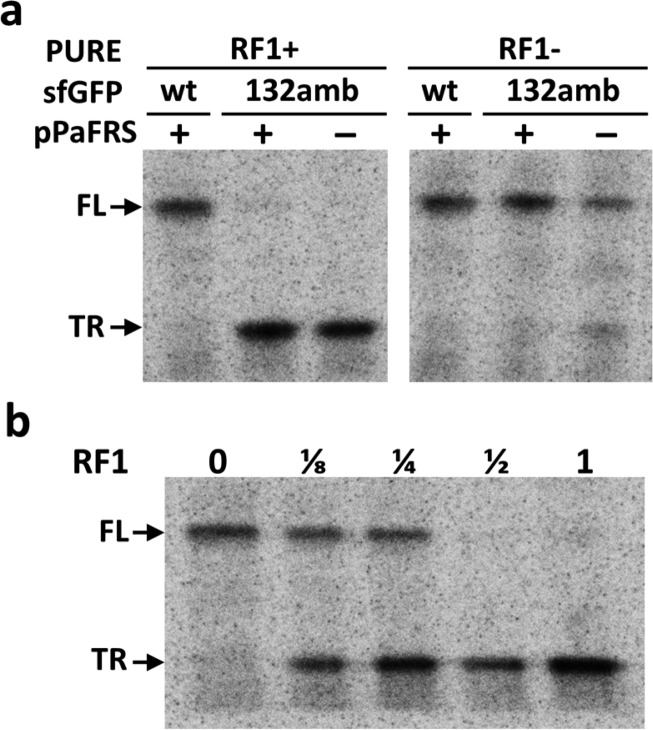
Site-specific incorporation of nonstandard amino acids (NSAAs) into proteins enables the creation of biopolymers, proteins, and enzymes with new chemical properties, new structures, and new functions. To achieve this, amber (TAG codon) suppression has been widely applied. However, the suppression efficiency is limited due to the competition with translation termination by release factor 1 (RF1), which leads to truncated products. Recently, we constructed a genomically recoded Escherichia coli strain lacking RF1 where 13 occurrences of the amber stop codon have been reassigned to the synonymous TAA codon (rEc.E13.ΔprfA). Here, we assessed and characterized cell-free protein synthesis (CFPS) in crude S30 cell lysates derived from this strain. We observed the synthesis of 190±20 μg/mL of modified soluble superfolder green fluorescent protein (sfGFP) containing a single p-propargyloxy-L-phenylalanine (pPaF) or p-acetyl-L-phenylalanine. As compared to the parent rEc.E13 strain with RF1, this results in a modified sfGFP synthesis improvement of more than 250%. Beyond introducing a single NSAA, we further demonstrated benefits of CFPS from the RF1-deficient strains for incorporating pPaF at two- and five-sites per sfGFP protein. Finally, we compared our crude S30 extract system to the PURE translation system lacking RF1. We observed that our S30 extract based approach is more cost-effective and high yielding than the PURE translation system lacking RF1, ∼1000 times on a milligram protein produced/$ basis. Looking forward, using RF1-deficient strains for extract-based CFPS will aid in the synthesis of proteins and biopolymers with site-specifically incorporated NSAAs.
将非标准氨基酸(NSAAs)位点特异性地掺入蛋白质中,能够创造出具有新化学性质、新结构和新功能的生物聚合物、蛋白质和酶。为实现这一目标,琥珀色(TAG密码子)抑制已被广泛应用。然而,由于与释放因子1(RF1)介导的翻译终止存在竞争,抑制效率受到限制,这会导致截短产物的产生。最近,我们构建了一种基因组重编码的大肠杆菌菌株,该菌株缺失RF1,其中13个琥珀色终止密码子已被重新分配为同义TAA密码子(rEc.E13.ΔprfA)。在此,我们对源自该菌株的粗制S30细胞裂解物中的无细胞蛋白质合成(CFPS)进行了评估和表征。我们观察到合成了190±20μg/mL的修饰型可溶性超级折叠绿色荧光蛋白(sfGFP),其含有单个对炔丙氧基-L-苯丙氨酸(pPaF)或对乙酰-L-苯丙氨酸。与具有RF1的亲本rEc.E13菌株相比,这使得修饰型sfGFP的合成提高了250%以上。除了引入单个NSAA外,我们还进一步证明了来自RF1缺陷菌株的CFPS在每个sfGFP蛋白的两个和五个位点掺入pPaF方面的优势。最后,我们将我们的粗制S30提取物系统与缺乏RF1的PURE翻译系统进行了比较。我们观察到,我们基于S30提取物的方法比缺乏RF1的PURE翻译系统更具成本效益且产量更高,以每毫克蛋白质产生的美元数计算约为其1000倍。展望未来,使用RF1缺陷菌株进行基于提取物的CFPS将有助于合成具有位点特异性掺入NSAAs的蛋白质和生物聚合物。