University of Calgary, 2500 University Dr, NW, Calgary, Alberta, T2N 1 N4, Canada.
BMC Womens Health. 2013 Dec 13;13:49. doi: 10.1186/1472-6874-13-49.
Despite rising breast cancer incidence and mortality rates, breast cancer screening (BCS) rates among women in Qatar remain low. Previous studies indicate the need to better understand the many complex beliefs, values, and attitudes that influence Arab women's health seeking behavior for the development of culturally appropriate and effective intervention strategies to address breast cancer in the Middle East. This study investigates beliefs, attitudes, and BCS practices of Arabic-speaking women in Qatar.
A multicenter, cross-sectional quantitative survey of 1,063 (87.5% response rate) Arabic-speaking female Qatari citizens and non-Qatari residents, 35 years of age or older, was conducted in Qatar from March 2011 to July 2011. Associations between beliefs and BCS practice were estimated using chi-square tests and multivariate logistic regression analyses. Participants who adhered to BCS guidelines (BCS practice = Yes) were compared to those who did not (BCS practice = No).
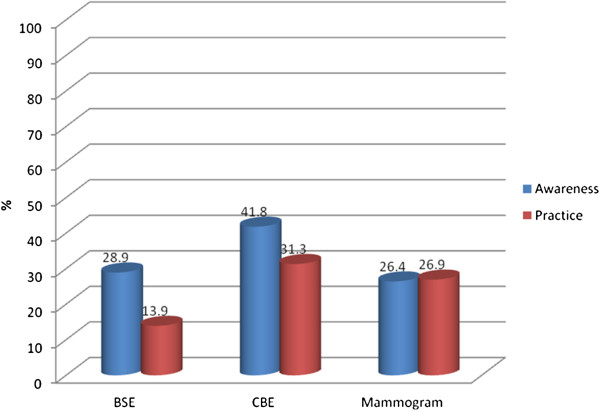
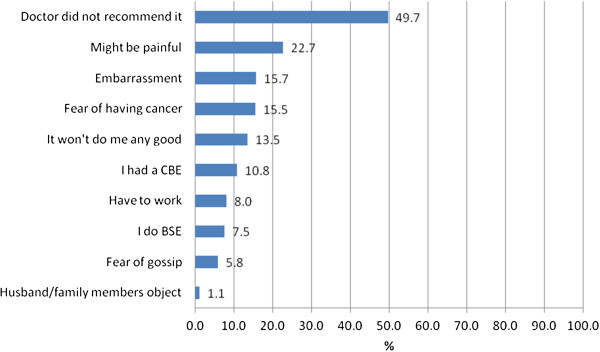
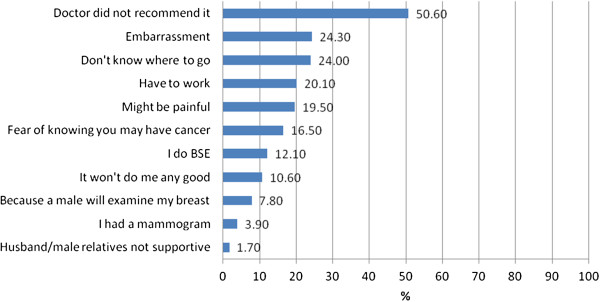
In addition to low levels of awareness and low participation rates in BCS, one quarter of the participants stated their doctors talked to them about breast cancer, and less than half of the women interviewed believed breast cancer can be prevented. Women who engaged in BCS practice were more likely to have a doctor who talked to them about breast cancer, to believe they were in good-excellent health, that cancer can be prevented, or that cancer might be hereditary. The majority wanted to know if they had cancer and felt their health care needs were being met. The main reasons given for not planning BCS were lack of a doctor's recommendation, fear, and embarrassment.
These findings indicate that a variety of channels (health care providers, media, breast cancer survivors, community leaders) should be utilized to create culturally appropriate breast cancer intervention programs and increased awareness of breast cancer, BCS, and the benefits of early detection of breast cancer. Employment of these measures will reduce breast cancer mortality rates among Arabic-speaking women living in the State of Qatar.
尽管乳腺癌发病率和死亡率上升,但卡塔尔女性的乳腺癌筛查(BCS)率仍然很低。先前的研究表明,需要更好地了解影响阿拉伯妇女健康寻求行为的许多复杂信仰、价值观和态度,以便为中东地区制定文化上适当和有效的干预策略来解决乳腺癌问题。本研究调查了卡塔尔讲阿拉伯语的妇女的信仰、态度和 BCS 实践。
2011 年 3 月至 7 月,在卡塔尔多中心、横断面定量调查了 1063 名(87.5%的应答率)年龄在 35 岁或以上的讲阿拉伯语的卡塔尔公民和非卡塔尔居民。使用卡方检验和多变量逻辑回归分析来估计信念与 BCS 实践之间的关联。符合 BCS 指南的参与者(BCS 实践=是)与不符合的参与者(BCS 实践=否)进行比较。
除了对 BCS 的认识水平低和参与率低之外,四分之一的参与者表示他们的医生与他们讨论过乳腺癌,不到一半的女性认为乳腺癌可以预防。参与 BCS 实践的女性更有可能有与她们讨论过乳腺癌的医生,认为她们身体健康良好,癌症可以预防,或者癌症可能是遗传性的。大多数人想知道自己是否患有癌症,并认为自己的医疗需求得到了满足。不打算进行 BCS 的主要原因是缺乏医生的建议、恐惧和尴尬。
这些发现表明,应该利用各种渠道(医疗保健提供者、媒体、乳腺癌幸存者、社区领袖)来创建文化上适当的乳腺癌干预计划,并提高对乳腺癌、BCS 以及早期发现乳腺癌的好处的认识。采取这些措施将降低居住在卡塔尔的讲阿拉伯语妇女的乳腺癌死亡率。