Department of Cardiac Surgery, Beijing Chao-Yang Hospital, Capital Medical University, Beijing 100020, P.R. China.
Int J Mol Med. 2014 Feb;33(2):277-300. doi: 10.3892/ijmm.2013.1582. Epub 2013 Dec 10.
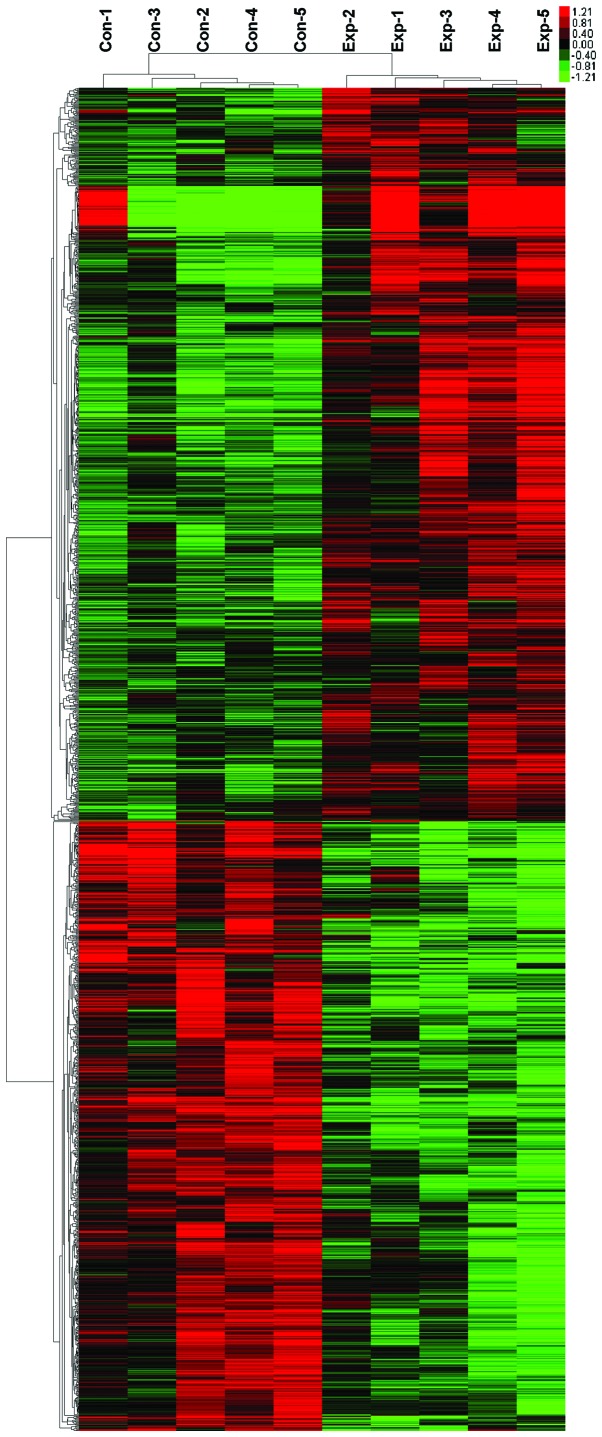
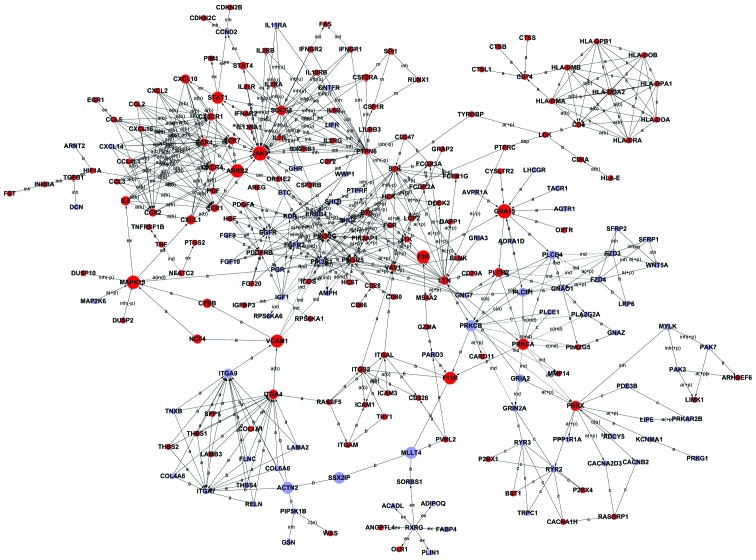
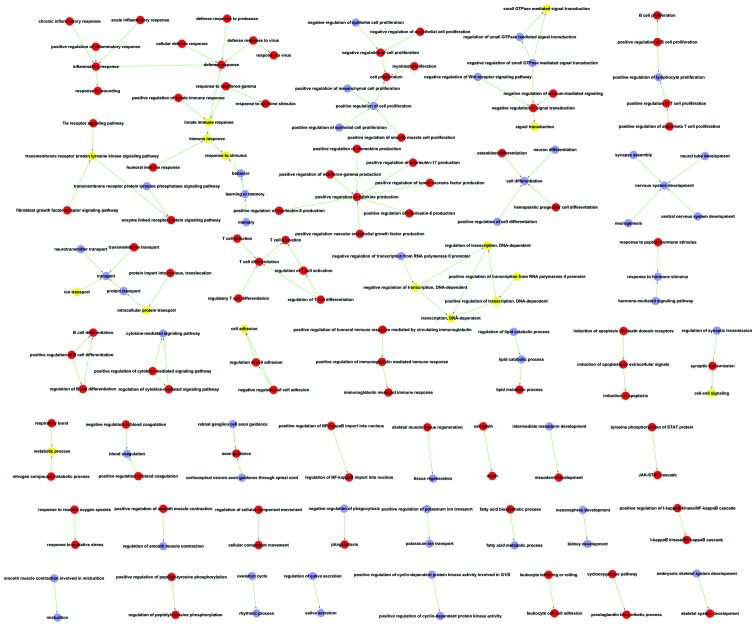
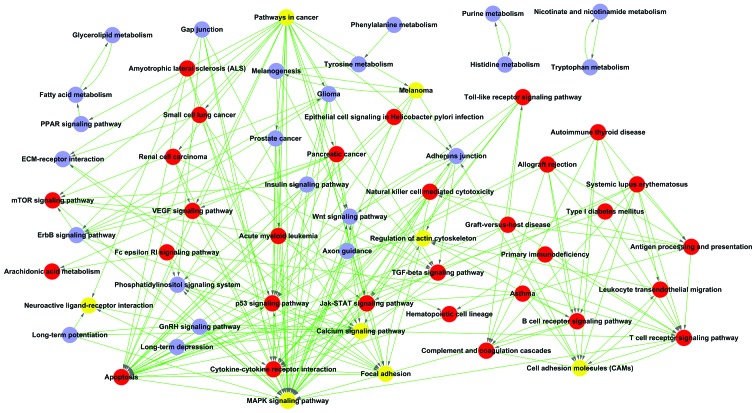
Chronic thromboembolic pulmonary hypertension (CTEPH) is one of the main causes of severe pulmonary hypertension. However, despite treatment (pulmonary endarterectomy), in approximately 15-20% of patients, pulmonary vascular resistance and pulmonary arterial pressure continue to increase. To date, little is known about the changes that occur in gene expression in CTEPH. The identification of genes associated with CTEPH may provide insight into the pathogenesis of CTEPH and may aid in diagnosis and treatment. In this study, we analyzed the gene expresion profiles of pulmonary artery endothelial cells from 5 patients with CTEPH and 5 healthy controls using oligonucleotide microarrays. Bioinformatics analyses using the Gene Ontology (GO) and KEGG databases were carried out to identify the genes and pathways specifically associated with CTEPH. Signal transduction networks were established to identify the core genes regulating the progression of CTEPH. A number of genes were found to be differentially expressed in the pulmonary artery endothelial cells from patients with CTEPH. In total, 412 GO terms and 113 pathways were found to be associated with our list of genes. All differential gene interactions in the Signal-Net network were analyzed. JAK3, GNA15, MAPK13, ARRB2 and F2R were the most significantly altered. Bioinformatics analysis may help gather and analyze large amounts of data in microarrays by means of rigorous experimental planning, scientific statistical analysis and the collection of complete data. In this study, a novel differential gene expression pattern was constructed. However, further studies are required to identify novel targets for the diagnosis and treatment of CTEPH.
慢性血栓栓塞性肺动脉高压(CTEPH)是严重肺动脉高压的主要原因之一。然而,尽管进行了治疗(肺动脉内膜切除术),大约 15-20%的患者的肺血管阻力和肺动脉压仍持续升高。迄今为止,人们对 CTEPH 中发生的基因表达变化知之甚少。与 CTEPH 相关的基因的鉴定可能有助于深入了解 CTEPH 的发病机制,并可能有助于诊断和治疗。在这项研究中,我们使用寡核苷酸微阵列分析了 5 例 CTEPH 患者和 5 例健康对照者的肺动脉内皮细胞的基因表达谱。使用基因本体论(GO)和 KEGG 数据库的生物信息学分析,确定了与 CTEPH 特异性相关的基因和途径。建立信号转导网络,以确定调节 CTEPH 进展的核心基因。在 CTEPH 患者的肺动脉内皮细胞中发现了一些差异表达的基因。共有 412 个 GO 术语和 113 条途径与我们的基因列表相关。对信号网络中的所有差异基因相互作用进行了分析。JAK3、GNA15、MAPK13、ARRB2 和 F2R 是变化最显著的基因。生物信息学分析可以通过严格的实验规划、科学的统计分析和完整数据的收集,帮助汇集和分析微阵列中的大量数据。在这项研究中,构建了一个新的差异基因表达模式。然而,需要进一步的研究来确定 CTEPH 的诊断和治疗的新靶点。