Mohan Uthra, Babu S Karthik, Kumar K Vijay, Suresh B V, Misri Z K, Chakrapani M
Department of Physiotherapy, Kasturba Medical College, Manipal University, Mangalore, Karnataka, India.
Ann Indian Acad Neurol. 2013 Oct;16(4):634-9. doi: 10.4103/0972-2327.120496.
To evaluate the effectiveness of mirror therapy on lower extremity motor recovery, balance and mobility in patients with acute stroke.
A randomized, sham-controlled, assessor blinded, pilot trial.
Inpatient stroke rehabilitation unit.
First time onset of stroke with mean post-stroke duration of 6.41 days, able to respond to verbal instructions, and Brunnstrom recovery stage 2 and above were enrolled.
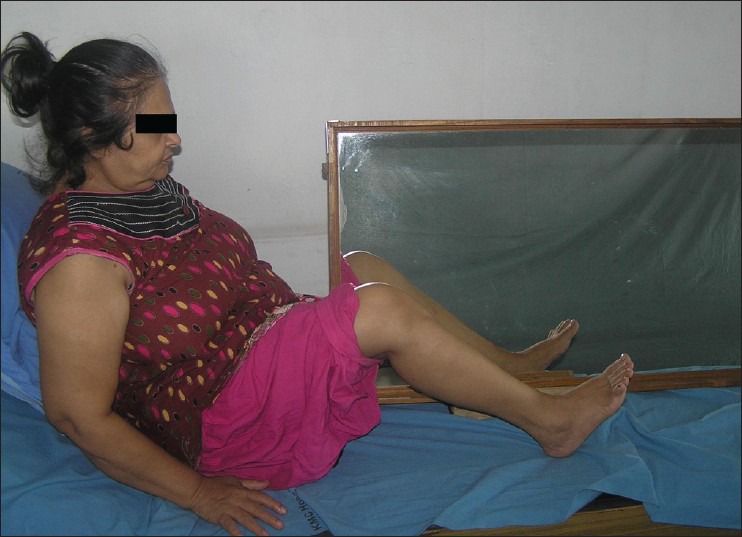
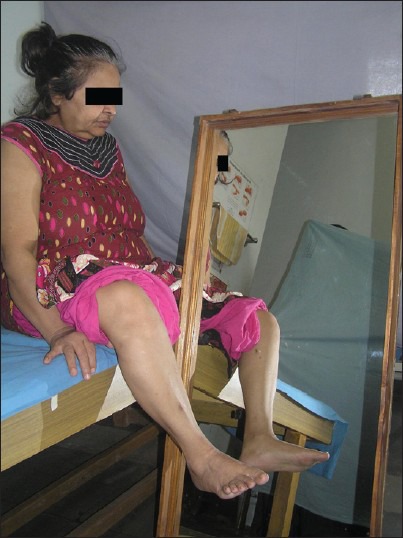
Mirror therapy group performed 30 minutes of functional synergy movements of non-paretic lower extremity, whereas control group underwent sham therapy with similar duration. In addition, both groups were administered with conventional stroke rehabilitation regime. Altogether 90 minutes therapy session per day, six days a week, for two weeks duration was administered to both groups.
Lower extremity motor subscale of Fugl Meyer Assessment (FMA), Brunnel Balance Assessment (BBA) and Functional Ambulation Categories (FAC).
Amongst the 22 patients included, equal number of patients participated in mirror group (N = 11) and control group (N = 11). Baseline variables were similar in both groups, except for Brunnstrom recovery stage. There was no statistical difference between groups, except for FAC. (FMA: P = 0.894; BBA: P = 0.358; FAC: P = 0.02). Significance was set at P < 0.05.
Administration of mirror therapy early after stroke is not superior to conventional treatment in improving lower limb motor recovery and balance, except for improvement in mobility.
评估镜像疗法对急性脑卒中患者下肢运动恢复、平衡及活动能力的有效性。
一项随机、假对照、评估者盲法的试点试验。
住院脑卒中康复单元。
首次发生脑卒中,卒中后平均病程6.41天,能对言语指令做出反应,且Brunnstrom恢复阶段为2期及以上者纳入研究。
镜像疗法组进行30分钟非患侧下肢的功能协同运动,而对照组接受持续时间相似的假治疗。此外,两组均给予常规脑卒中康复方案。两组均每天进行共90分钟的治疗,每周6天,持续2周。
Fugl Meyer评估量表(FMA)下肢运动亚量表、Brunnel平衡评估量表(BBA)和功能性步行分类(FAC)。
纳入的22例患者中,镜像组(N = 11)和对照组(N = 11)的患者数量相等。除Brunnstrom恢复阶段外,两组的基线变量相似。除FAC外,两组之间无统计学差异。(FMA:P = 0.894;BBA:P = 0.358;FAC:P = 0.02)。显著性设定为P < 0.05。
脑卒中后早期给予镜像疗法在改善下肢运动恢复和平衡方面并不优于传统治疗,但在改善活动能力方面除外。