Department of Physiology, Development and Neuroscience, University of Cambridge Cambridge, UK.
Front Neurosci. 2013 Dec 10;7:233. doi: 10.3389/fnins.2013.00233.
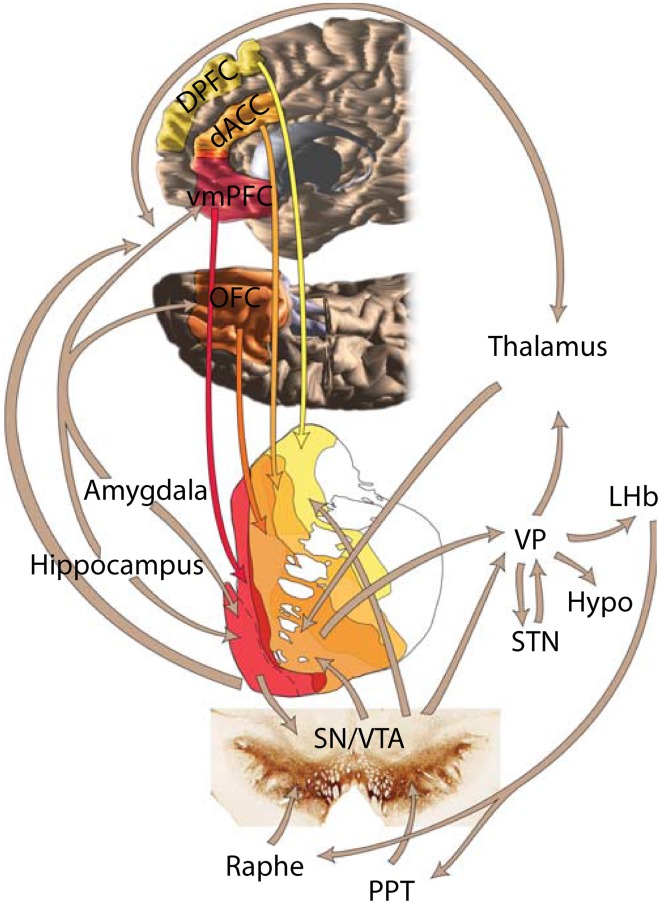
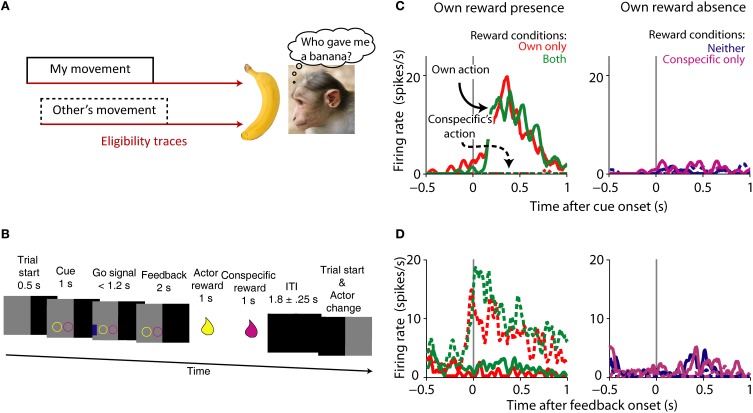
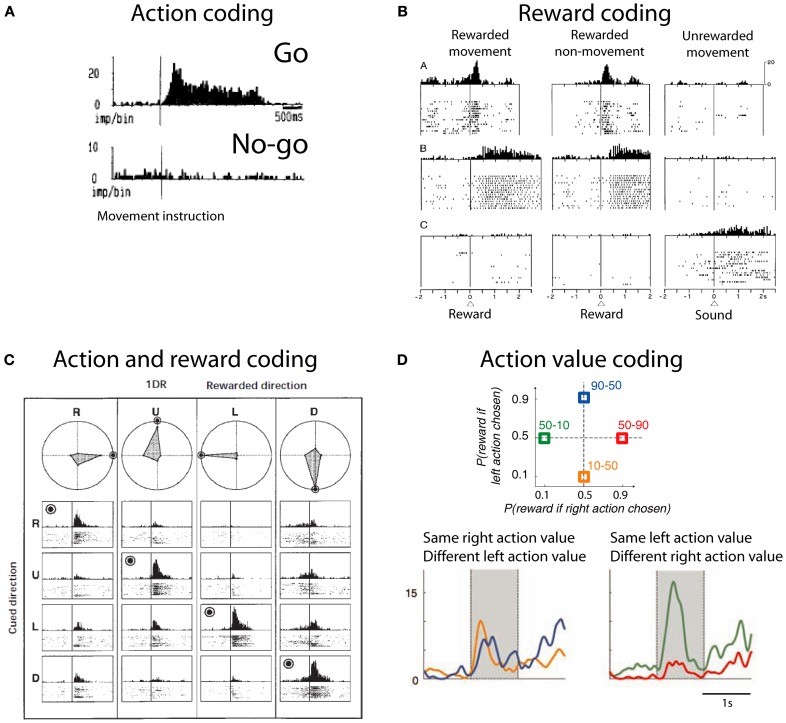
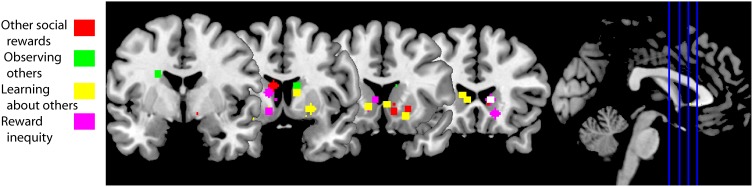
Where and how does the brain code reward during social behavior? Almost all elements of the brain's reward circuit are modulated during social behavior. The striatum in particular is activated by rewards in social situations. However, its role in social behavior is still poorly understood. Here, we attempt to review its participation in social behaviors of different species ranging from voles to humans. Human fMRI experiments show that the striatum is reliably active in relation to others' rewards, to reward inequity and also while learning about social agents. Social contact and rearing conditions have long-lasting effects on behavior, striatal anatomy and physiology in rodents and primates. The striatum also plays a critical role in pair-bond formation and maintenance in monogamous voles. We review recent findings from single neuron recordings showing that the striatum contains cells that link own reward to self or others' actions. These signals might be used to solve the agency-credit assignment problem: the question of whose action was responsible for the reward. Activity in the striatum has been hypothesized to integrate actions with rewards. The picture that emerges from this review is that the striatum is a general-purpose subcortical region capable of integrating social information into coding of social action and reward.
大脑在社交行为中如何以及在哪里对奖励进行编码?在社交行为中,大脑奖励回路的几乎所有元素都被调节。特别是纹状体在社交情境中被奖励激活。然而,其在社交行为中的作用仍知之甚少。在这里,我们试图从田鼠到人类等不同物种的社会行为来回顾其参与情况。人类 fMRI 实验表明,纹状体与他人的奖励、奖励不均以及学习社会代理人有关时,会可靠地活跃。社会接触和养育条件对啮齿动物和灵长类动物的行为、纹状体解剖和生理学有持久的影响。纹状体在一夫一妻制田鼠的伴侣形成和维持中也起着关键作用。我们回顾了最近的单细胞记录研究结果,这些结果表明纹状体包含将自身奖励与自身或他人行为联系起来的细胞。这些信号可能用于解决代理信用分配问题:即谁的行为导致了奖励。纹状体的活动被假设为将动作与奖励结合起来。从这个综述中得出的结论是,纹状体是一个通用的皮质下区域,能够将社交信息整合到社交动作和奖励的编码中。