Department of Psychology, University of Wisconsin-Milwaukee, Milwaukee, Wisconsin 53201, USA.
Learn Mem. 2013 Dec 16;21(1):9-13. doi: 10.1101/lm.032771.113.
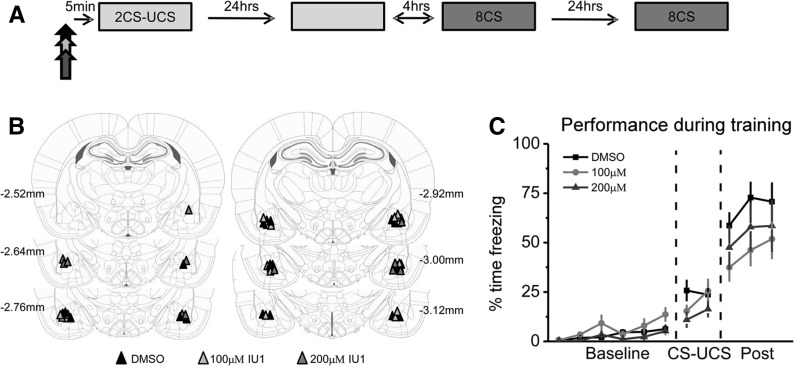
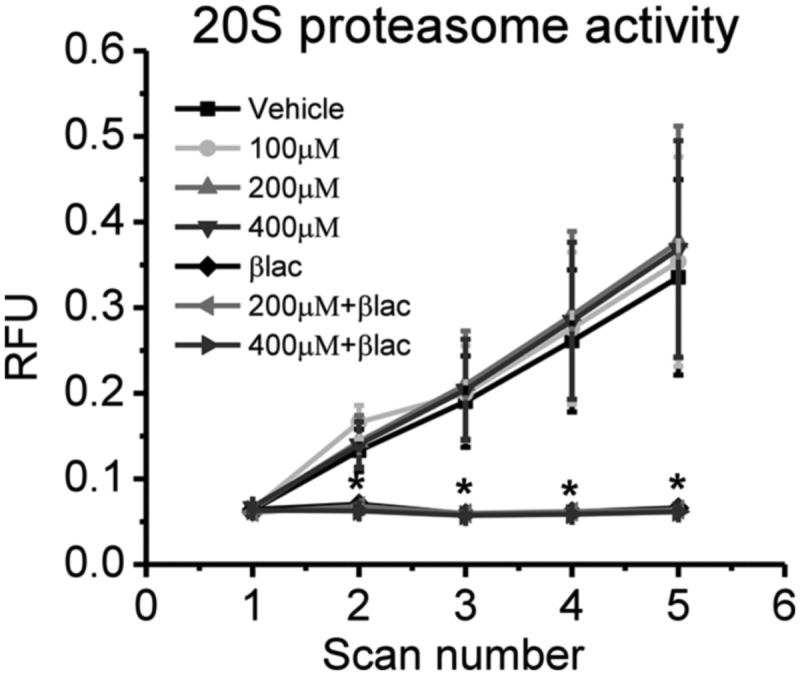
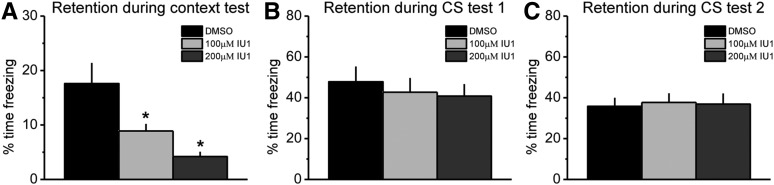
Numerous studies have suggested a role for ubiquitin-proteasome-mediated protein degradation in learning-dependent synaptic plasticity; however, very little is known about how protein degradation is regulated at the level of the proteasome during memory formation. The ubiquitin-specific protease 14 (USP14) is a proteasomal deubiquitinating enzyme that is thought to regulate protein degradation in neurons; however, it is unknown if USP14 is involved in learning-dependent synaptic plasticity. We found that infusion of a USP14 inhibitor into the amygdala impaired long-term memory for a fear conditioning task, suggesting that USP14 is a critical regulator of long-term memory formation in the amygdala.
许多研究表明泛素-蛋白酶体介导的蛋白质降解在学习相关的突触可塑性中起作用;然而,对于在记忆形成过程中蛋白酶体水平的蛋白质降解是如何调节的,知之甚少。泛素特异性蛋白酶 14(USP14)是一种蛋白酶体去泛素化酶,被认为调节神经元中的蛋白质降解;然而,USP14 是否参与学习相关的突触可塑性尚不清楚。我们发现,将 USP14 抑制剂注入杏仁核会损害恐惧条件反射任务的长期记忆,这表明 USP14 是杏仁核中长期记忆形成的关键调节剂。