School of Electrical, Computer and Energy Engineering, and Security & Defense Systems Initiative, Arizona State University, Tempe, Arizona, 85287 USA.
Sci Rep. 2013 Dec 18;3:3535. doi: 10.1038/srep03535.
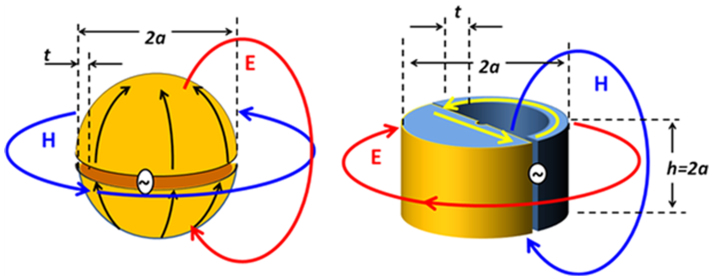
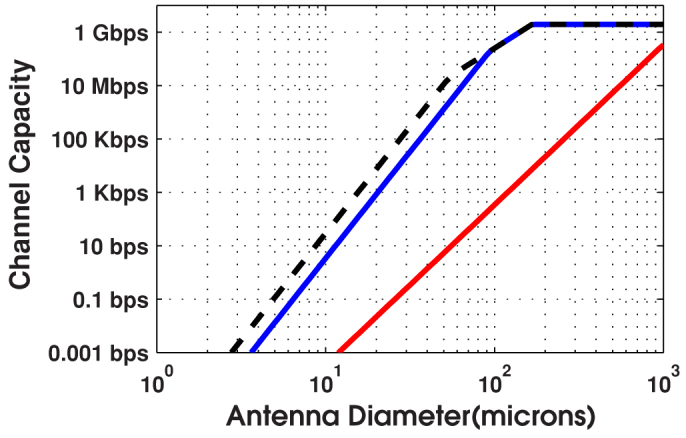
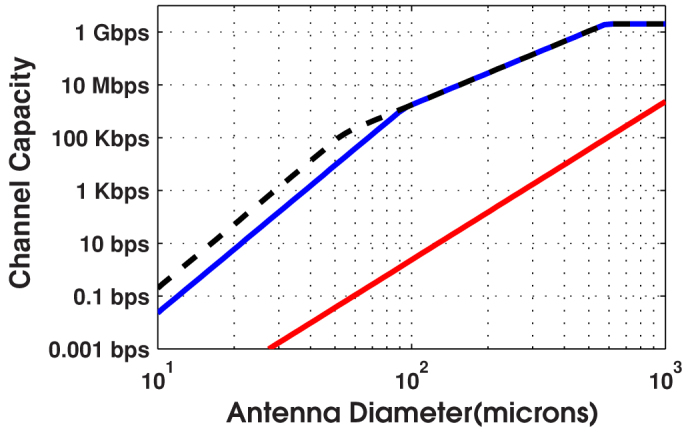
The viability of a radiofrequency (RF) telemetry channel for reporting individual neuron activity wirelessly from an embedded antenna to an external receiver is determined. Comparing the power at the transmitting antenna required for the desired Channel Capacity, to the maximum power that this antenna can dissipate in the body without altering or damaging surrounding tissue reveals the severe penalty incurred by miniaturization of the antenna. Using both Specific Absorption Rate (SAR) and thermal damage limits as constraints, and 300 Kbps as the required capacity for telemetry streams 100 ms in duration, the model shows that conventional antennas smaller than 0.1 mm could not support human neuronal telemetry to a remote receiver (1 m away.) Reducing the antenna to 10 microns in size to enable the monitoring of single human neuron signals to a receiver at the surface of the head would require operating with a channel capacity of only 0.3 bps.
确定了用于通过嵌入式天线将个体神经元活动无线传输到外部接收器的射频 (RF) 遥测通道的可行性。将发送天线所需的功率与天线在不改变或损坏周围组织的情况下在体内耗散的最大功率进行比较,揭示了天线小型化带来的严重损失。使用特定吸收率 (SAR) 和热损伤限制作为约束条件,并将持续 100ms 的遥测流所需的容量设置为 300Kbps,该模型表明,小于 0.1mm 的传统天线无法支持人类神经元向远程接收器(距离 1 米远)的遥测。为了能够在头部表面的接收器上监测单个人类神经元信号,将天线缩小到 10 微米大小,则需要以仅 0.3bps 的信道容量进行操作。