Department of Pediatrics, University of California, San Francisco, San Francisco, California, United States of America ; Program in Microbial Pathogenesis and Host Defense, University of California, San Francisco, San Francisco, California, United States of America.
Department of Bioengineering and Program in Biophysics, University of California, Berkeley, Berkeley, California, United States of America.
PLoS Pathog. 2013;9(12):e1003821. doi: 10.1371/journal.ppat.1003821. Epub 2013 Dec 12.
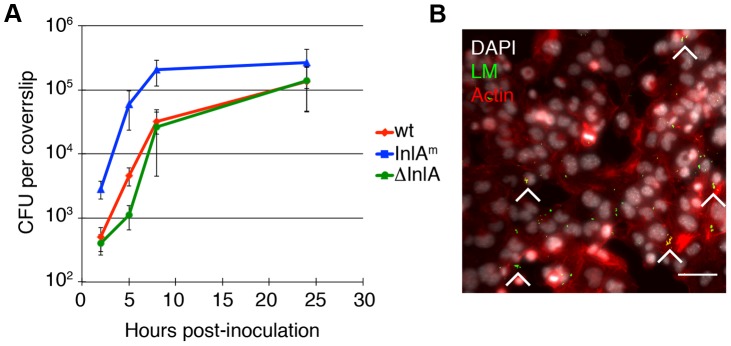
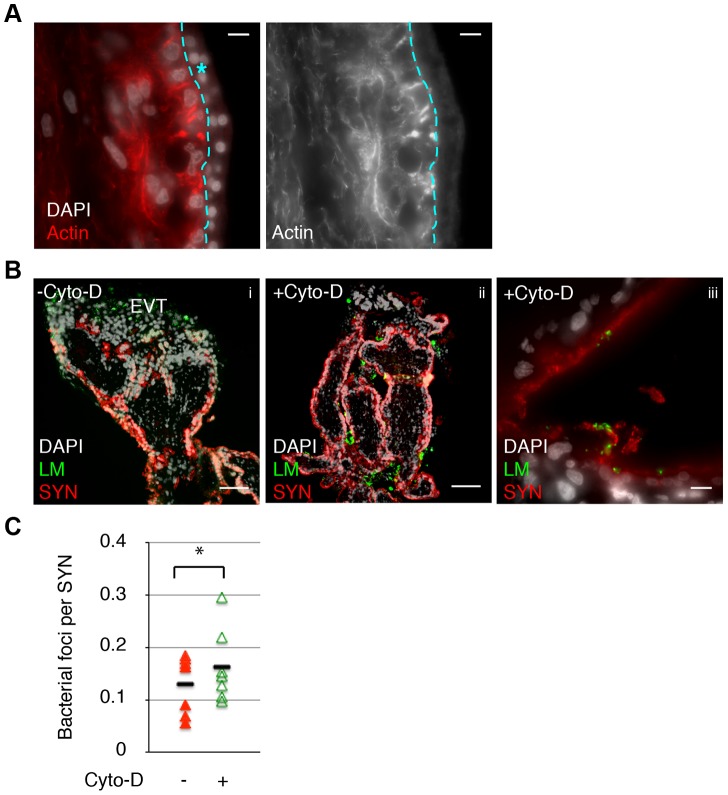
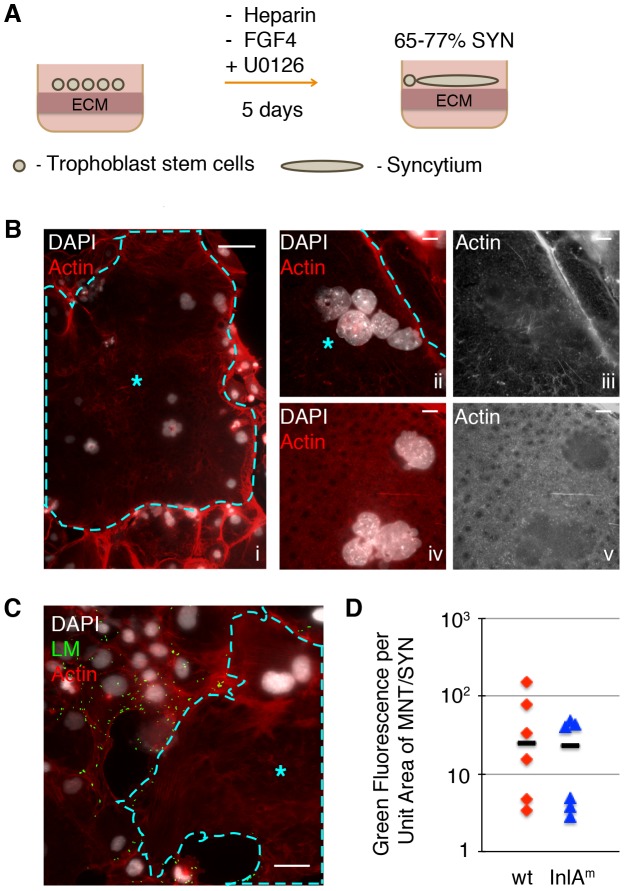
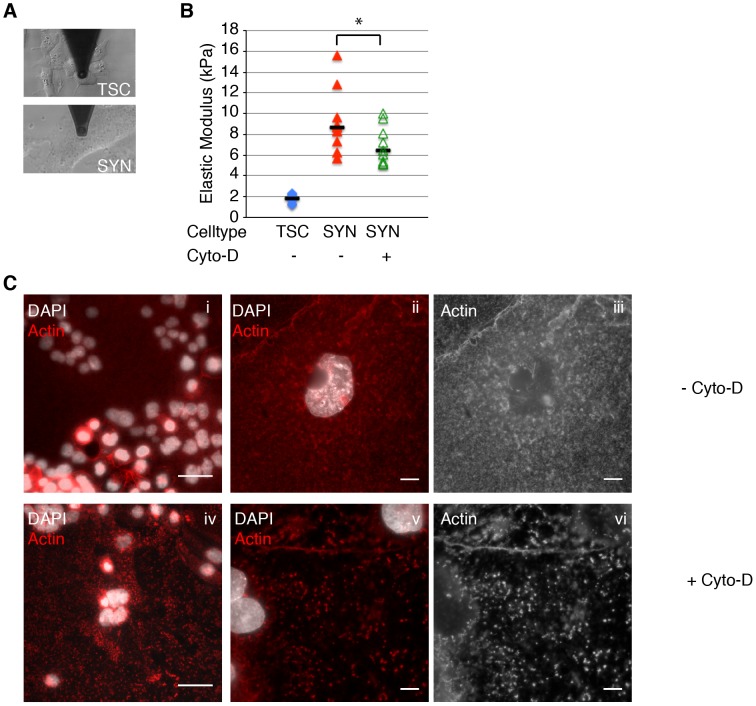
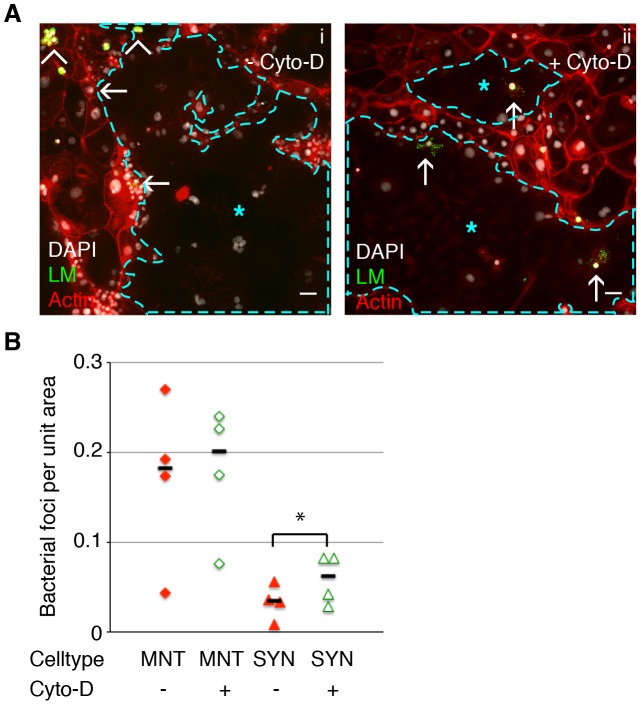
Fetal syncytiotrophoblasts form a unique fused multinuclear surface that is bathed in maternal blood, and constitutes the main interface between fetus and mother. Syncytiotrophoblasts are exposed to pathogens circulating in maternal blood, and appear to have unique resistance mechanisms against microbial invasion. These are due in part to the lack of intercellular junctions and their receptors, the Achilles heel of polarized mononuclear epithelia. However, the syncytium is immune to receptor-independent invasion as well, suggesting additional general defense mechanisms against infection. The difficulty of maintaining and manipulating primary human syncytiotrophoblasts in culture makes it challenging to investigate the cellular and molecular basis of host defenses in this unique tissue. Here we present a novel system to study placental pathogenesis using murine trophoblast stem cells (mTSC) that can be differentiated into syncytiotrophoblasts and recapitulate human placental syncytium. Consistent with previous results in primary human organ cultures, murine syncytiotrophoblasts were found to be resistant to infection with Listeria monocytogenes via direct invasion and cell-to-cell spread. Atomic force microscopy of murine syncytiotrophoblasts demonstrated that these cells have a greater elastic modulus than mononuclear trophoblasts. Disruption of the unusually dense actin structure--a diffuse meshwork of microfilaments--with Cytochalasin D led to a decrease in its elastic modulus by 25%. This correlated with a small but significant increase in invasion of L. monocytogenes into murine and human syncytium. These results suggest that the syncytial actin cytoskeleton may form a general barrier against pathogen entry in humans and mice. Moreover, murine TSCs are a genetically tractable model system for the investigation of specific pathways in syncytial host defenses.
胎儿合体滋养层形成独特的融合多核表面,浸泡在母体血液中,构成胎儿与母体之间的主要界面。合体滋养层暴露于母体血液中循环的病原体,似乎具有独特的抵抗微生物入侵的机制。这部分是由于缺乏细胞间连接及其受体,这是极化单核上皮细胞的阿喀琉斯之踵。然而,合体滋养层也能免疫受体非依赖性的入侵,这表明存在针对感染的额外一般防御机制。由于难以在培养中维持和操纵原代人合体滋养层,因此难以研究该独特组织中宿主防御的细胞和分子基础。在这里,我们提出了一种使用能够分化为合体滋养层并重现人胎盘合体滋养层的鼠滋养层干细胞 (mTSC) 研究胎盘发病机制的新系统。与原代人器官培养中的先前结果一致,发现鼠合体滋养层对李斯特菌属的感染具有抗性通过直接入侵和细胞间传播。对鼠合体滋养层的原子力显微镜分析表明,这些细胞的弹性模量大于单核滋养层。用细胞松弛素 D 破坏异常致密的肌动蛋白结构(微丝的弥散网格)会导致其弹性模量降低 25%。这与李斯特菌属进入鼠和人合体滋养层的微小但显著增加相关。这些结果表明,合胞体肌动蛋白细胞骨架可能在人类和小鼠中形成针对病原体进入的一般屏障。此外,鼠 TSCs 是研究合胞体宿主防御中特定途径的遗传上易于处理的模型系统。