Cluster of Excellence, Department of Experimental Otology, Institute of Audioneurotechnology, ENT Clinics, Hannover Medical School Hannover, Germany.
Cluster of Excellence, Department of Experimental Otology, Institute of Audioneurotechnology, ENT Clinics, Hannover Medical School Hannover, Germany ; Department of Physiology and Otolaryngology, J. W. Goethe University Frankfurt am Main, Germany.
Front Syst Neurosci. 2013 Nov 27;7:93. doi: 10.3389/fnsys.2013.00093. eCollection 2013.
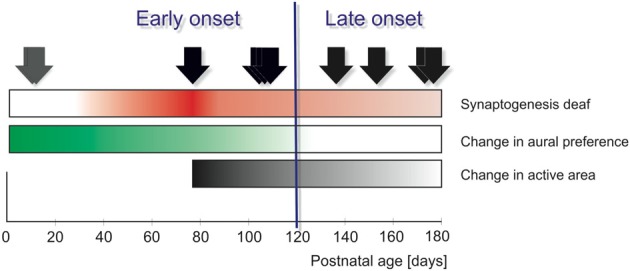
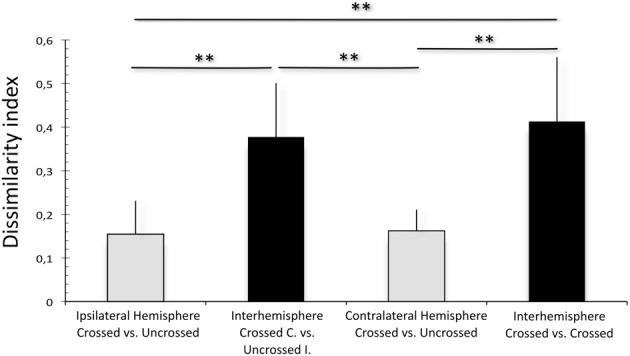
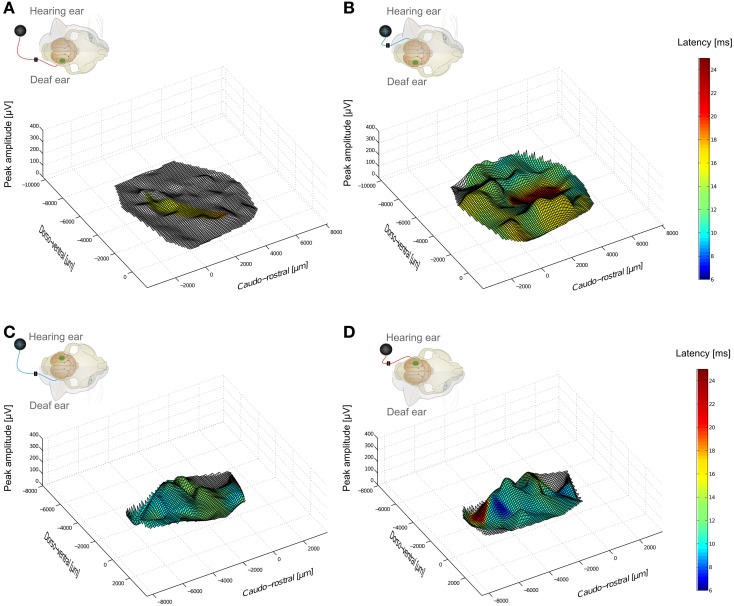
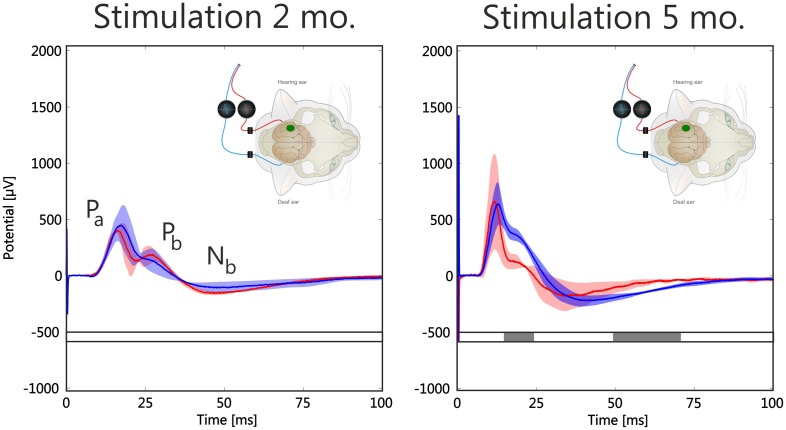
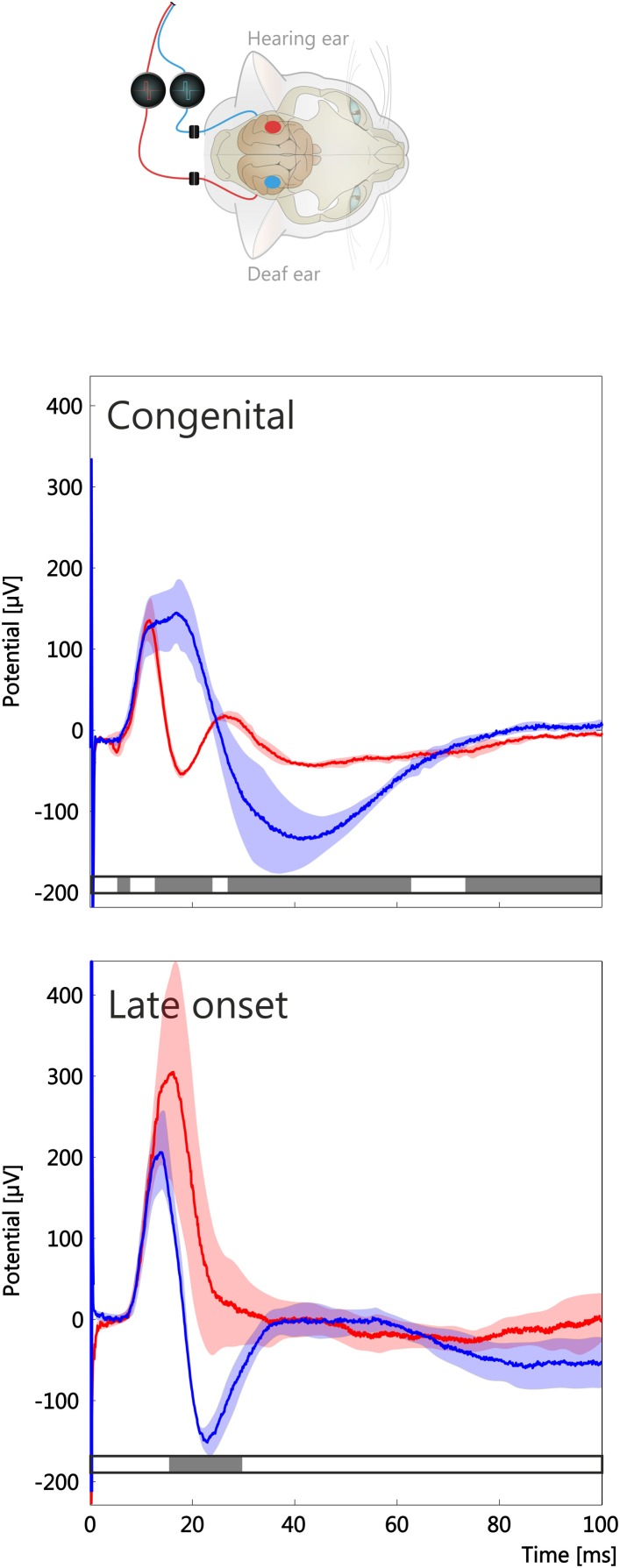
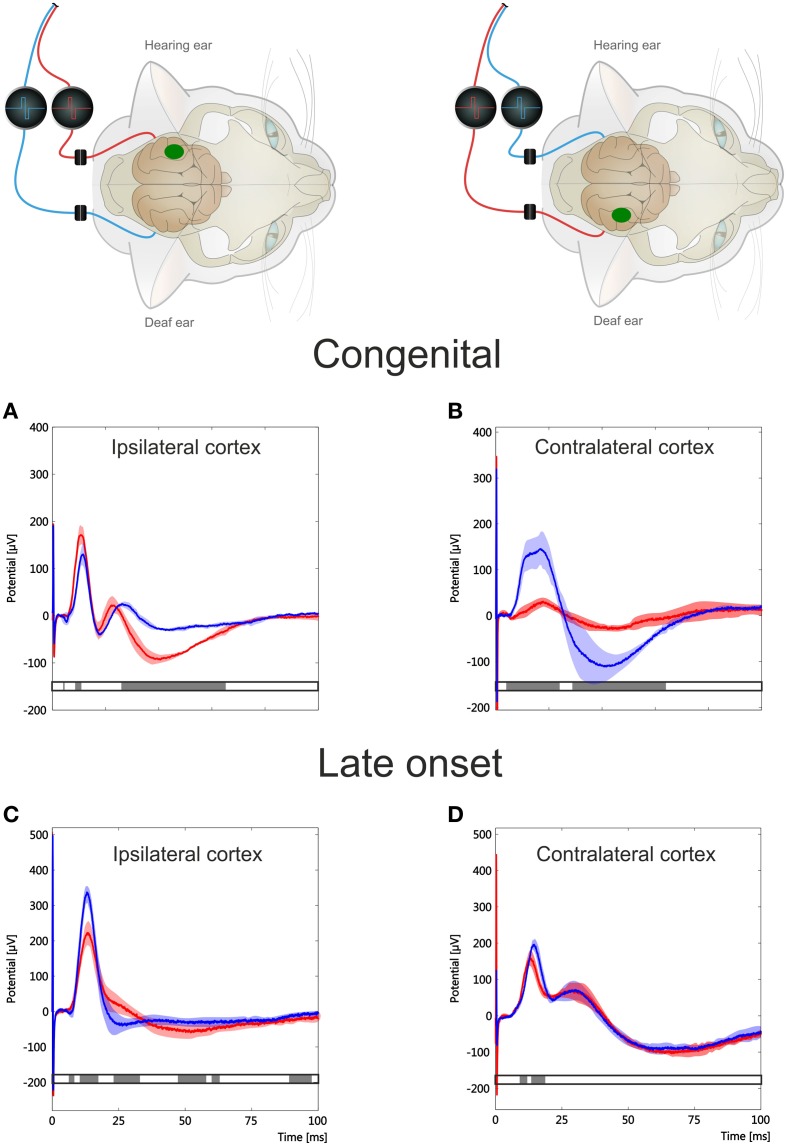
The present study investigates the hemispheric contributions of neuronal reorganization following early single-sided hearing (unilateral deafness). The experiments were performed on ten cats from our colony of deaf white cats. Two were identified in early hearing screening as unilaterally congenitally deaf. The remaining eight were bilaterally congenitally deaf, unilaterally implanted at different ages with a cochlear implant. Implanted animals were chronically stimulated using a single-channel portable signal processor for two to five months. Microelectrode recordings were performed at the primary auditory cortex under stimulation at the hearing and deaf ear with bilateral cochlear implants. Local field potentials (LFPs) were compared at the cortex ipsilateral and contralateral to the hearing ear. The focus of the study was on the morphology and the onset latency of the LFPs. With respect to morphology of LFPs, pronounced hemisphere-specific effects were observed. Morphology of amplitude-normalized LFPs for stimulation of the deaf and the hearing ear was similar for responses recorded at the same hemisphere. However, when comparisons were performed between the hemispheres, the morphology was more dissimilar even though the same ear was stimulated. This demonstrates hemispheric specificity of some cortical adaptations irrespective of the ear stimulated. The results suggest a specific adaptation process at the hemisphere ipsilateral to the hearing ear, involving specific (down-regulated inhibitory) mechanisms not found in the contralateral hemisphere. Finally, onset latencies revealed that the sensitive period for the cortex ipsilateral to the hearing ear is shorter than that for the contralateral cortex. Unilateral hearing experience leads to a functionally-asymmetric brain with different neuronal reorganizations and different sensitive periods involved.
本研究调查了早期单侧听力丧失(单侧耳聋)后神经元重组的半球贡献。实验在我们的耳聋白猫群体中的十只猫上进行。其中两只在早期听力筛查中被确定为单侧先天性耳聋。其余八只均为双侧先天性耳聋,在不同年龄时单侧植入了人工耳蜗。植入动物使用单通道便携式信号处理器进行了两到五个月的慢性刺激。在双侧人工耳蜗刺激下,在初级听觉皮层进行微电极记录。比较了对侧和同侧听觉皮层的局部场电位(LFPs)。研究的重点是 LFPs 的形态和起始潜伏期。就 LFPs 的形态而言,观察到明显的半球特异性效应。对于耳聋和听力耳刺激的幅度归一化 LFPs 的形态,在同一半球记录的响应相似。然而,当在半球之间进行比较时,即使刺激相同的耳朵,形态也更为不同。这表明即使刺激相同的耳朵,一些皮层适应也具有半球特异性。结果表明,在听觉侧的半球上存在特定的适应过程,涉及到在对侧半球中未发现的特定(下调的抑制性)机制。最后,起始潜伏期表明,听觉侧同侧皮层的敏感期比对侧皮层短。单侧听力经验导致大脑功能不对称,涉及不同的神经元重组和不同的敏感期。