Department of Physiology and Pharmacology, Department of Psychology, University of Calgary Calgary, AB, Canada.
Front Syst Neurosci. 2013 May 6;7:12. doi: 10.3389/fnsys.2013.00012. eCollection 2013.
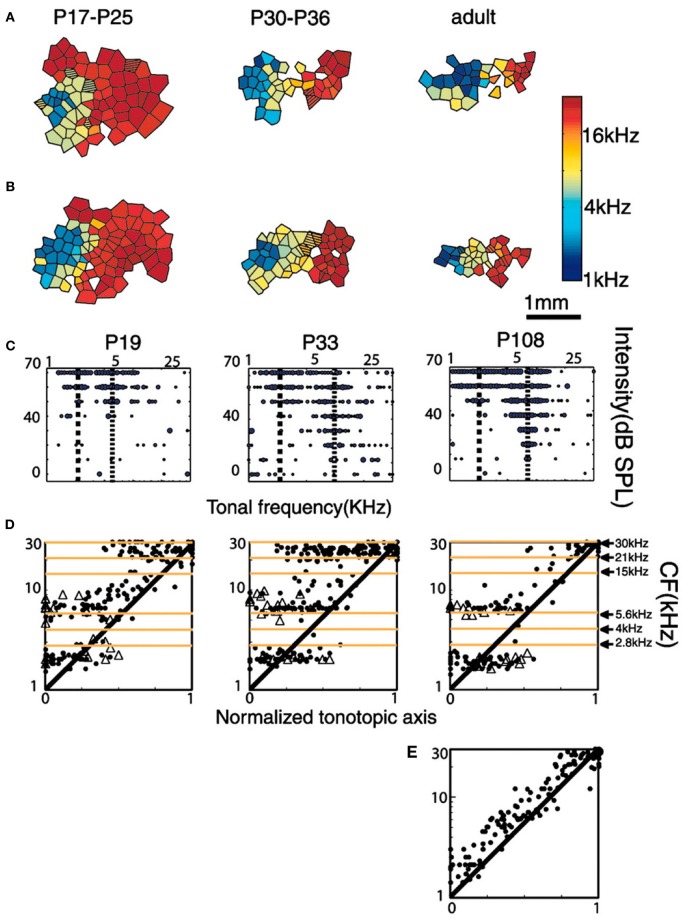
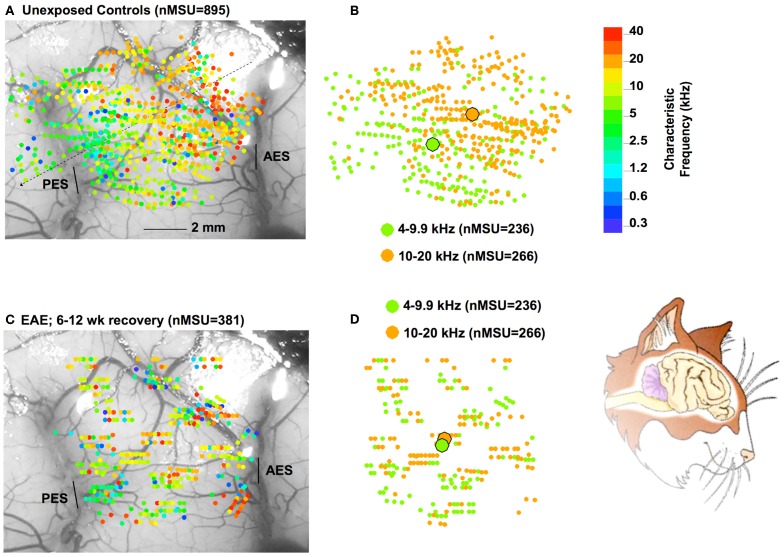
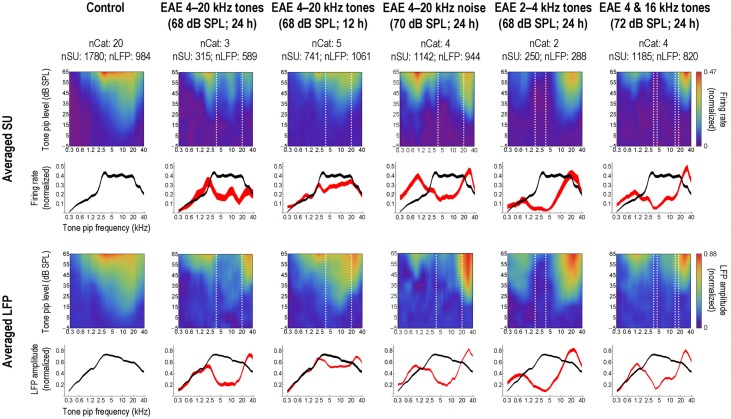
There is an almost dogmatic view of the different effects of moderate-level sound stimulation in neonatal vs. adult animals. It is often stated that exposure in neonates results in an expansion of the cortical area that responds to the frequencies present in the sound, being either pure tones or frequency modulated sounds. In contrast, recent findings on stimulating adult animals for a sufficiently long time with similar sounds show a contraction of the cortical region responding to those sounds. In this review I will suggest that most neonatal animal results have been wrongly interpreted (albeit generally not by the original authors) and that the changes caused in the critical period (CP) and in adulthood are very similar. Thus, the mechanisms leading to the cortical map changes appear to be similar in the CP and in adulthood. Despite this similarity, the changes induced in the CP are occurring faster and are generally permanent (unless extensive training paradigms to revert the changes are involved), whereas in adults the induction is slower and a slow recovery (months) to pre-exposure conditions takes place.
对于中度声音刺激对新生儿和成年动物的不同影响,存在一种近乎教条的观点。人们常说,在新生儿中暴露于声音会导致对声音中存在的频率(无论是纯音还是调频声音)做出反应的皮质区域扩大。相比之下,最近关于用类似声音对成年动物进行足够长时间刺激的发现表明,对这些声音做出反应的皮质区域会收缩。在这篇综述中,我将提出,大多数新生儿动物的结果被错误地解释了(尽管通常不是由最初的作者),并且在关键期(CP)和成年期引起的变化非常相似。因此,导致皮质图变化的机制在 CP 和成年期似乎是相似的。尽管存在这种相似性,但 CP 中诱导的变化发生得更快,并且通常是永久性的(除非涉及到广泛的训练方案来逆转这些变化),而在成年人中,诱导较慢,并且需要数月时间才能恢复到暴露前的状态。