Cardiovascular and Renal Research, Institute of Molecular Medicine, University of Southern Denmark, Odense, Denmark.
Cardiovascular and Renal Research, Institute of Molecular Medicine, University of Southern Denmark, Odense, Denmark ; Centre for Individualized Medicine in Arterial Diseases (CIMA), Department of Clinical Biochemistry and Pharmacology, Odense University Hospital, Odense, Denmark ; Odense Patient data Explorative Network (OPEN), Odense University Hospital, Odense, Denmark.
PLoS One. 2013 Dec 13;8(12):e82243. doi: 10.1371/journal.pone.0082243. eCollection 2013.
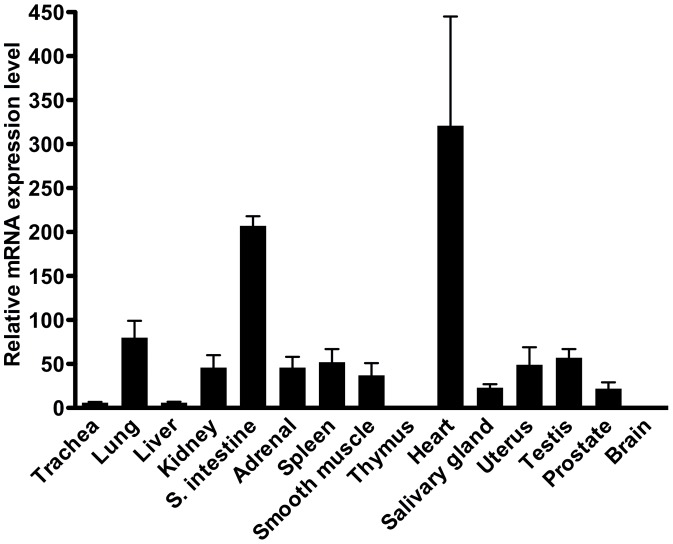
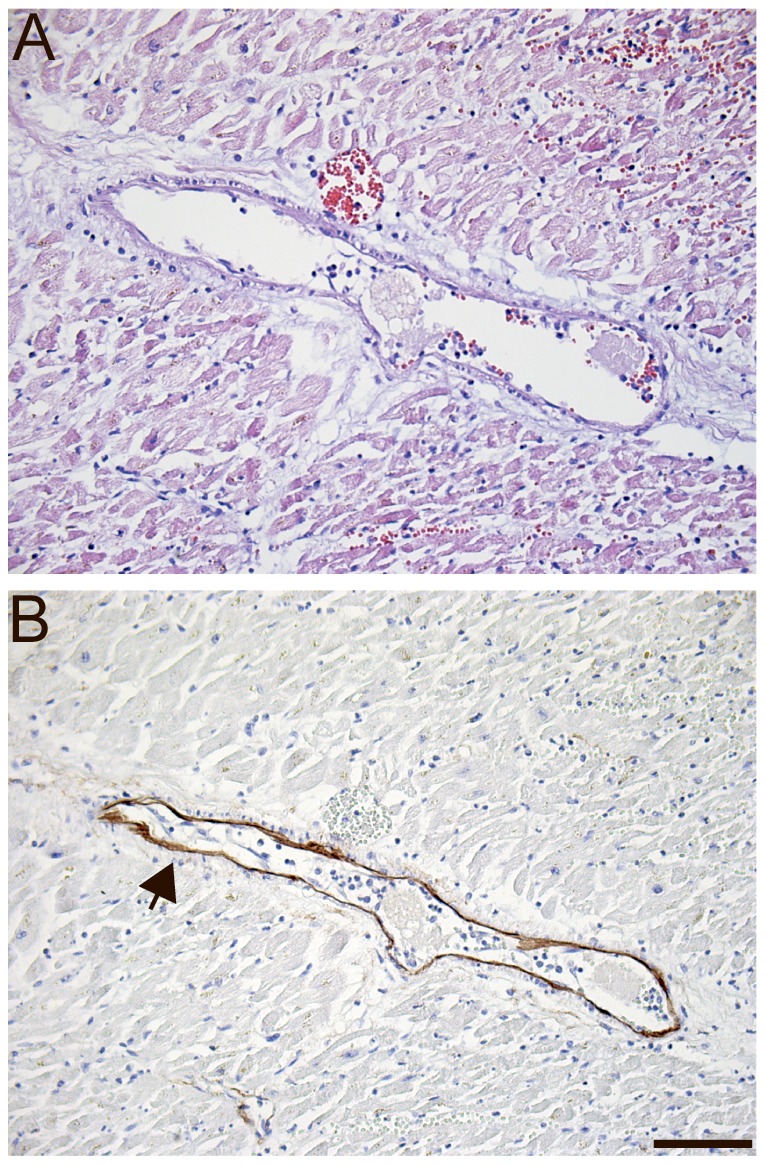
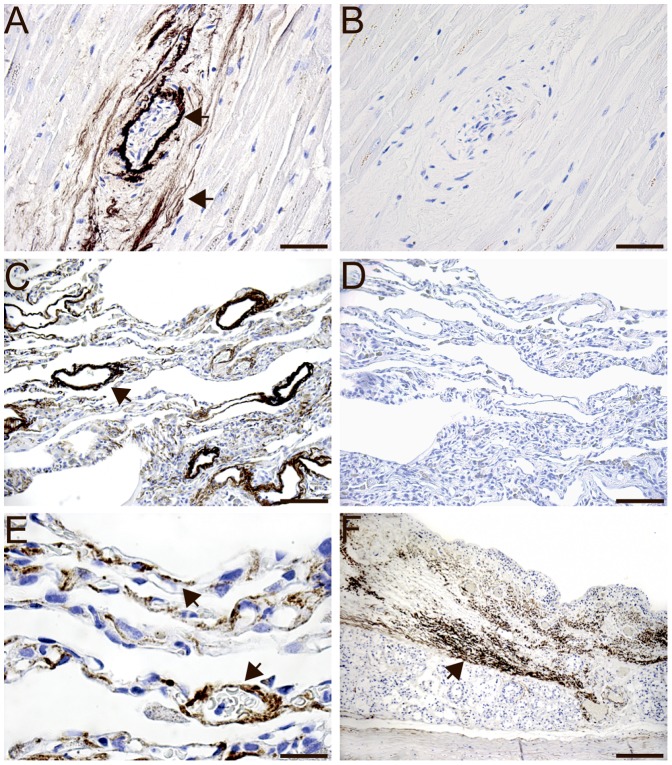
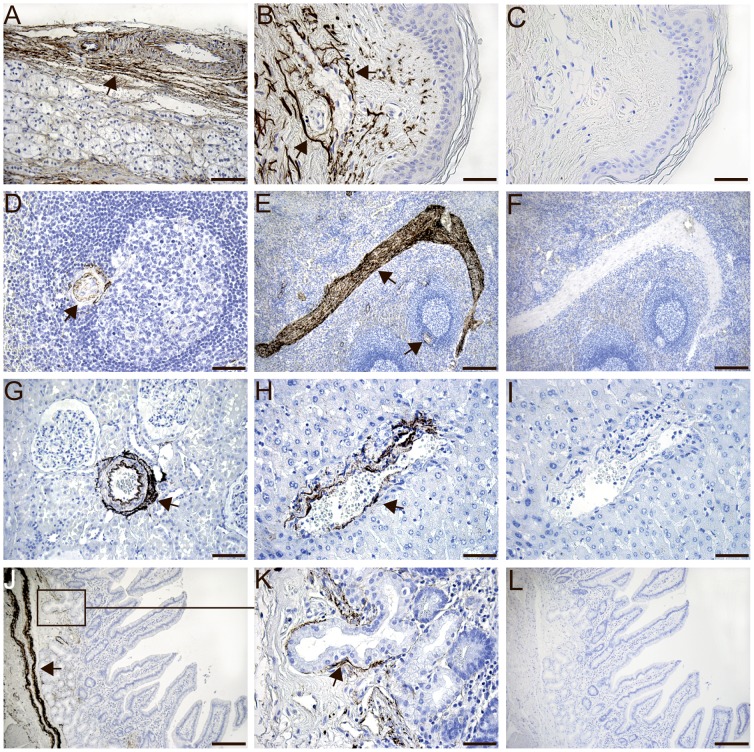
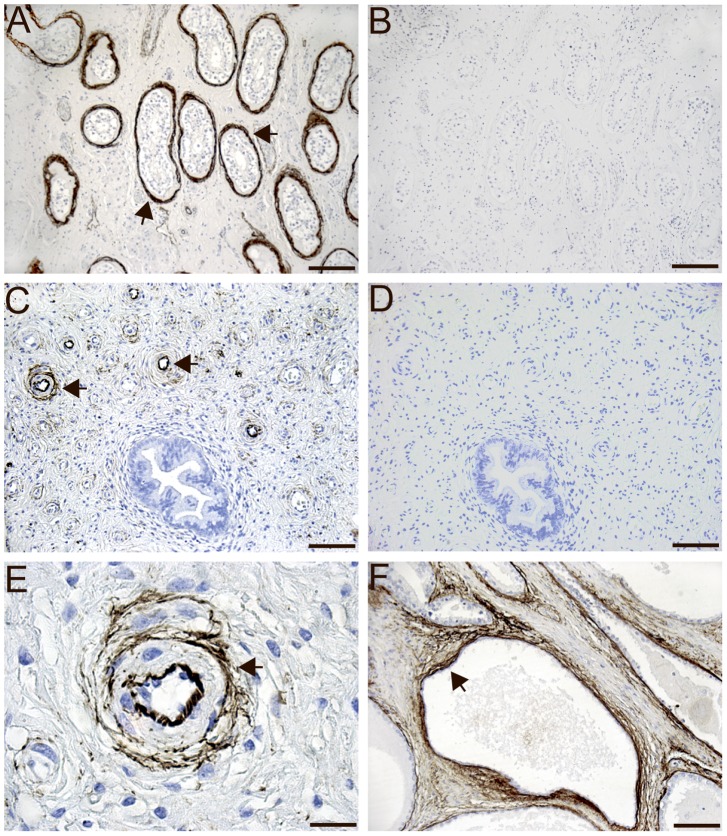
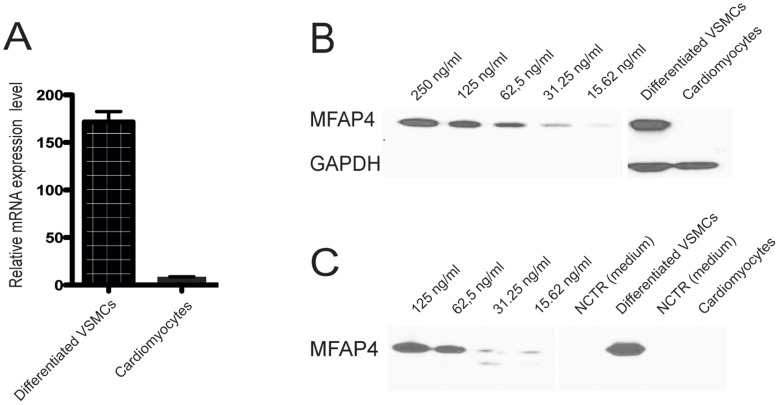
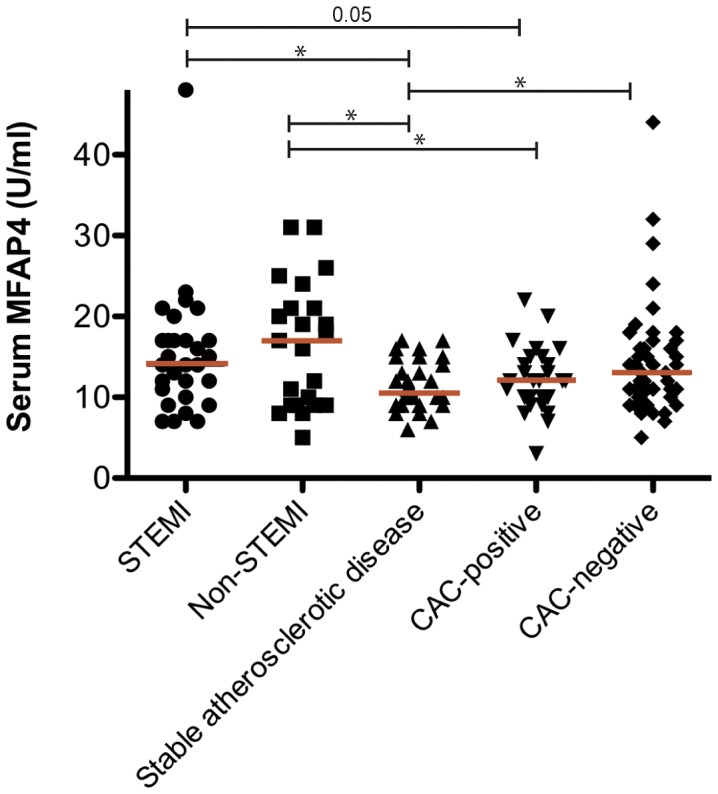
Microfibrillar-associated protein 4 (MFAP4) is located in the extracellular matrix (ECM). We sought to identify tissues with high levels of MFAP4 mRNA and MFAP4 protein expression. Moreover, we aimed to evaluate the significance of MFAP4 as a marker of cardiovascular disease (CVD) and to correlate MFAP4 with other known ECM markers, such as fibulin-1, osteoprotegerin (OPG), and osteopontin (OPN). Quantitative real-time PCR demonstrated that MFAP4 mRNA was more highly expressed in the heart, lung, and intestine than in other elastic tissues. Immunohistochemical studies demonstrated high levels of MFAP4 protein mainly at sites rich in elastic fibers and within blood vessels in all tissues investigated. The AlphaLISA technique was used to determine serum MFAP4 levels in a clinical cohort of 172 patients consisting of 5 matched groups with varying degrees of CVD: 1: patients with ST elevation myocardial infarction (STEMI), 2: patients with non-STEMI, 3: patients destined for vascular surgery because of various atherosclerotic diseases (stable atherosclerotic disease), 4: apparently healthy individuals with documented coronary artery calcification (CAC-positive), and 5: apparently healthy individuals without signs of coronary artery calcification (CAC-negative). Serum MFAP4 levels were significantly lower in patients with stable atherosclerotic disease than CAC-negative individuals (p<0.05). Furthermore, lower serum MFAP4 levels were present in patients with stable atherosclerotic disease compared with STEMI and non-STEMI patients (p<0.05). In patients with stable atherosclerotic disease, positive correlations between MFAP4 and both fibulin-1 (ρ = 0.50; p = 0.0244) and OPG (ρ = 0.62; p = 0.0014) were found. Together, these results indicate that MFAP4 is mainly located in elastic fibers and is highly expressed in blood vessels. The present study suggests that serum MFAP4 varies in groups of patients with different cardiovascular conditions. Further studies are warranted to describe the role of serum MFAP4 as a biomarker of stable atherosclerotic disease.
微纤维相关蛋白 4(MFAP4)位于细胞外基质(ECM)中。我们试图确定具有高 MFAP4 mRNA 和 MFAP4 蛋白表达水平的组织。此外,我们旨在评估 MFAP4 作为心血管疾病(CVD)标志物的意义,并将 MFAP4 与其他已知的 ECM 标志物(如纤维蛋白-1、骨保护素(OPG)和骨桥蛋白(OPN))进行相关性分析。定量实时 PCR 显示,MFAP4 mRNA 在心脏、肺和肠中的表达水平高于其他弹性组织。免疫组织化学研究表明,在所有研究的组织中,MFAP4 蛋白水平较高,主要位于富含弹性纤维的部位和血管内。AlphaLISA 技术用于测定 172 例临床患者队列的血清 MFAP4 水平,该队列由 5 个具有不同 CVD 程度的匹配组组成:1:ST 段抬高型心肌梗死(STEMI)患者,2:非 STEMI 患者,3:因各种动脉粥样硬化疾病(稳定型动脉粥样硬化疾病)而需要血管手术的患者,4:有记录的冠状动脉钙化(CAC-阳性)的看似健康的个体,5:无冠状动脉钙化迹象(CAC-阴性)的看似健康的个体。与 CAC-阴性个体相比,稳定型动脉粥样硬化疾病患者的血清 MFAP4 水平显着降低(p<0.05)。此外,与 STEMI 和非 STEMI 患者相比,稳定型动脉粥样硬化疾病患者的血清 MFAP4 水平较低(p<0.05)。在稳定型动脉粥样硬化疾病患者中,MFAP4 与纤维蛋白-1(ρ=0.50;p=0.0244)和 OPG(ρ=0.62;p=0.0014)之间呈正相关。综上所述,这些结果表明 MFAP4 主要位于弹性纤维中,在血管中高度表达。本研究表明,血清 MFAP4 在具有不同心血管状况的患者组中存在差异。需要进一步研究来描述血清 MFAP4 作为稳定型动脉粥样硬化疾病生物标志物的作用。