Biological Science Laboratories, Kao Corporation, Haga, Tochigi, 321–3497, Japan.
Sci Rep. 2011;1:164. doi: 10.1038/srep00164. Epub 2011 Nov 22.
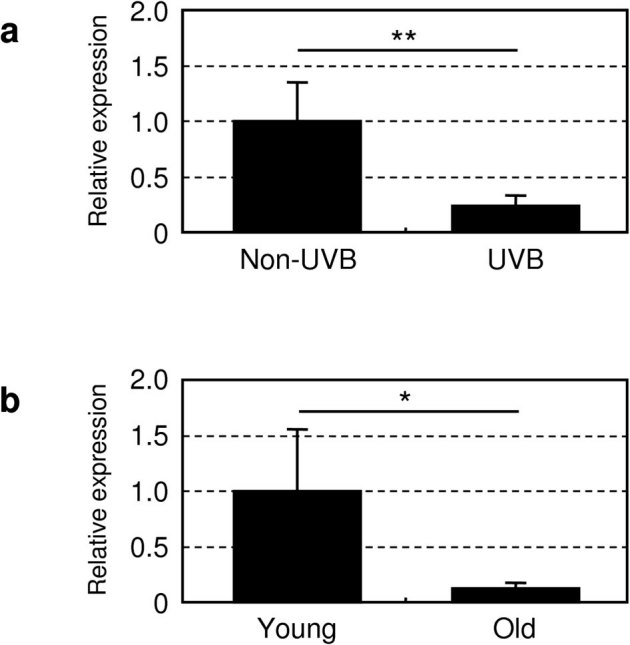
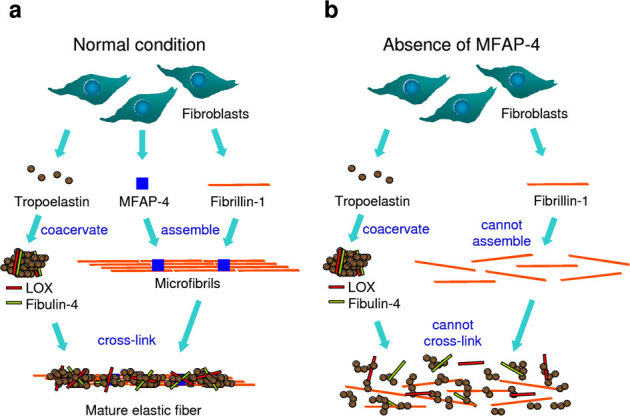
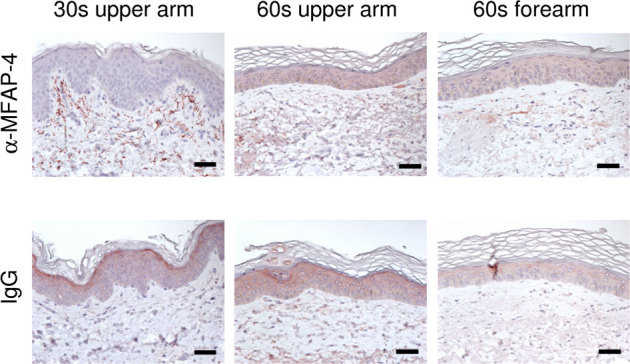
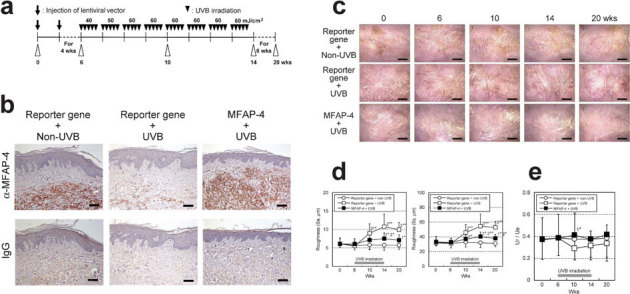
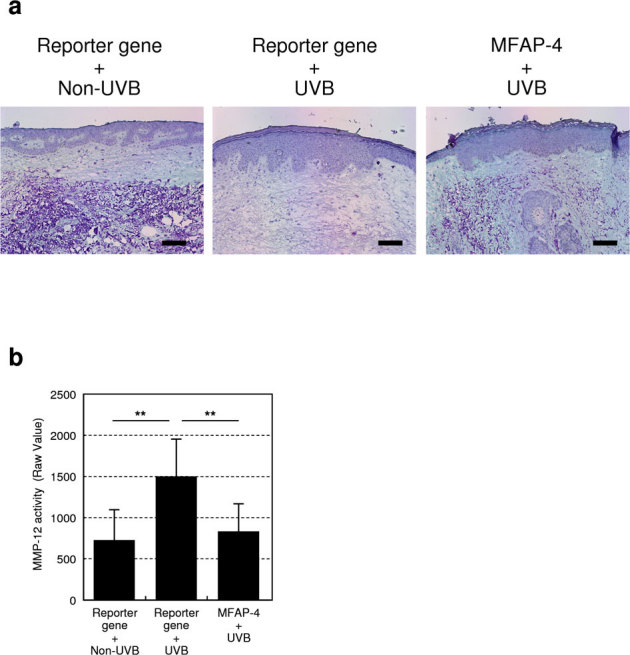
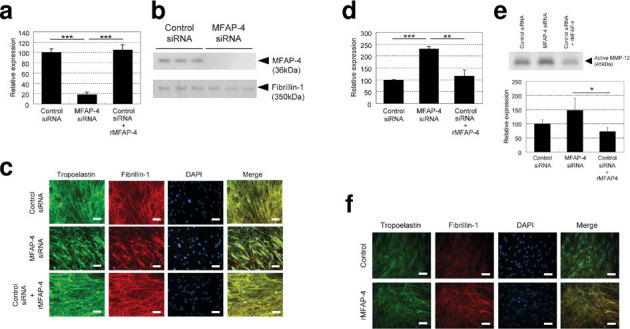
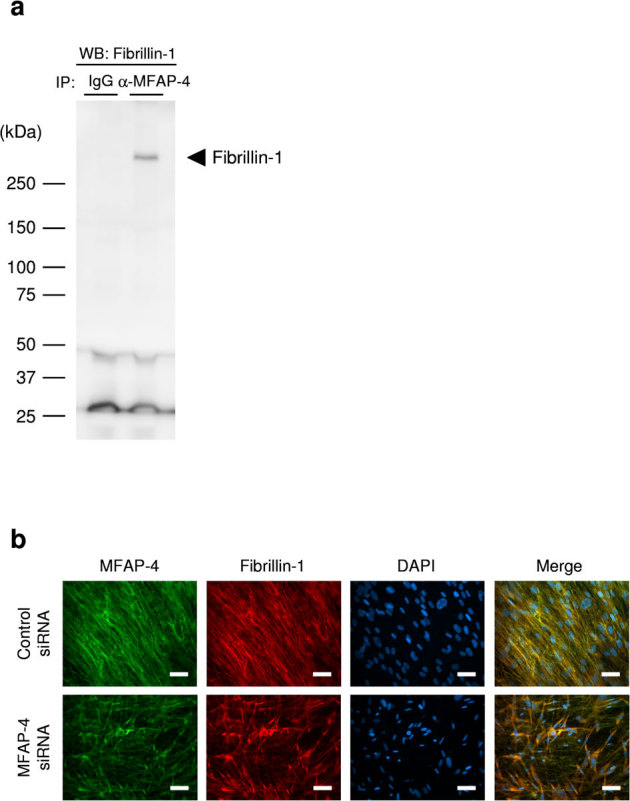
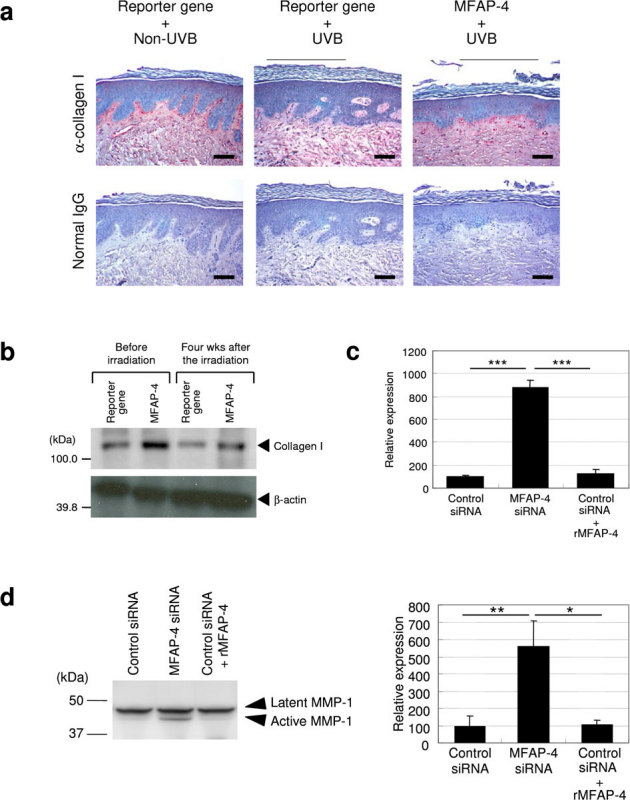
UVB-induced cutaneous photodamage/photoaging is characterized by qualitative and quantitative deterioration in dermal extracellular matrix (ECM) components such as collagen and elastic fibers. Disappearance of microfibrillar-associated protein 4 (MFAP-4), a possible limiting factor for cutaneous elasticity, was documented in photoaged dermis, but its function is poorly understood. To characterize its possible contribution to photoprotection, MFAP-4 expression was either augmented or inhibited in a human skin xenograft photodamage murine model and human fibroblasts. Xenografted skin with enhanced MFAP-4 expression was protected from UVB-induced photodamage/photoaging accompanied by the prevention of ECM degradation and aggravated elasticity. Additionally, remarkably increased or decreased fibrillin-1-based microfibril development was observed when fibroblasts were treated with recombinant MFAP-4 or with MFAP-4-specific siRNA, respectively. Immunoprecipitation analysis confirmed direct interaction between MFAP-4 and fibrillin-1. Taken together, our findings reveal the essential role of MFAP-4 in photoprotection and offer new therapeutic opportunities to prevent skin-associated pathologies.
UVB 诱导的皮肤光损伤/光老化的特征是真皮细胞外基质 (ECM) 成分(如胶原和弹性纤维)的定性和定量恶化。在光老化的真皮中,微纤维相关蛋白 4(MFAP-4)消失,MFAP-4 可能是皮肤弹性的限制因素,但对其功能知之甚少。为了表征其对光保护的可能贡献,在人皮肤异种移植物光损伤鼠模型和人成纤维细胞中增强或抑制 MFAP-4 的表达。表达增强的 MFAP-4 的异种移植物皮肤免受 UVB 诱导的光损伤/光老化的影响,同时防止 ECM 降解和弹性恶化。此外,当用重组 MFAP-4 或 MFAP-4 特异性 siRNA 处理成纤维细胞时,观察到基于原纤维蛋白 1 的微纤维发育显著增加或减少。免疫沉淀分析证实 MFAP-4 与原纤维蛋白 1 之间存在直接相互作用。总之,我们的研究结果揭示了 MFAP-4 在光保护中的重要作用,并为预防与皮肤相关的病理提供了新的治疗机会。