Division of Biochemistry and Innovative Cancer Therapeutics, Chiba Cancer Center Research Institute, Chiba, Japan ; Division of Clinical Oncology Research, Shonan Kamakura General Hospital, Kanagawa, Japan.
Laboratory of Anti-tumor Research, Chiba Cancer Center Research Institute, Chiba, Japan.
PLoS One. 2013 Dec 11;8(12):e82744. doi: 10.1371/journal.pone.0082744. eCollection 2013.
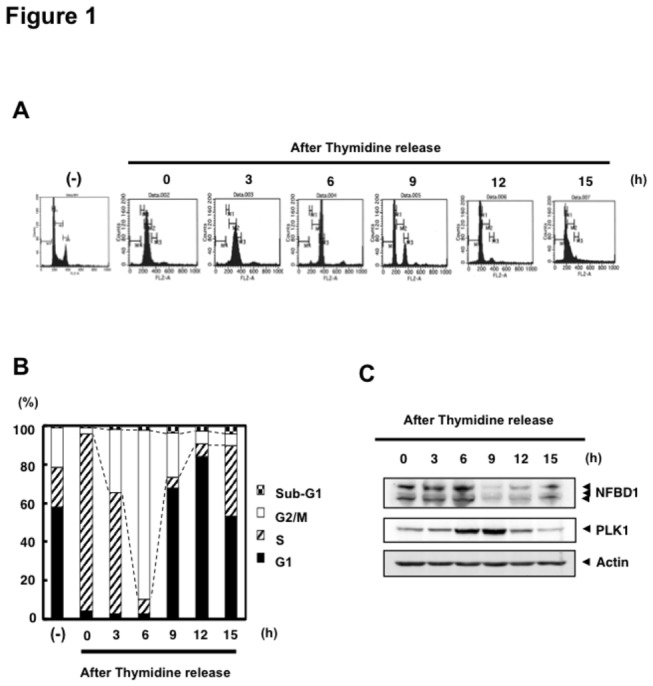
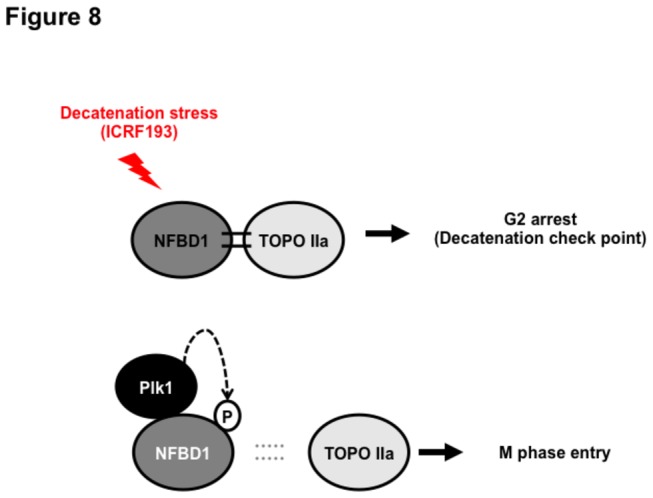
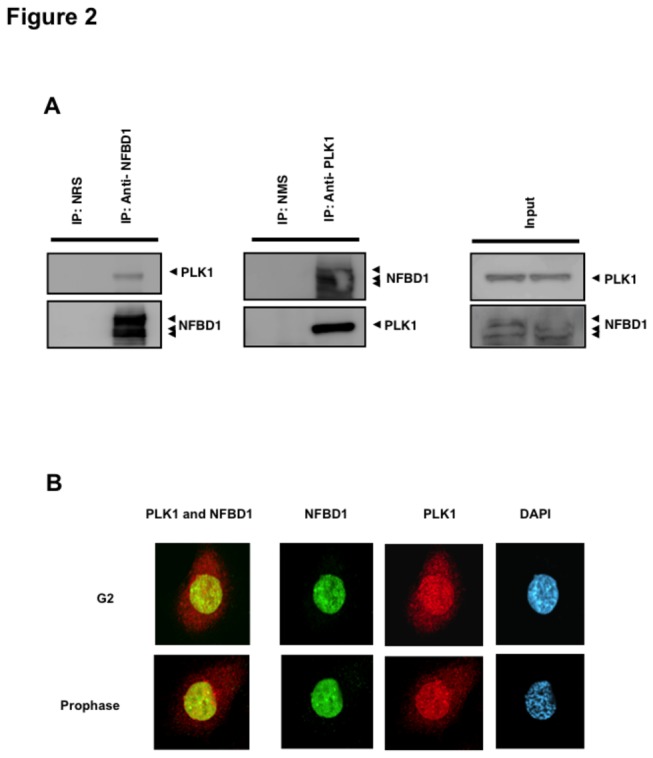
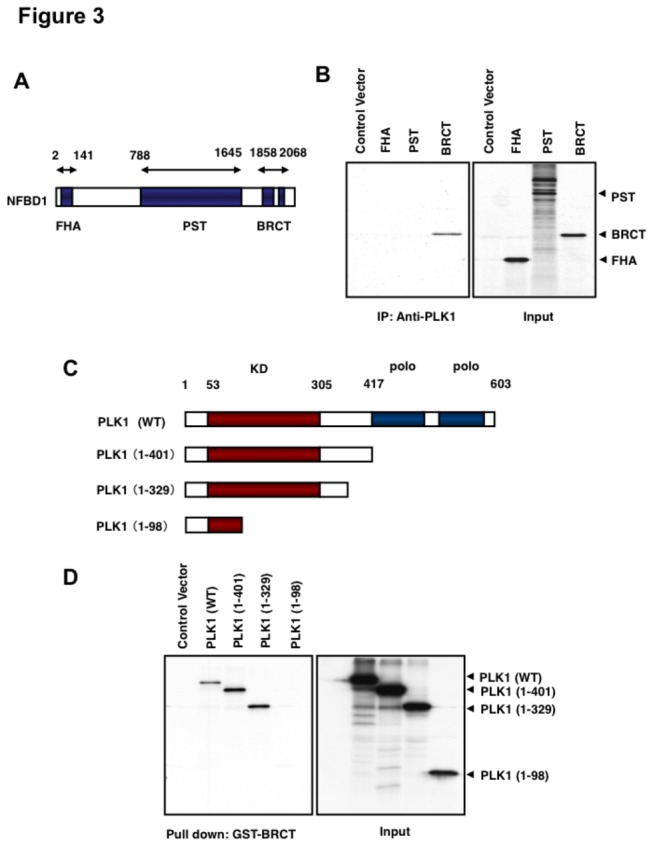
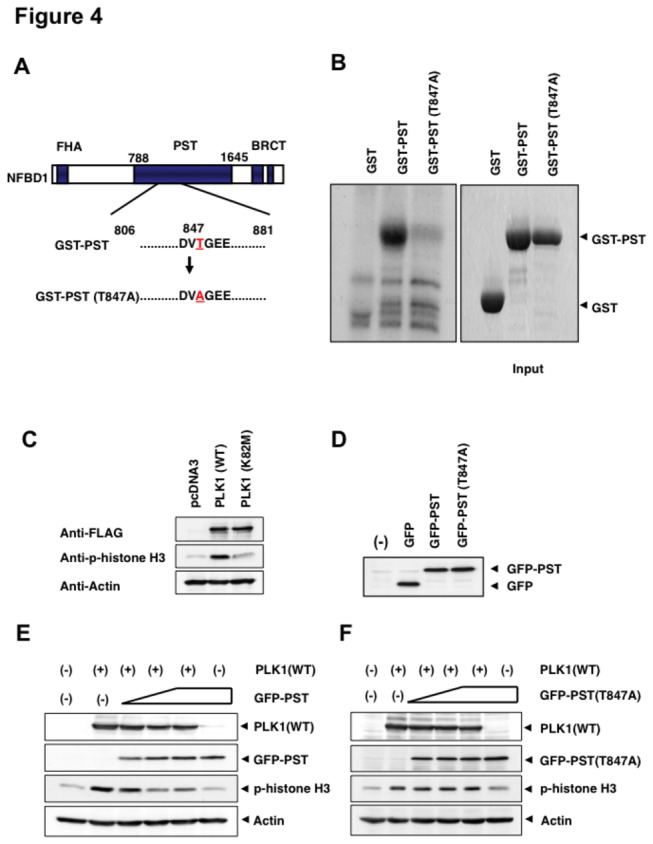
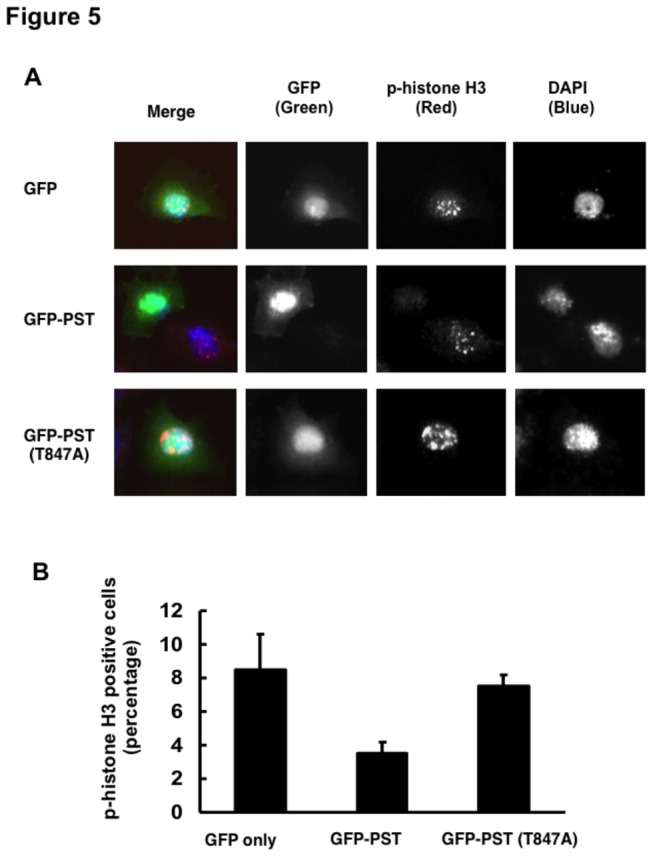
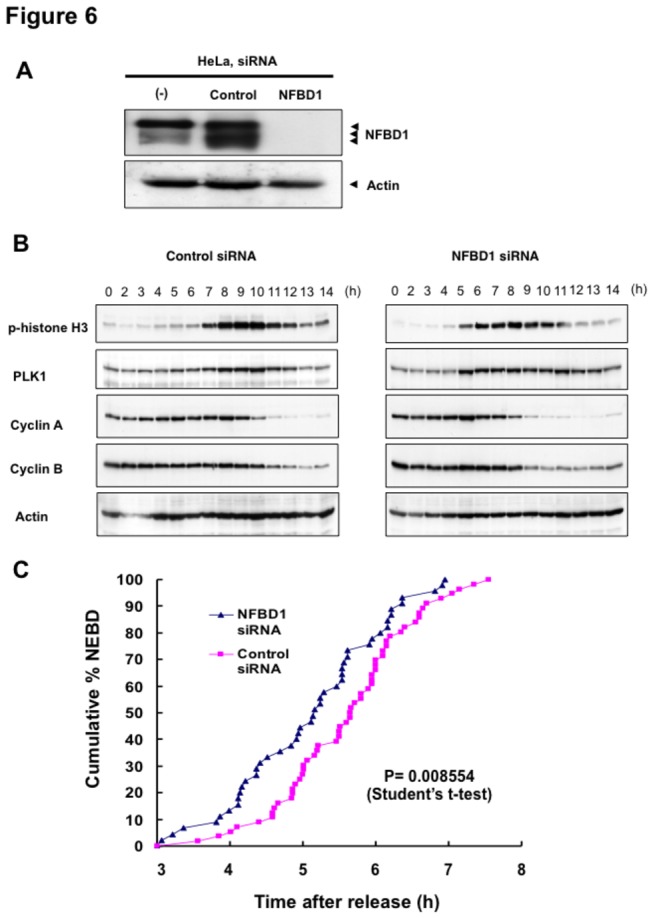
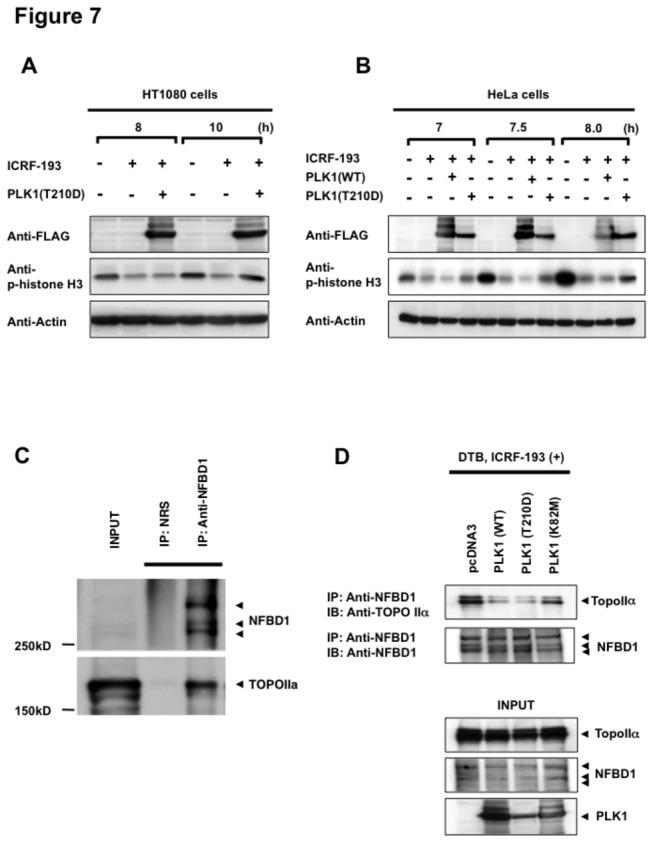
Although it has been established that nuclear factor with BRCT domain 1/ mediator of the DNA damage checkpoint protein 1 (NFBD1/MDC1) is closely involved in DNA damage response, its possible contribution to the regulation of cell- cycle progression is unclear. In the present study, we have found for the first time that NFBD1 is phosphorylated by polo-like kinase 1 (PLK1) and has an important role in G2/M transition. Both NFBD1 and PLK1 are co-expressed in cellular nuclei throughout G2/M transition, and binding assays demonstrated direct interaction between NFBD1 and PLK1. Indeed, in vitro kinase reactions revealed that the PST domain of NFBD1 contains a potential amino acid sequence (845-DVTGEE-850) targeted by PLK1. Furthermore, enforced expression of GFP-PST but not GFP-PST(T847A) where threonine at 847 was substituted by alanine inhibited the phosphorylation levels of histone H3, suggesting a defect of M phase entry. Because PLK1 has been implicated in promoting the G2/M transition, we reasoned that overexpressed PST might serve as a pseudosubstrate for PLK1 and thus interfere with phosphorylation of endogenous PLK1 substrates. Interestingly, siRNA-mediated knockdown of NFBD1 resulted in early M phase entry and accelerated M phase progression, raising the possibility that NFBD1 is a PLK1 substrate for regulating the G2/M transition. Moreover, the constitutive active form of PLK1(T210D) overcame the ICRF-193-induced decatenation checkpoint and inhibited the interaction between NFBD1 and topoisomerase IIα, but kinase-deficient PLK1 did not. Based on these observations, we propose that PLK1-mediated phosphorylation of NFBD1 is involved in the regulation of G2/M transition by recovering a decatenation checkpoint.
虽然已经证实核因子与 BRCT 域 1/DNA 损伤检查点蛋白 1 的介质(NFBD1/MDC1)密切参与 DNA 损伤反应,但它对细胞周期进程的调节的可能贡献尚不清楚。在本研究中,我们首次发现 NFBD1 被 polo 样激酶 1(PLK1)磷酸化,并在 G2/M 转换中具有重要作用。NFBD1 和 PLK1 在整个 G2/M 转换过程中均在细胞核中共表达,结合测定表明 NFBD1 和 PLK1 之间存在直接相互作用。实际上,体外激酶反应表明 NFBD1 的 PST 结构域包含一个潜在的氨基酸序列(845-DVTGEE-850),该序列是 PLK1 的靶标。此外,GFP-PST 的强制表达而不是 GFP-PST(T847A)(其中 847 位的苏氨酸被丙氨酸取代)抑制了组蛋白 H3 的磷酸化水平,表明 M 期进入缺陷。由于 PLK1 已被牵连以促进 G2/M 转换,我们推断过表达的 PST 可能作为 PLK1 的伪底物,并因此干扰内源性 PLK1 底物的磷酸化。有趣的是,NFBD1 的 siRNA 介导的敲低导致早期 M 期进入并加速 M 期进程,这表明 NFBD1 是调节 G2/M 转换的 PLK1 底物。此外,PLK1 的组成型活性形式(T210D)克服了 ICRF-193 诱导的解连环检查点,并抑制了 NFBD1 与拓扑异构酶 IIα 之间的相互作用,但激酶缺陷型 PLK1 则没有。基于这些观察结果,我们提出 PLK1 介导的 NFBD1 磷酸化参与了通过恢复解连环检查点来调节 G2/M 转换。