Honda Akio, Shibata Hiroshi, Hidaka Souta, Gyoba Jiro, Iwaya Yukio, Suzuki Yôiti
Research Institute of Electrical Communication, Tohoku University, 2-1-1, Katahira, Aoba-ku, Sendai, Miyagi 980-8577, Japan Currently at: Department of Welfare Psychology, Tohoku Fukushi University, 1-8-1, Kunimi, Aoba-ku, Sendai, Miyagi 981-8522, Japan; e-mail:
Research Institute of Electrical Communication, Tohoku University, 2-1-1, Katahira, Aoba-ku, Sendai, Miyagi 980-8577, Japan; Department of Psychology, Graduate School of Arts and Letters, Tohoku University, 27-1, Kawauchi, Aoba-ku, Sendai, Miyagi 980-8576, Japan Currently at: Faculty of Medical Science and Welfare, Tohoku Bunka Gakuen University, 6-45-1, Kunimi, Aoba-ku, Sendai, Miyagi 981-0943, Japan; e-mail:
Iperception. 2013 Jun 3;4(4):253-64. doi: 10.1068/i0522. eCollection 2013.
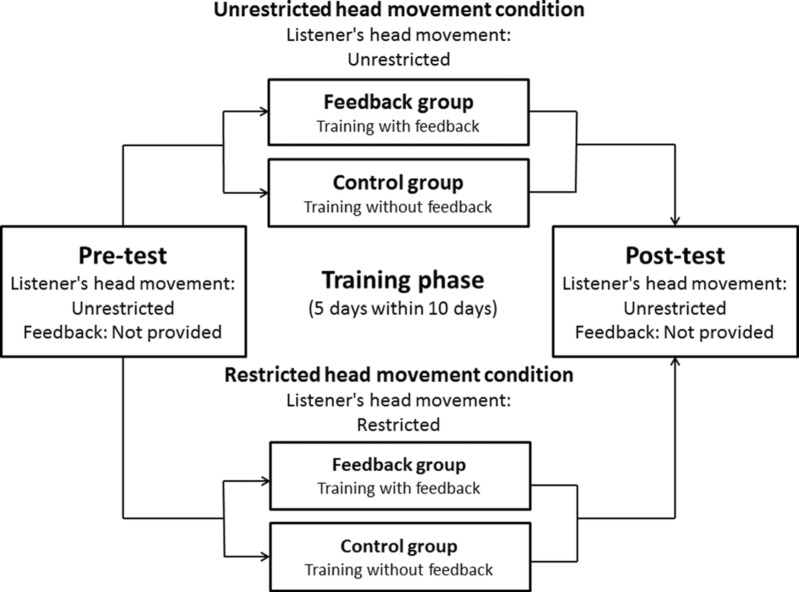
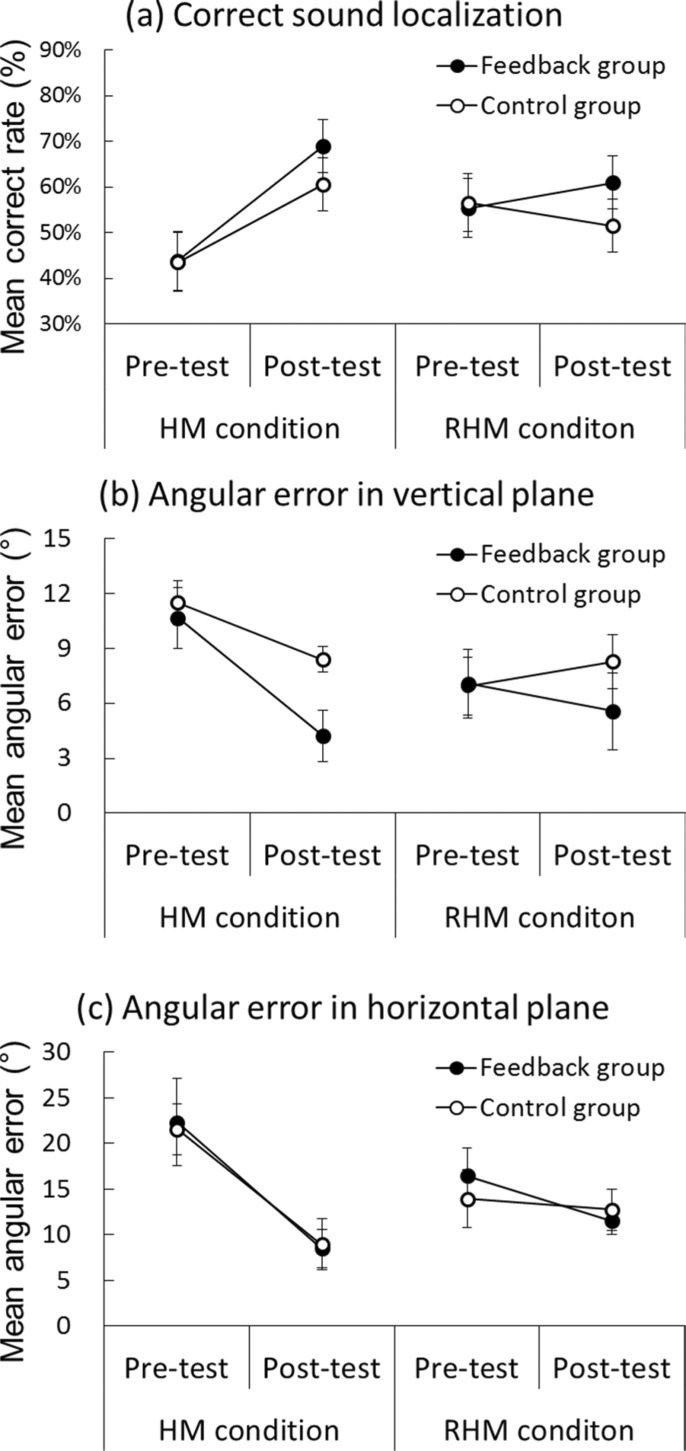
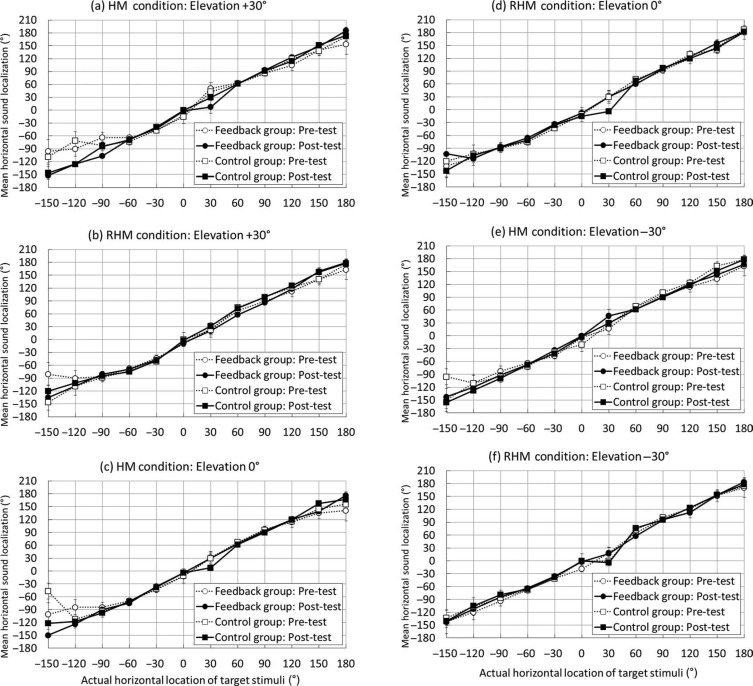
We investigated the effects of listeners' head movements and proprioceptive feedback during sound localization practice on the subsequent accuracy of sound localization performance. The effects were examined under both restricted and unrestricted head movement conditions in the practice stage. In both cases, the participants were divided into two groups: a feedback group performed a sound localization drill with accurate proprioceptive feedback; a control group conducted it without the feedback. Results showed that (1) sound localization practice, while allowing for free head movement, led to improvement in sound localization performance and decreased actual angular errors along the horizontal plane, and that (2) proprioceptive feedback during practice decreased actual angular errors in the vertical plane. Our findings suggest that unrestricted head movement and proprioceptive feedback during sound localization training enhance perceptual motor learning by enabling listeners to use variable auditory cues and proprioceptive information.
我们研究了声音定位练习过程中听众头部运动和本体感觉反馈对后续声音定位表现准确性的影响。在练习阶段,分别在头部运动受限和不受限的条件下对这些影响进行了检验。在这两种情况下,参与者均被分为两组:反馈组在有准确本体感觉反馈的情况下进行声音定位训练;对照组在没有反馈的情况下进行训练。结果表明:(1)声音定位练习在允许自由头部运动时,可提高声音定位表现,并减少沿水平面的实际角度误差;(2)练习过程中的本体感觉反馈可减少垂直平面内的实际角度误差。我们的研究结果表明,声音定位训练过程中不受限的头部运动和本体感觉反馈,通过使听众能够利用可变的听觉线索和本体感觉信息,增强了感知运动学习。