Ceregene, Inc., San Diego, California, USA; RTBioconsultants, Inc., San Diego, California, USA.
Gene Therapy Center, University of North Carolina, Chapel Hill, North Carolina, USA.
Mol Ther. 2014 Mar;22(3):487-497. doi: 10.1038/mt.2013.281. Epub 2013 Dec 20.
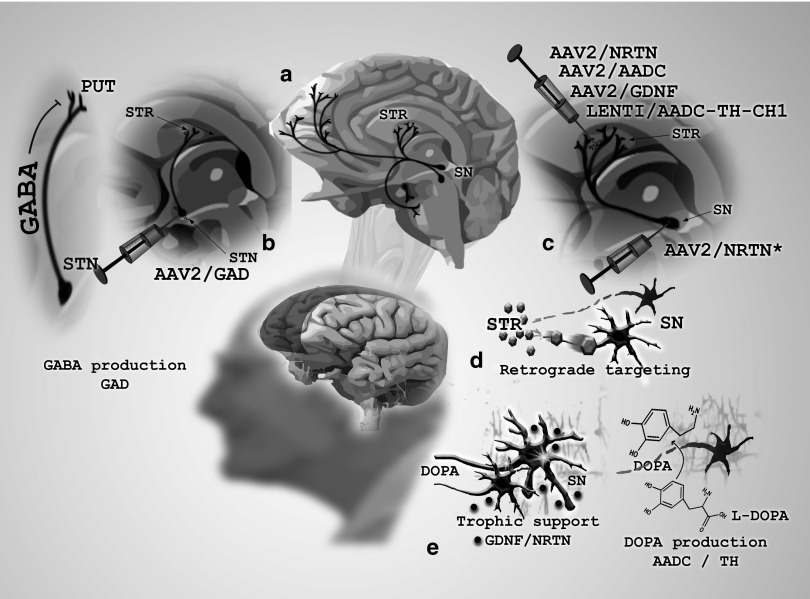
Over the past decade, nine gene therapy clinical trials for Parkinson's disease (PD) have been initiated and completed. Starting with considerable optimism at the initiation of each trial, none of the programs has yet borne sufficiently robust clinical efficacy or found a clear path toward regulatory approval. Despite the immediately disappointing nature of the efficacy outcomes in these trials, the clinical data garnered from the individual studies nonetheless represent tangible and significant progress for the gene therapy field. Collectively, the clinical trials demonstrate that we have overcome the major safety hurdles previously suppressing central nervous system (CNS) gene therapy, for none produced any evidence of untoward risk or harm after administration of various vector-delivery systems. More importantly, these studies also demonstrated controlled, highly persistent generation of biologically active proteins targeted to structures deep in the human brain. Therefore, a renewed, focused emphasis must be placed on advancing clinical efficacy by improving clinical trial design, patient selection and outcome measures, developing more predictive animal models to support clinical testing, carefully performing retrospective analyses, and most importantly moving forward-beyond our past limits.
在过去的十年中,已经启动并完成了九项帕金森病(PD)的基因治疗临床试验。从每个试验开始时的相当乐观出发,这些项目都没有产生足够强大的临床疗效,也没有找到明确的监管批准途径。尽管这些试验的疗效结果令人失望,但从个别研究中获得的临床数据仍然代表了基因治疗领域的切实和重大进展。总的来说,临床试验表明,我们已经克服了以前抑制中枢神经系统(CNS)基因治疗的主要安全障碍,因为在使用各种载体传递系统后,没有任何证据表明存在不良风险或危害。更重要的是,这些研究还证明了可以控制、高度持久地产生针对人类大脑深部结构的生物活性蛋白。因此,必须通过改进临床试验设计、患者选择和结果测量、开发更具预测性的动物模型来支持临床测试、仔细进行回顾性分析,并最重要的是,超越过去的限制,重新集中精力提高临床疗效。