Departamento de Neurobiología Conductual y Cognitiva, Instituto de Neurobiología, Universidad Nacional Autónoma de México Querétaro, México.
Front Integr Neurosci. 2013 Dec 5;7:83. doi: 10.3389/fnint.2013.00083.
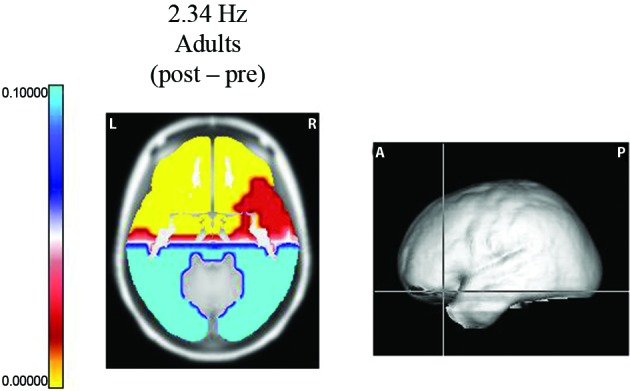
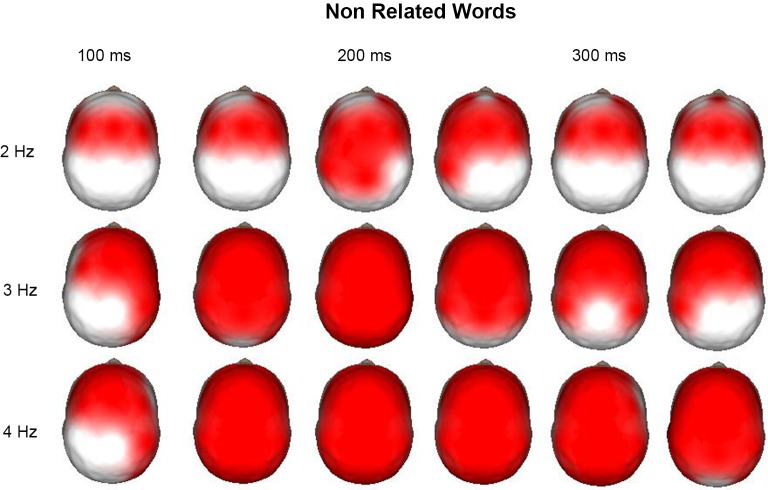
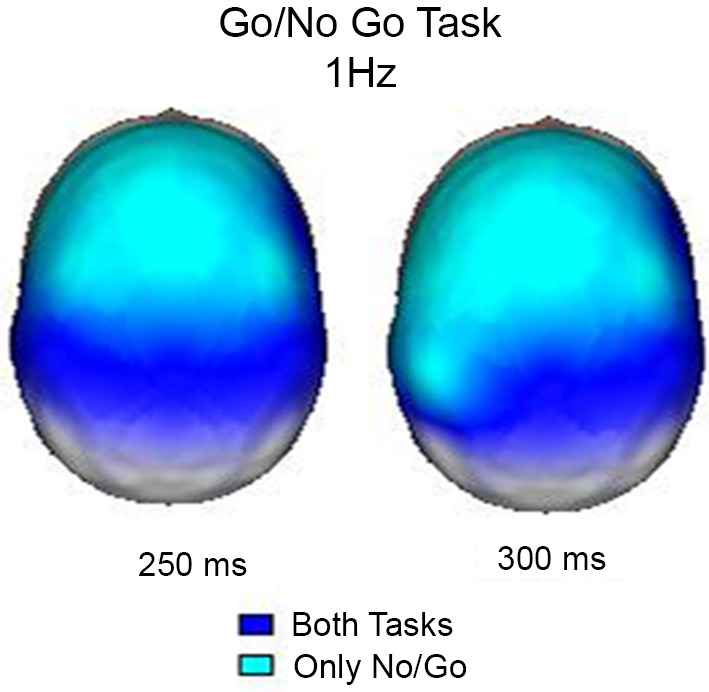
Ample evidence suggests that electroencephalographic (EEG) oscillatory activity is linked to a broad variety of perceptual, sensorimotor, and cognitive operations. However, few studies have investigated the delta band (0.5-3.5 Hz) during different cognitive processes. The aim of this review is to present data and propose the hypothesis that sustained delta oscillations inhibit interferences that may affect the performance of mental tasks, possibly by modulating the activity of those networks that should be inactive to accomplish the task. It is clear that two functionally distinct and potentially competing brain networks can be broadly distinguished by their contrasting roles in attention to the external world vs. the internally directed mentation or concentration. During concentration, EEG delta (1-3.5 Hz) activity increases mainly in frontal leads in different tasks: mental calculation, semantic tasks, and the Sternberg paradigm. This last task is considered a working memory task, but in neural, as well as phenomenological, terms, working memory can be best understood as attention focused on an internal representation. In the Sternberg task, increases in power in the frequencies from 1 to 3.90 Hz in frontal regions are reported. In a Go/No-Go task, power increases at 1 Hz in both conditions were observed during 100-300 ms in central, parietal and temporal regions. However, in the No-Go condition, power increases were also observed in frontal regions, suggesting its participation in the inhibition of the motor response. Increases in delta power were also reported during semantic tasks in children. In conclusion, the results suggest that power increases of delta frequencies during mental tasks are associated with functional cortical deafferentation, or inhibition of the sensory afferences that interfere with internal concentration. These inhibitory oscillations would modulate the activity of those networks that should be inactive to accomplish the task.
大量证据表明,脑电图(EEG)振荡活动与广泛的感知、感觉运动和认知操作相关。然而,很少有研究调查不同认知过程中的 delta 波段(0.5-3.5 Hz)。本综述的目的是呈现数据并提出假设,即持续的 delta 振荡抑制可能影响心理任务表现的干扰,可能通过调节那些应该处于不活跃状态以完成任务的网络的活动来实现。显然,可以通过它们在关注外部世界与内部定向思维或专注之间的对比作用,广泛区分两个功能上截然不同且可能相互竞争的大脑网络。在专注期间,不同任务中前额导联的 EEG delta(1-3.5 Hz)活动增加:心算、语义任务和 Sternberg 范式。最后一个任务被认为是工作记忆任务,但在神经和现象学方面,工作记忆可以被理解为集中注意力于内部表示。在 Sternberg 任务中,报告了前额区域中频率从 1 到 3.90 Hz 的功率增加。在 Go/No-Go 任务中,观察到在中央、顶叶和颞叶区域在 100-300 ms 期间在两种条件下 1 Hz 的功率增加。然而,在 No-Go 条件下,也观察到前额区域的功率增加,表明其参与运动反应的抑制。在儿童的语义任务中也报告了 delta 功率的增加。总之,结果表明,在心理任务中 delta 频率的功率增加与功能皮质去传入或干扰内部专注的感觉传入的抑制有关。这些抑制性振荡将调节那些应该处于不活跃状态以完成任务的网络的活动。