Center for Decision Sciences and Graduate School of Business, Columbia University, New York, New York, United States of America.
Center for Rationality, The Hebrew University of Jerusalem. Jerusalem, Israel.
PLoS One. 2013 Dec 18;8(12):e81521. doi: 10.1371/journal.pone.0081521. eCollection 2013.
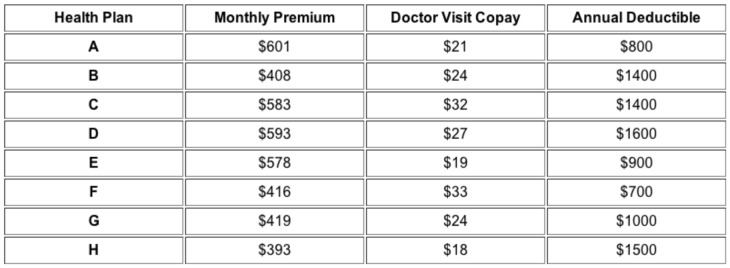
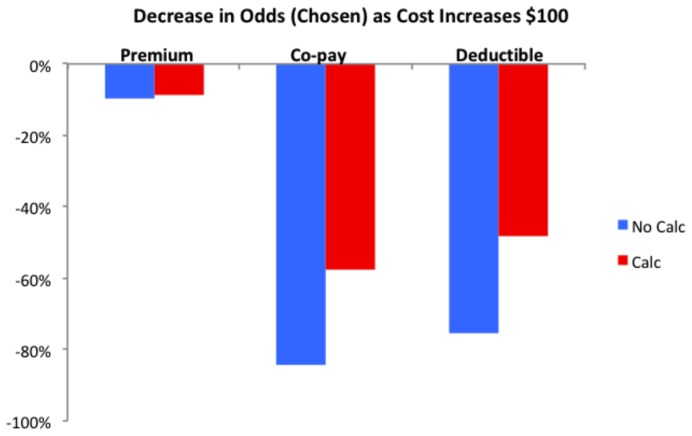
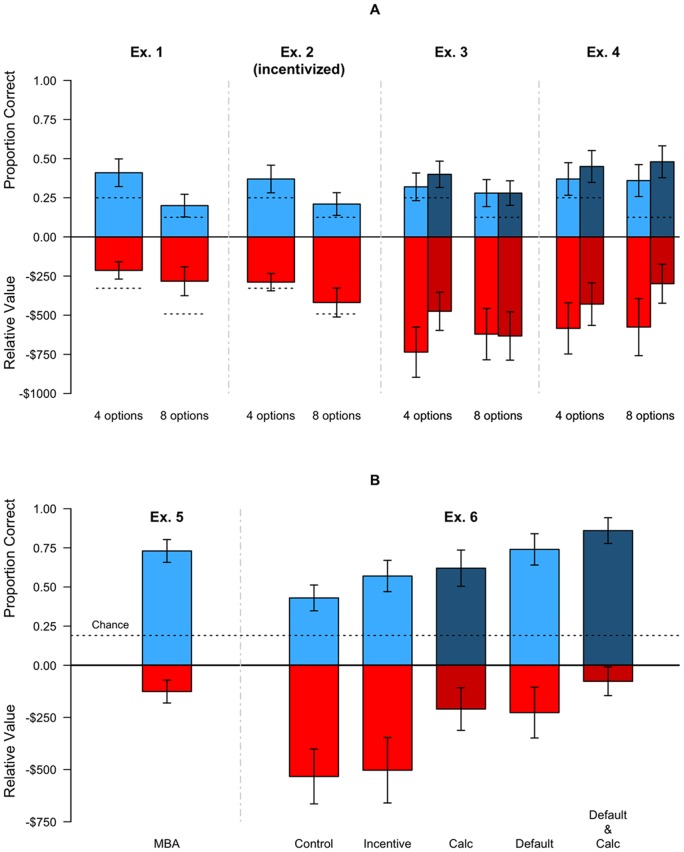
Tens of millions of people are currently choosing health coverage on a state or federal health insurance exchange as part of the Patient Protection and Affordable Care Act. We examine how well people make these choices, how well they think they do, and what can be done to improve these choices. We conducted 6 experiments asking people to choose the most cost-effective policy using websites modeled on current exchanges. Our results suggest there is significant room for improvement. Without interventions, respondents perform at near chance levels and show a significant bias, overweighting out-of-pocket expenses and deductibles. Financial incentives do not improve performance, and decision-makers do not realize that they are performing poorly. However, performance can be improved quite markedly by providing calculation aids, and by choosing a "smart" default. Implementing these psychologically based principles could save purchasers of policies and taxpayers approximately 10 billion dollars every year.
目前,数千万人正在州或联邦医疗保险交易所选择医疗保险,这是《患者保护与平价医疗法案》(Patient Protection and Affordable Care Act)的一部分。我们研究了人们做出这些选择的情况,以及他们认为自己做得如何,以及可以采取哪些措施来改善这些选择。我们进行了 6 项实验,要求人们使用模拟当前交易所的网站选择最具成本效益的政策。我们的研究结果表明,还有很大的改进空间。如果没有干预措施,受访者的表现接近机会水平,并且表现出明显的偏差,对自付费用和免赔额的重视程度过高。经济激励措施并不能提高表现,而且决策者并没有意识到自己表现不佳。然而,通过提供计算辅助工具,并选择“智能”默认选项,可以显著提高表现。实施这些基于心理学的原则可以每年为政策购买者和纳税人节省约 100 亿美元。