Fujiyuki Tomoko, Yoneda Misako, Yasui Fumihiko, Kuraishi Takeshi, Hattori Shosaku, Kwon Hyun-Jeong, Munekata Keisuke, Kiso Yuri, Kida Hiroshi, Kohara Michinori, Kai Chieko
Laboratory Animal Research Center, The Institute of Medical Science, The University of Tokyo, Tokyo, Japan.
Department of Microbiology and Cell Biology, Tokyo Metropolitan Institute of Medical Science, Tokyo, Japan.
PLoS One. 2013 Dec 18;8(12):e83551. doi: 10.1371/journal.pone.0083551. eCollection 2013.
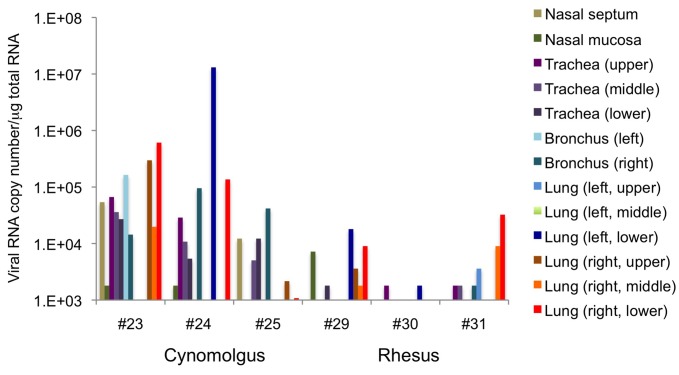
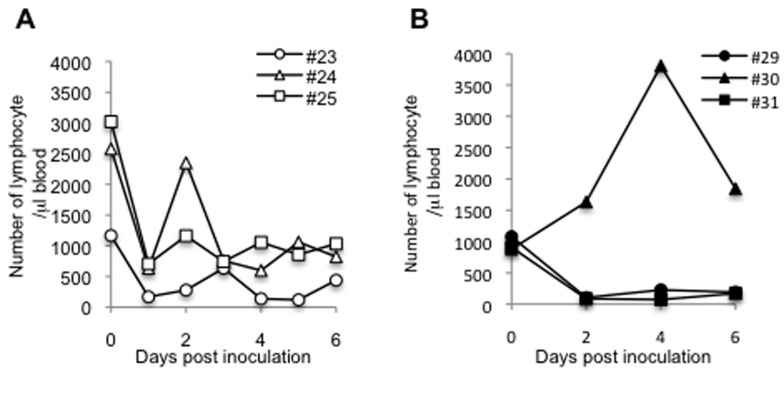
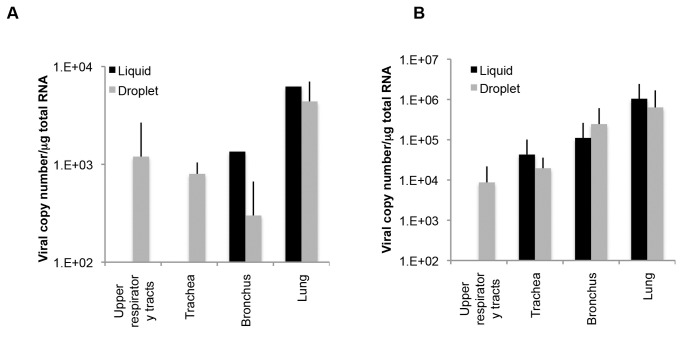
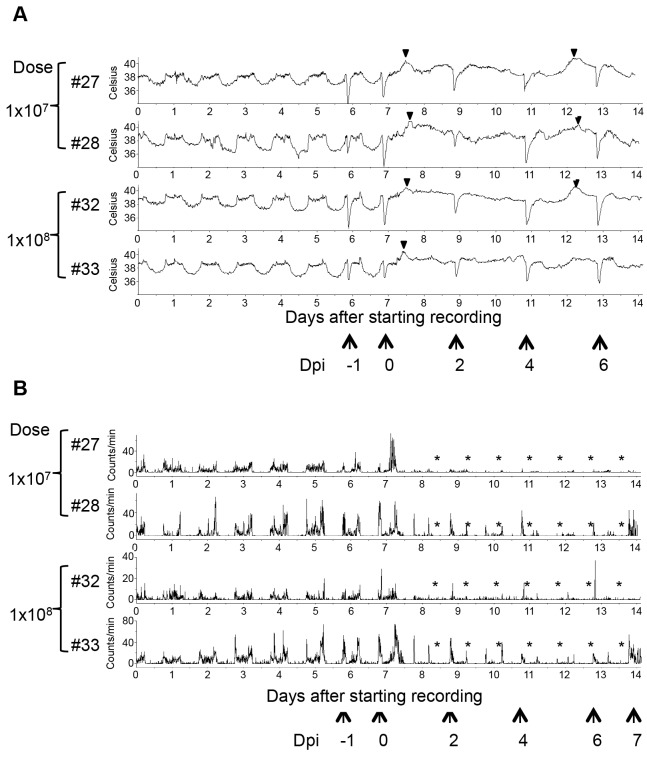
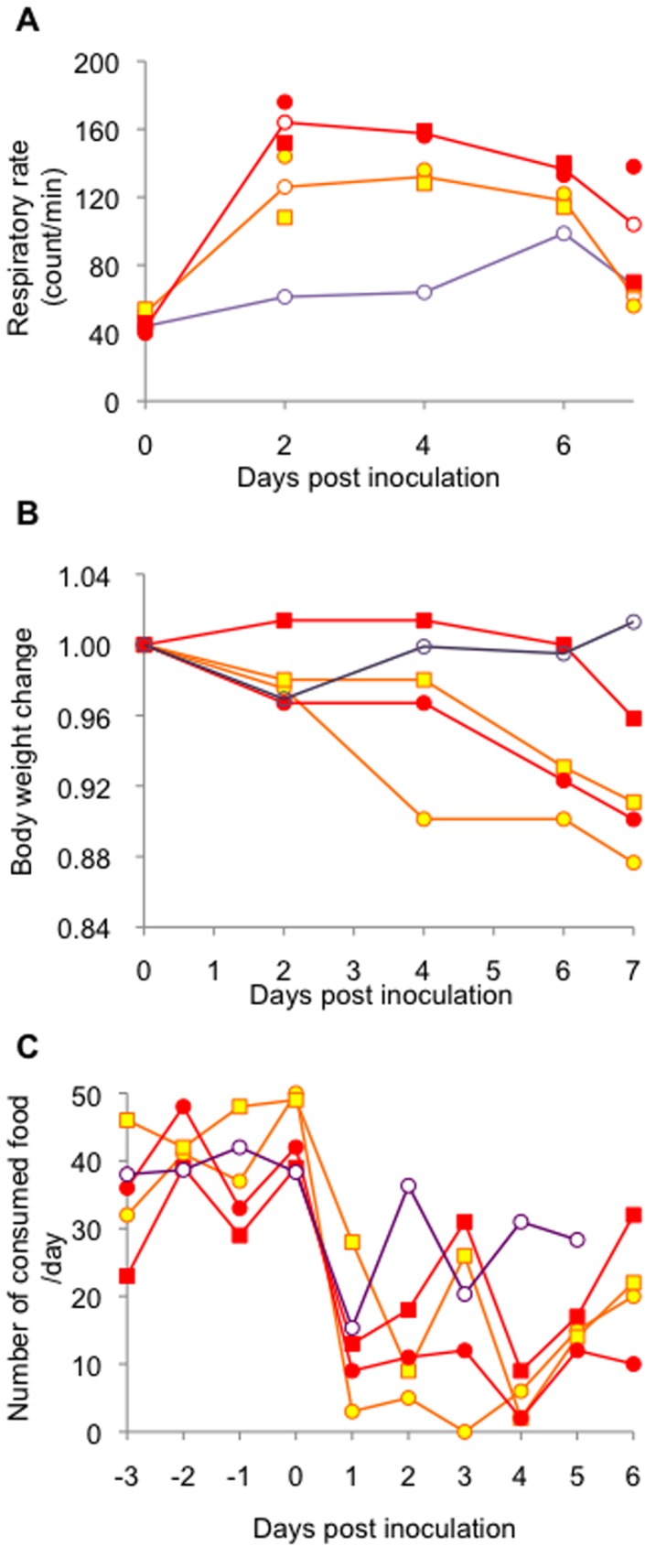
Highly pathogenic avian influenza virus (HPAIV) continues to threaten human health. Non-human primate infection models of human influenza are desired. To establish an animal infection model with more natural transmission and to determine the pathogenicity of HPAIV isolated from a wild water bird in primates, we administered a Japanese isolate of HPAIV (A/whooper swan/Hokkaido/1/2008, H5N1 clade 2.3.2.1) to rhesus and cynomolgus monkeys, in droplet form, via the intratracheal route. Infection of the lower and upper respiratory tracts and viral shedding were observed in both macaques. Inoculation of rhesus monkeys with higher doses of the isolate resulted in stronger clinical symptoms of influenza. Our results demonstrate that HPAIV isolated from a water bird in Japan is pathogenic in monkeys by experimental inoculation, and provide a new method for HPAIV infection of non-human primate hosts, a good animal model for investigation of HPAIV pathogenicity.
高致病性禽流感病毒(HPAIV)持续威胁人类健康。人们期望建立人类流感的非人灵长类动物感染模型。为了建立一种具有更自然传播方式的动物感染模型,并确定从野生水鸟分离出的HPAIV在灵长类动物中的致病性,我们通过气管内途径以液滴形式将一株日本HPAIV分离株(A/大天鹅/北海道/1/2008,H5N1进化分支2.3.2.1)接种给恒河猴和食蟹猴。在两种猕猴中均观察到了上、下呼吸道感染及病毒脱落现象。用更高剂量的该分离株接种恒河猴会导致更严重的流感临床症状。我们的结果表明,通过实验接种,从日本水鸟分离出的HPAIV对猴子具有致病性,并为HPAIV感染非人灵长类宿主提供了一种新方法,该方法是研究HPAIV致病性的良好动物模型。