Department of Influenza, Chinese National Influenza Center, State Key Laboratory for Molecular Virology and Genetic Engineering, National Institute for Viral Disease Control and Prevention, Chinese Center for Disease Control and Prevention, Beijing, China.
PLoS One. 2010 Oct 12;5(10):e13315. doi: 10.1371/journal.pone.0013315.
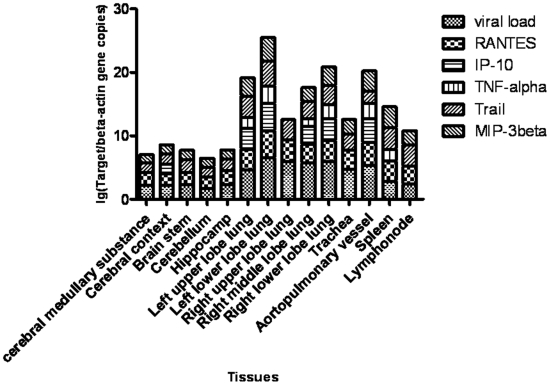
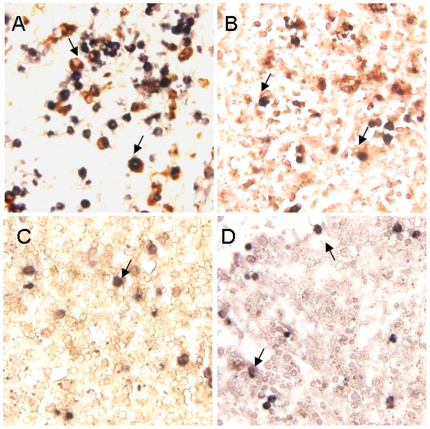
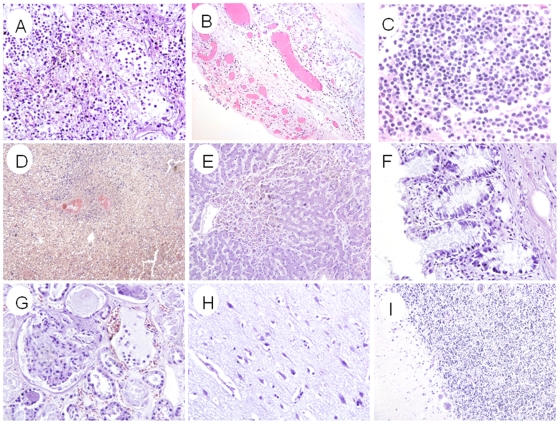
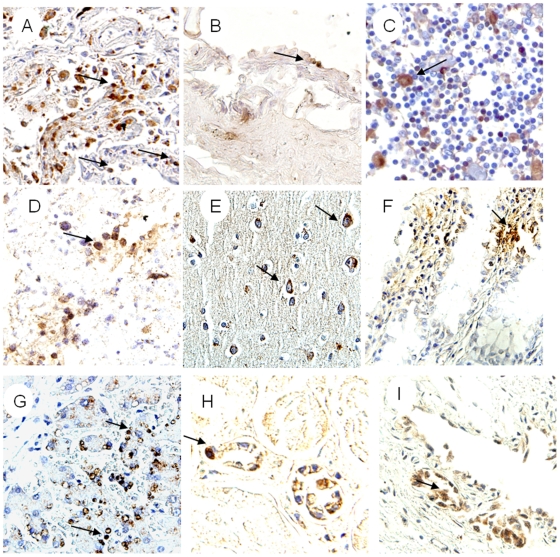
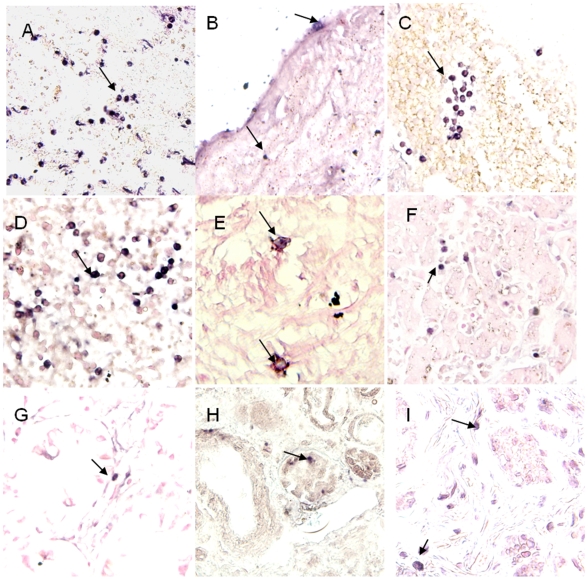
Autopsy studies have shown that human highly pathogenic avian influenza virus (H5N1) can infect multiple human organs other than just the lungs, and that possible causes of organ damage are either viral replication and/or dysregulation of cytokines and chemokines. Uncertainty still exists, partly because of the limited number of cases analysed. In this study, a full autopsy including 5 organ systems was conducted on a confirmed H5N1 human fatal case (male, 42 years old) within 18 hours of death. In addition to the respiratory system (lungs, bronchus and trachea), virus was isolated from cerebral cortex, cerebral medullary substance, cerebellum, brain stem, hippocampus ileum, colon, rectum, ureter, aortopulmonary vessel and lymph-node. Real time RT-PCR evidence showed that matrix and hemagglutinin genes were positive in liver and spleen in addition to positive tissues with virus isolation. Immunohistochemistry and in-situ hybridization stains showed accordant evidence of viral infection with real time RT-PCR except bronchus. Quantitative RT-PCR suggested that a high viral load was associated with increased host responses, though the viral load was significantly different in various organs. Cells of the immunologic system could also be a target for virus infection. Overall, the pathogenesis of HPAI H5N1 virus was associated both with virus replication and with immunopathologic lesions. In addition, immune cells cannot be excluded from playing a role in dissemination of the virus in vivo.
尸检研究表明,人类高致病性禽流感病毒(H5N1)除了肺部之外,还可以感染多个人体器官,导致器官损伤的可能原因是病毒复制和/或细胞因子和趋化因子的失调。由于分析的病例数量有限,目前仍存在不确定性。在这项研究中,对一名确诊的 H5N1 人类致死病例(男性,42 岁)进行了全面尸检,包括 5 个器官系统,在死亡后 18 小时内进行。除了呼吸系统(肺、支气管和气管)外,病毒还从大脑皮层、脑髓质、小脑、脑干、回肠、结肠、直肠、输尿管、肺动脉和淋巴结中分离出来。实时 RT-PCR 证据表明,除了具有病毒分离的阳性组织外,肝脏和脾脏中的基质和血凝素基因也呈阳性。免疫组织化学和原位杂交染色显示,除了支气管外,与实时 RT-PCR 检测到的病毒感染一致。定量 RT-PCR 表明,高病毒载量与宿主反应增加有关,但在不同器官中病毒载量存在显著差异。免疫系统的细胞也可能是病毒感染的靶标。总的来说,高致病性禽流感病毒 H5N1 的发病机制与病毒复制和免疫病理损伤有关。此外,免疫细胞不能排除在病毒体内传播中发挥作用。