Bell Adrian Viliami, Hinde Katie, Newson Lesley
Department of Anthropology, University of Utah, Salt Lake City, Utah, United States of America.
Department of Human Evolutionary Biology, Harvard University, Cambridge, Massachussetts, United States of America ; Brain, Mind, and Behavior Unit, California National Primate Research Center, University of California Davis, Davis, California, United States of America.
PLoS One. 2013 Dec 18;8(12):e83667. doi: 10.1371/journal.pone.0083667. eCollection 2013.
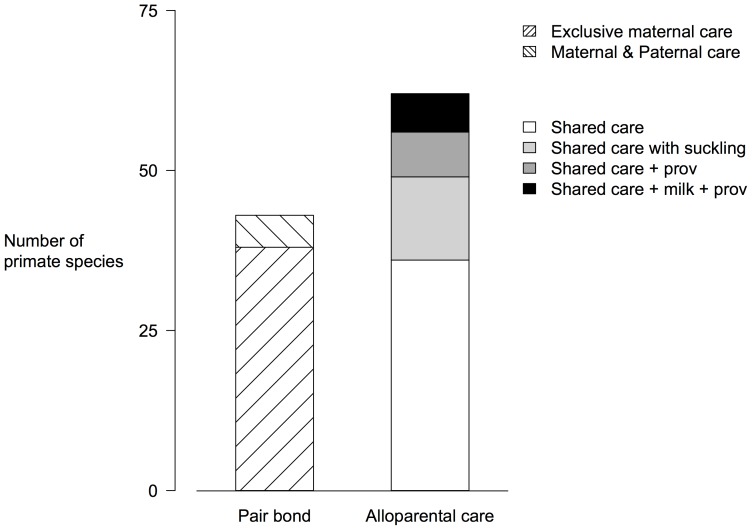
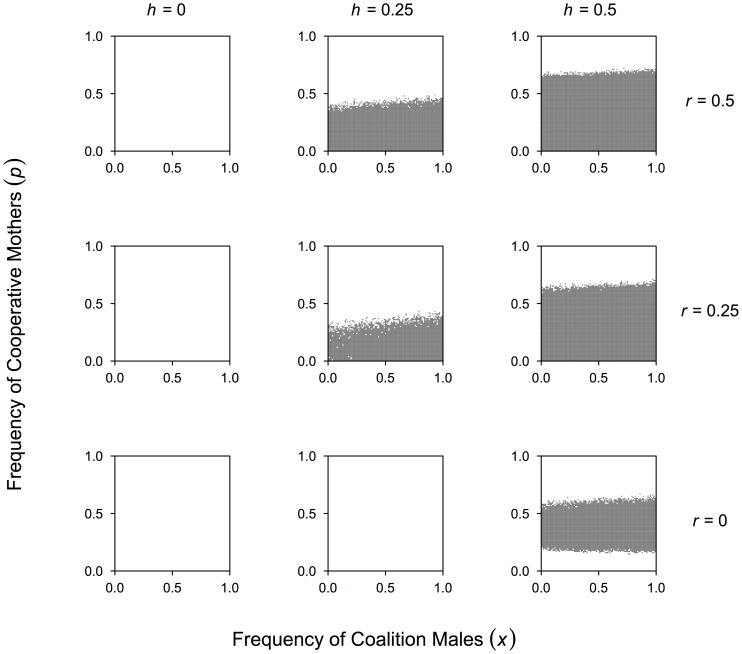
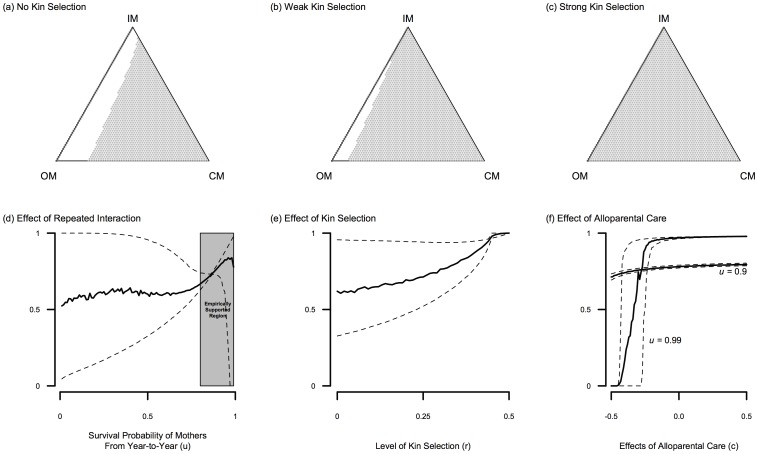
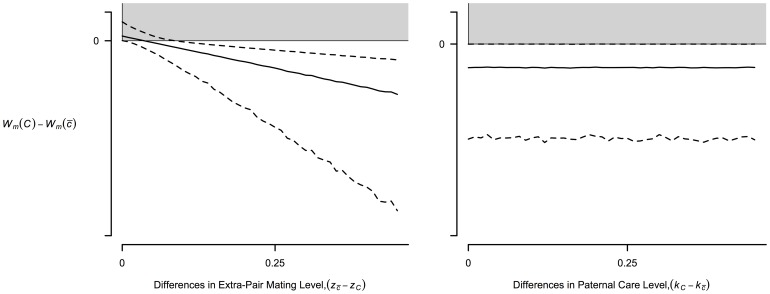
Derived aspects of our human life history, such as short interbirth intervals and altricial newborns, have been attributed to male provisioning of nutrient-rich meat within monogamous relationships. However, many primatologists and anthropologists have questioned the relative importance of pair-bonding and biparental care, pointing to evidence that cooperative breeding better characterizes human reproductive and child-care relationships. We present a mathematical model with empirically-informed parameter ranges showing that natural selection favors cooperation among mothers over a wide range of conditions. In contrast, our analysis provides a far more narrow range of support for selection favoring male coalition-based monogamy over more promiscuous independent males, suggesting that provisioning within monogamous relationships may fall short of explaining the evolution of Homo life history. Rather, broader cooperative networks within and between the sexes provide the primary basis for our unique life history.
人类生活史的衍生特征,比如生育间隔短和新生儿发育不全,一直被归因于在一夫一妻制关系中男性提供营养丰富的肉类。然而,许多灵长类动物学家和人类学家对配偶关系和双亲照料的相对重要性提出了质疑,指出有证据表明合作繁殖更能体现人类的生殖和育儿关系。我们提出了一个具有基于经验的参数范围的数学模型,表明自然选择在广泛的条件下有利于母亲之间的合作。相比之下,我们的分析对支持基于男性联盟的一夫一妻制而非更滥交的独立雄性的选择提供的支持范围要窄得多,这表明一夫一妻制关系中的供养可能不足以解释人类生活史的演变。相反,性别内部和性别之间更广泛的合作网络为我们独特的生活史提供了主要基础。