Eneljung Tove, Tengvall Sara, Jirholt Pernilla, Henningsson Louise, Holmdahl Rikard, Gustafsson Kenth, Gjertsson Inger
Department of Rheumatology and Inflammatory Research, University of Gothenburg, P.O. Box 480, 405 30 Gothenburg, Sweden.
Medical Inflammation Research, Karolinska Institute, 171 77 Stockholm, Sweden.
Clin Dev Immunol. 2013;2013:345092. doi: 10.1155/2013/345092. Epub 2013 Nov 26.
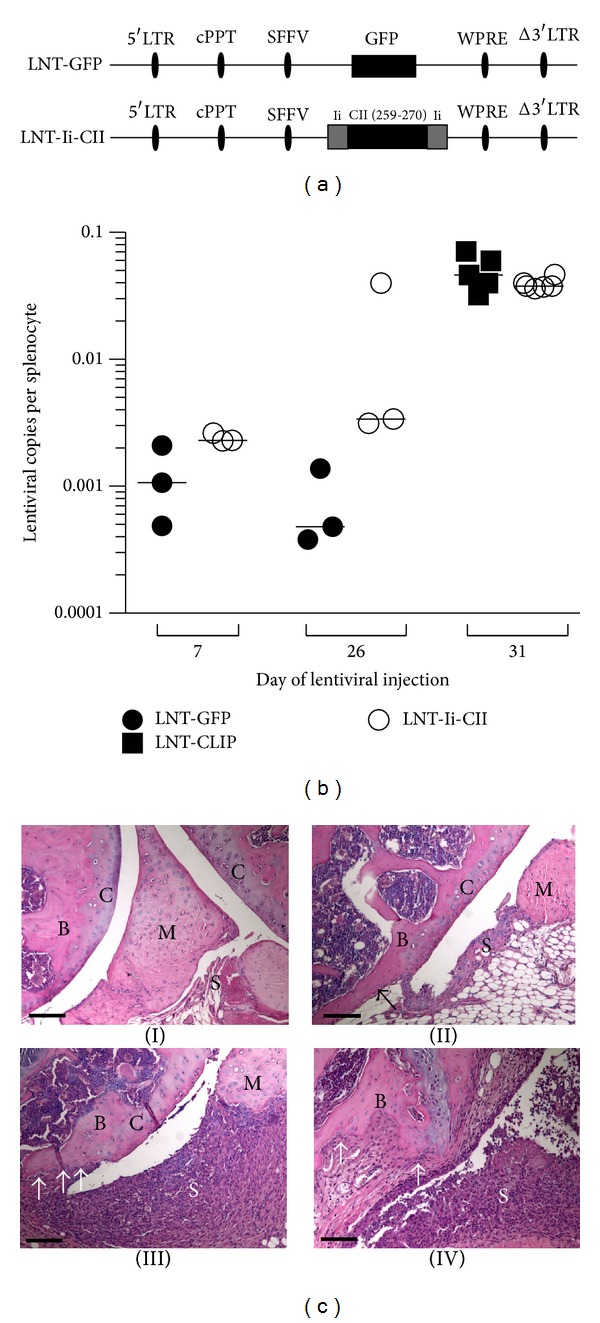
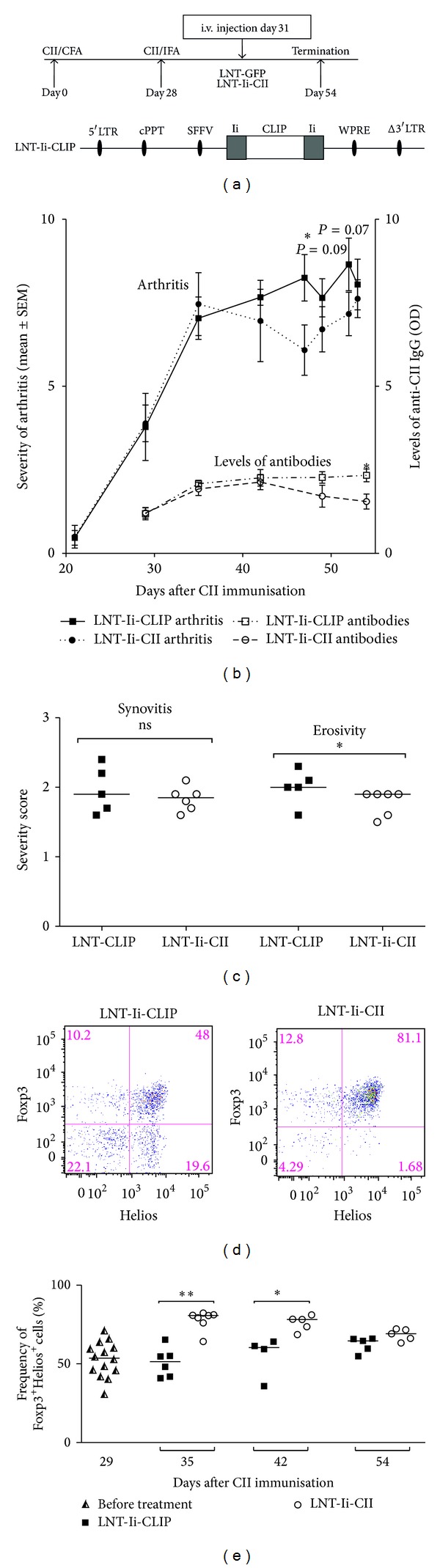
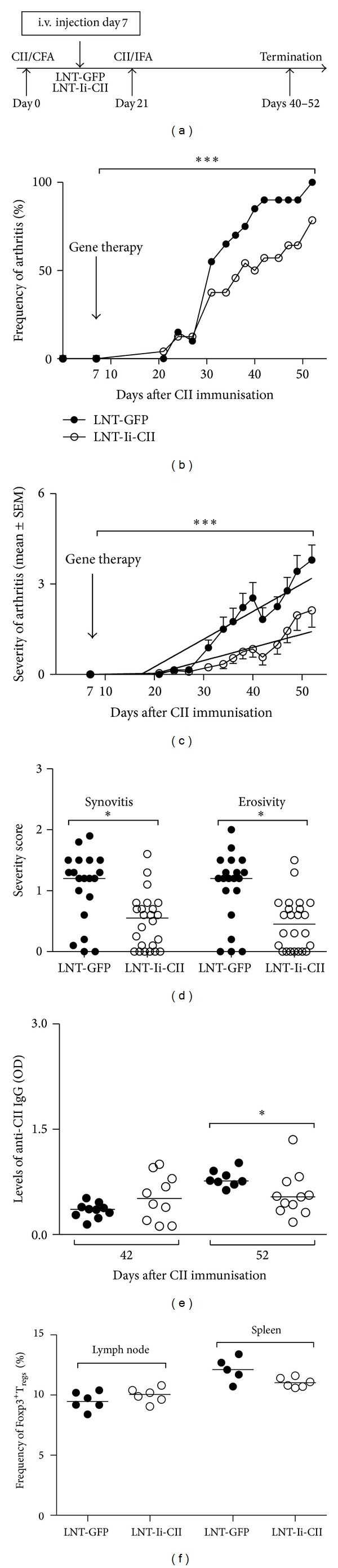
Reestablishment of tolerance induction in rheumatoid arthritis (RA) would be an optimal treatment with few, if any, side effects. However, to develop such a treatment further insights in the immunological mechanisms governing tolerance are needed. We have developed a model of antigen-specific tolerance in collagen type II (CII) induced arthritis (CIA) using lentivirus-based gene therapy. The immunodominant epitope of CII was inserted into a lentivirus vector to achieve expression on the MHC class II molecule and the lentiviral particles were subsequently intravenously injected at different time points during CIA. Injection of lentiviral particles in early phases of CIA, that is, at day 7 or day 26 after CII immunisation, partially prevented development of arthritis, decreased the serum levels of CII-specific IgG antibodies, and enhanced the suppressive function of CII-specific T regulatory cells. When lentiviral particles were injected during manifest arthritis, that is, at day 31 after CII immunisation, the severity of arthritis progression was ameliorated, the levels of CII-specific IgG antibodies decreased and the proportion of T regulatory cells increased. Thus, antigen-specific gene therapy is effective when administered throughout the inflammatory course of arthritis and offers a good model for investigation of the basic mechanisms during tolerance in CIA.
在类风湿性关节炎(RA)中重新建立耐受性诱导将是一种副作用极少(如果有的话)的理想治疗方法。然而,要开发这样一种治疗方法,需要对控制耐受性的免疫机制有更深入的了解。我们利用基于慢病毒的基因疗法,建立了II型胶原(CII)诱导性关节炎(CIA)中的抗原特异性耐受模型。将CII的免疫显性表位插入慢病毒载体,以实现在MHC II类分子上的表达,随后在CIA期间的不同时间点静脉注射慢病毒颗粒。在CIA的早期阶段,即在CII免疫后第7天或第26天注射慢病毒颗粒,可部分预防关节炎的发展,降低CII特异性IgG抗体的血清水平,并增强CII特异性调节性T细胞的抑制功能。当在明显关节炎期间,即在CII免疫后第31天注射慢病毒颗粒时,关节炎进展的严重程度得到改善,CII特异性IgG抗体水平降低,调节性T细胞比例增加。因此,抗原特异性基因疗法在关节炎的整个炎症过程中给药时是有效的,并为研究CIA耐受性的基本机制提供了一个良好的模型。