Talei Daryush, Valdiani Alireza, Maziah Mahmood, Sagineedu Sreenivasa Rao, Saad Mohd Said
Medicinal Plant Research Center, Shahed University, Tehran 33191 18651, Iran ; Department of Cell and Molecular Biology, Faculty of Biotechnology and Biomolecular Sciences, Universiti Putra Malaysia (UPM), 43400 Serdang, Selangor, Malaysia.
Department of Biochemistry, Faculty of Biotechnology and Biomolecular Sciences, Universiti Putra Malaysia (UPM), 43400 Serdang, Selangor, Malaysia.
Biomed Res Int. 2013;2013:319047. doi: 10.1155/2013/319047. Epub 2013 Nov 28.
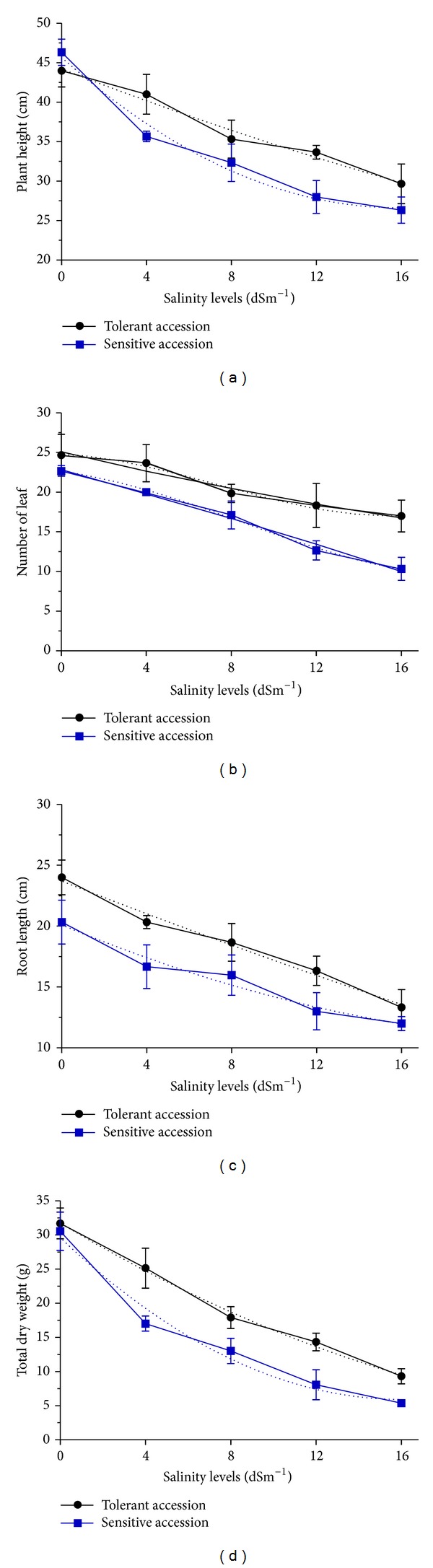
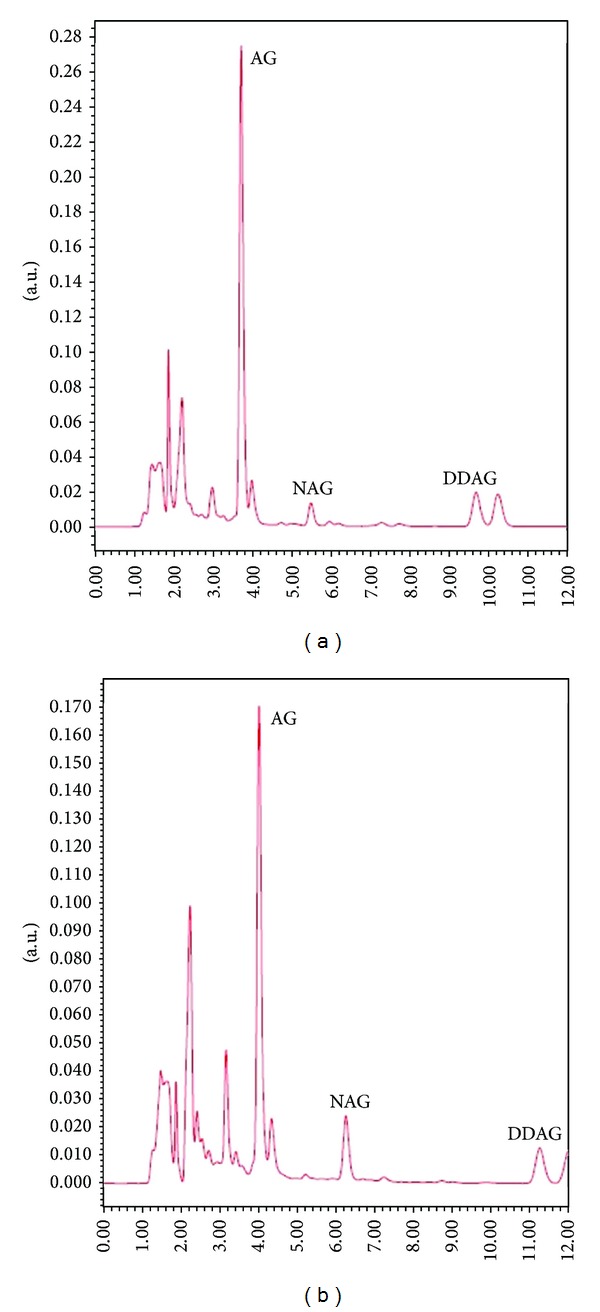
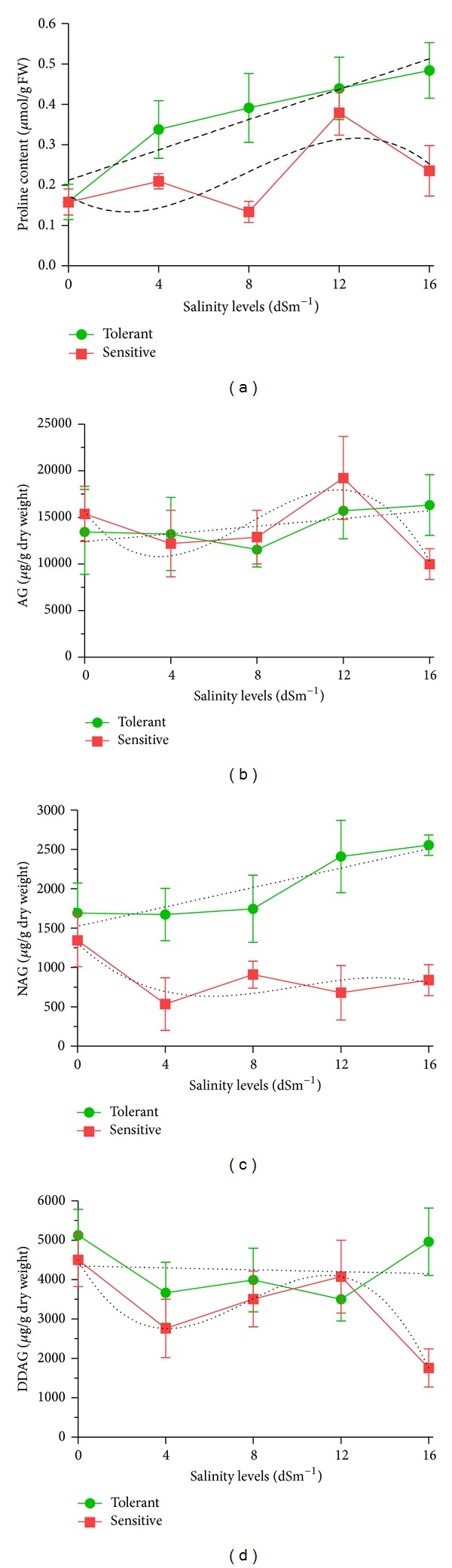
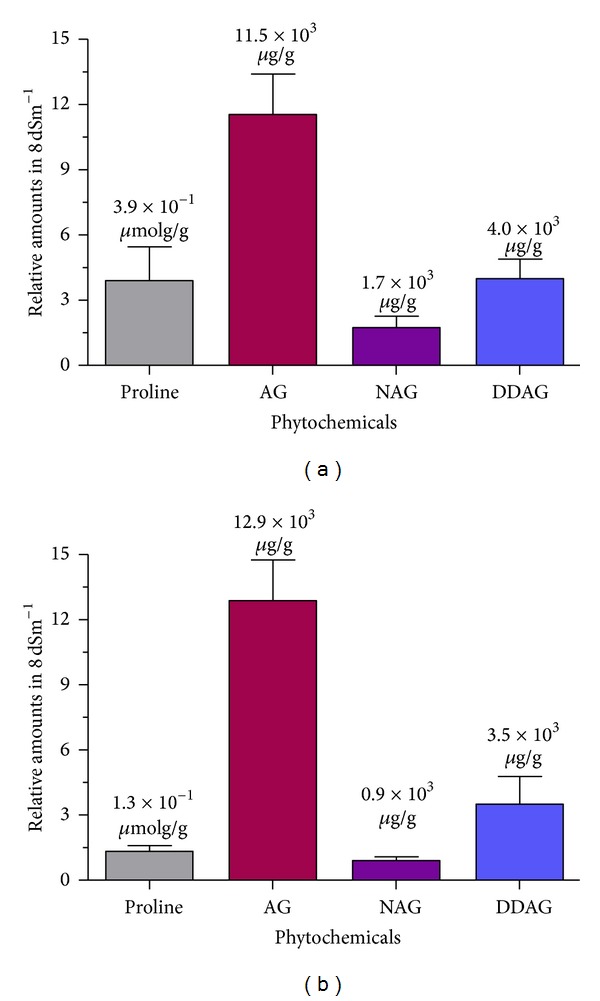
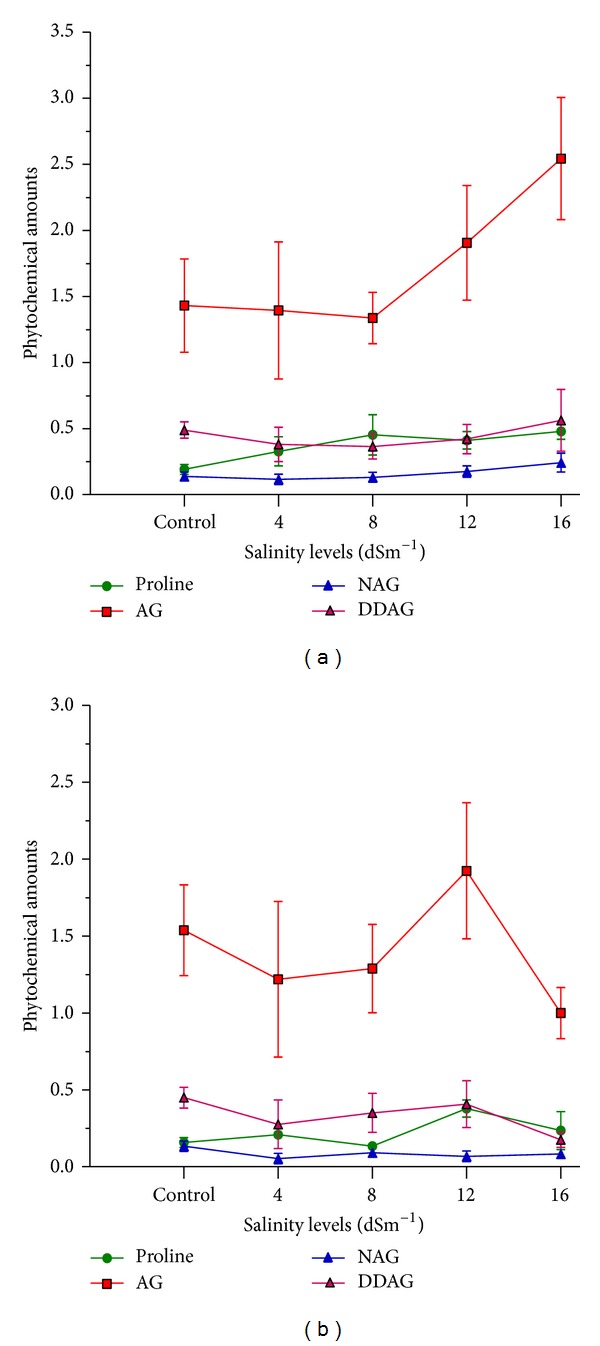
Salinity causes the adverse effects in all physiological processes of plants. The present study aimed to investigate the potential of salt stress to enhance the accumulation of the anticancer phytochemicals in Andrographis paniculata accessions. For this purpose, 70-day-old plants were grown in different salinity levels (0.18, 4, 8, 12, and 16 dSm(-1)) on sand medium. After inducing a period of 30-day salinity stress and before flowering, all plants were harvested and the data on morphological traits, proline content and the three anticancer phytochemicals, including andrographolide (AG), neoandrographolide (NAG), and 14-deoxy-11,12-didehydroandrographolide (DDAG), were measured. The results indicated that salinity had a significant effect on the aforementioned three anticancer phytochemicals. In addition, the salt tolerance index (STI) was significantly decreased, while, except for DDAG, the content of proline, the AG, and NAG was significantly increased (P ≤ 0.01). Furthermore, it was revealed that significant differences among accessions could happen based on the total dry weight, STI, AG, and NAG. Finally, we noticed that the salinity at 12 dSm(-1) led to the maximum increase in the quantities of AG, NAG, and DDAG. In other words, under salinity stress, the tolerant accessions were capable of accumulating the higher amounts of proline, AG, and NAG than the sensitive accessions.
盐分对植物的所有生理过程都会产生不利影响。本研究旨在探究盐胁迫增强穿心莲种质中抗癌植物化学物质积累的潜力。为此,将70日龄的植株种植在沙质培养基上的不同盐度水平(0.18、4、8、12和16 dSm(-1))下。在诱导30天盐胁迫期后且开花前,收获所有植株,并测量形态特征、脯氨酸含量以及三种抗癌植物化学物质的数据,这三种物质包括穿心莲内酯(AG)、新穿心莲内酯(NAG)和14-去氧-11,12-二脱氢穿心莲内酯(DDAG)。结果表明,盐度对上述三种抗癌植物化学物质有显著影响。此外,耐盐性指数(STI)显著降低,而除DDAG外,脯氨酸、AG和NAG的含量显著增加(P≤0.01)。此外,研究发现基于总干重、STI、AG和NAG,种质间可能存在显著差异。最后,我们注意到12 dSm(-1)的盐度导致AG、NAG和DDAG的含量增加最多。换句话说,在盐胁迫下,耐盐种质比敏感种质能够积累更多的脯氨酸、AG和NAG。