Benaroya Research Institute at Virginia Mason, Seattle, Wash.
Department of Dermatology and Allergology, University Medical Center, Marburg, Germany.
J Allergy Clin Immunol. 2014 Mar;133(3):872-9.e7. doi: 10.1016/j.jaci.2013.10.054. Epub 2013 Dec 25.
Understanding the mechanisms by which the immune system induces and controls allergic inflammation at the T-cell epitope level is critical for the design of new allergy vaccine strategies.
We sought to characterize allergen-specific T-cell responses linked with allergy or peripheral tolerance and to determine how CD4(+) T-cell responses to individual allergen-derived epitopes change over allergen-specific immunotherapy.
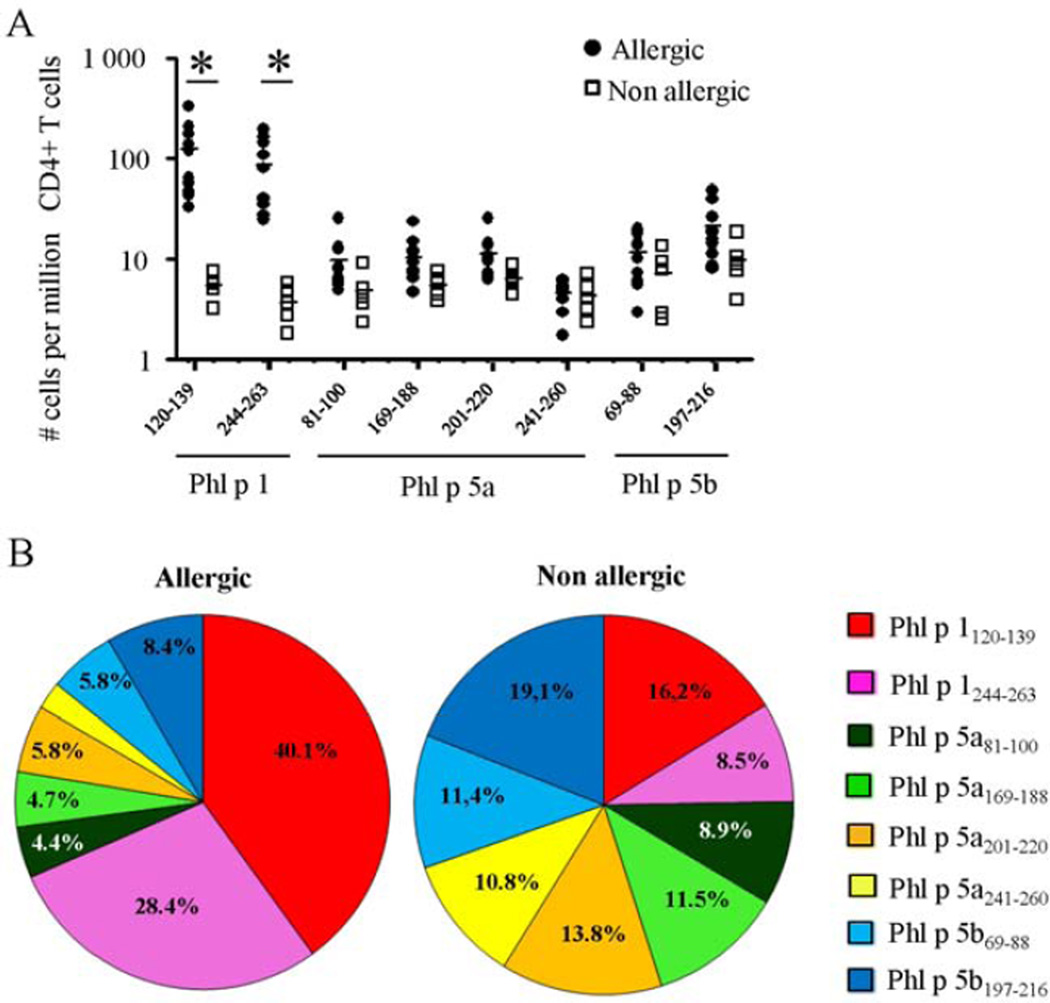
Timothy grass pollen (TGP) allergy was used as a model for studying grass pollen allergies. The breadth, magnitude, epitope hierarchy, and phenotype of the DR04:01-restricted TGP-specific T-cell responses in 10 subjects with grass pollen allergy, 5 nonatopic subjects, and 6 allergy vaccine-treated subjects was determined by using an ex vivo peptide-MHC class II tetramer approach.
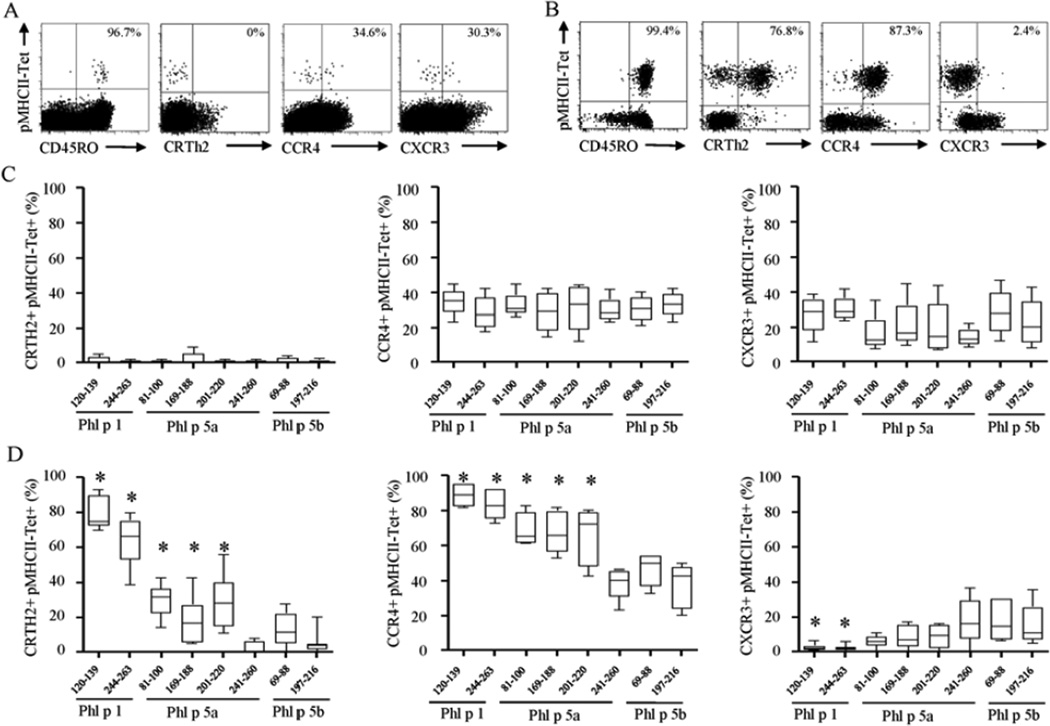
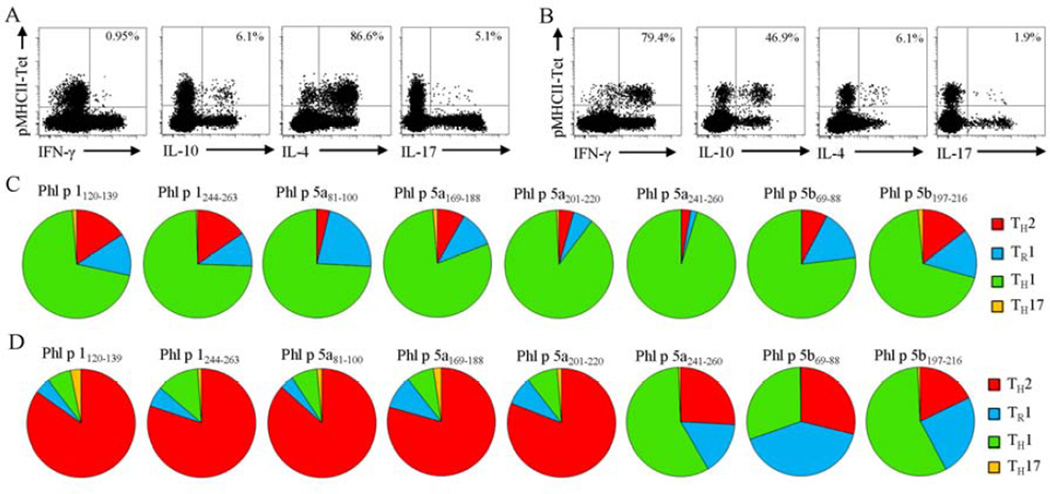
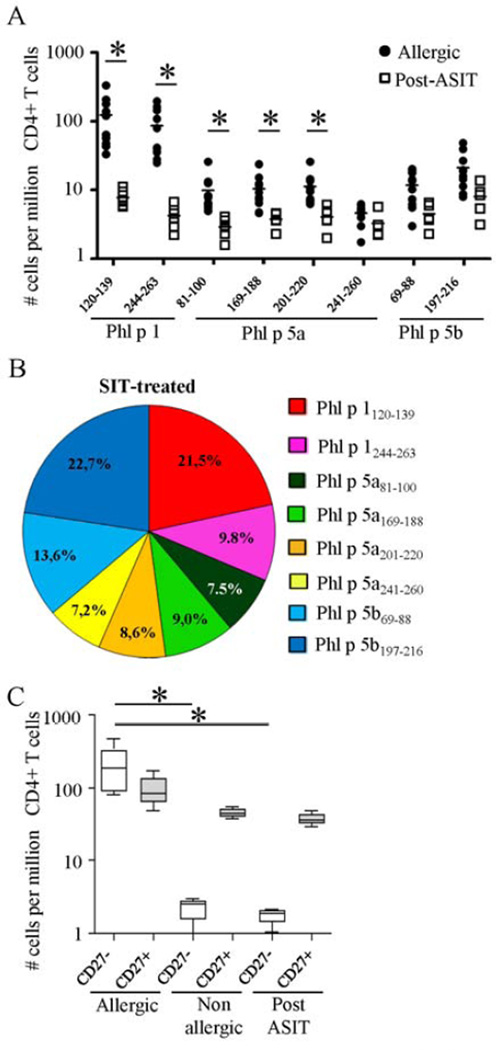
CD4(+) T cells in allergic subjects are directed to a broad range of TGP epitopes characterized by defined immunodominance hierarchy patterns and with distinct functional profiles that depend on the epitope recognized. Epitopes that are restricted specifically to either TH2 or TH1/TR1 responses were identified. Allergen-specific immunotherapy was associated with preferential deletion of allergen-specific TH2 cells and without a significant change in the frequency of TH1/TR1 cells.
Preferential allergen-specific TH2 cell deletion after repeated high-dose antigen stimulation can be another independent mechanism to restore tolerance to allergen during immunotherapy.
了解免疫系统在 T 细胞表位水平诱导和控制过敏炎症的机制,对于设计新的过敏疫苗策略至关重要。
我们旨在描述与过敏或外周耐受相关的过敏原特异性 T 细胞反应,并确定个体过敏原衍生表位的 CD4+T 细胞反应如何在过敏原特异性免疫治疗中发生变化。
采用豚草花粉(TGP)过敏作为研究草花粉过敏的模型。通过使用体外肽-MHC 类二聚体方法,确定了 10 名 TGP 过敏患者、5 名非过敏患者和 6 名过敏疫苗治疗患者中 DR04:01 限制性 TGP 特异性 T 细胞反应的广度、幅度、表位层次结构和表型。
过敏患者的 CD4+T 细胞针对广泛的 TGP 表位,这些表位具有明确的免疫优势层次结构模式,并具有依赖于所识别表位的不同功能特征。确定了特异性限制于 TH2 或 TH1/TR1 反应的表位。过敏原特异性免疫治疗与过敏原特异性 TH2 细胞的优先删除有关,而 TH1/TR1 细胞的频率没有明显变化。
在反复高剂量抗原刺激后,过敏原特异性 TH2 细胞的优先删除可能是免疫治疗期间恢复对过敏原耐受的另一种独立机制。