Research Center Deutscher Sprachatlas, Philipps-University Marburg, Marburg, Germany.
Bioessays. 2014 Feb;36(2):141-50. doi: 10.1002/bies.201300096. Epub 2013 Dec 27.
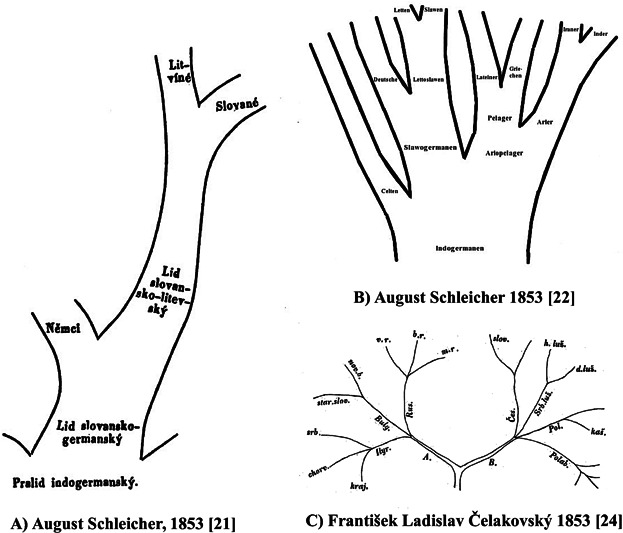
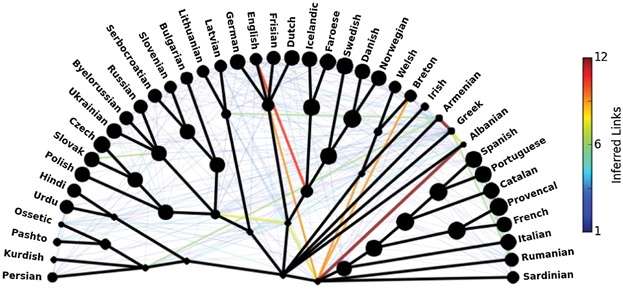
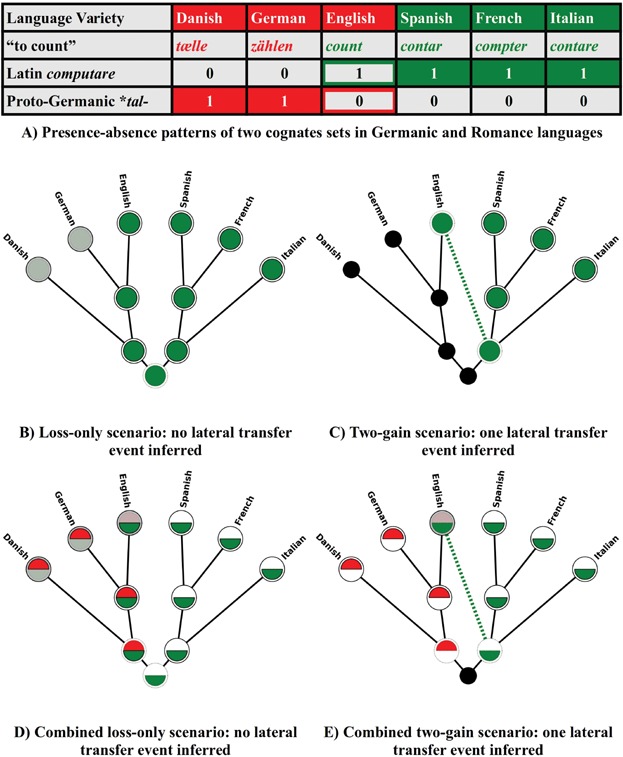
Like biological species, languages change over time. As noted by Darwin, there are many parallels between language evolution and biological evolution. Insights into these parallels have also undergone change in the past 150 years. Just like genes, words change over time, and language evolution can be likened to genome evolution accordingly, but what kind of evolution? There are fundamental differences between eukaryotic and prokaryotic evolution. In the former, natural variation entails the gradual accumulation of minor mutations in alleles. In the latter, lateral gene transfer is an integral mechanism of natural variation. The study of language evolution using biological methods has attracted much interest of late, most approaches focusing on language tree construction. These approaches may underestimate the important role that borrowing plays in language evolution. Network approaches that were originally designed to study lateral gene transfer may provide more realistic insights into the complexities of language evolution.
与生物物种一样,语言也会随时间而变化。正如达尔文所指出的,语言进化和生物进化之间有许多相似之处。在过去的 150 年中,对这些相似之处的认识也发生了变化。就像基因一样,单词会随着时间而变化,因此语言进化可以相应地比作基因组进化,但是什么样的进化呢?真核生物和原核生物的进化有根本的区别。在前者中,自然变异需要等位基因中微小突变的逐渐积累。在后者中,水平基因转移是自然变异的一个组成机制。最近,使用生物学方法研究语言进化引起了很大的兴趣,大多数方法都集中在语言树的构建上。这些方法可能低估了借用在语言进化中所起的重要作用。最初为研究水平基因转移而设计的网络方法可能会为语言进化的复杂性提供更现实的见解。