Department of Geriatric Cardiology, Chinese General Hospital of the Air Force, Beijing, People's Republic of China.
Department of Geriatric Cardiology, Beijing Military General Hospital, Beijing, People's Republic of China.
Int J Nanomedicine. 2014;9:17-26. doi: 10.2147/IJN.S52005. Epub 2013 Dec 11.
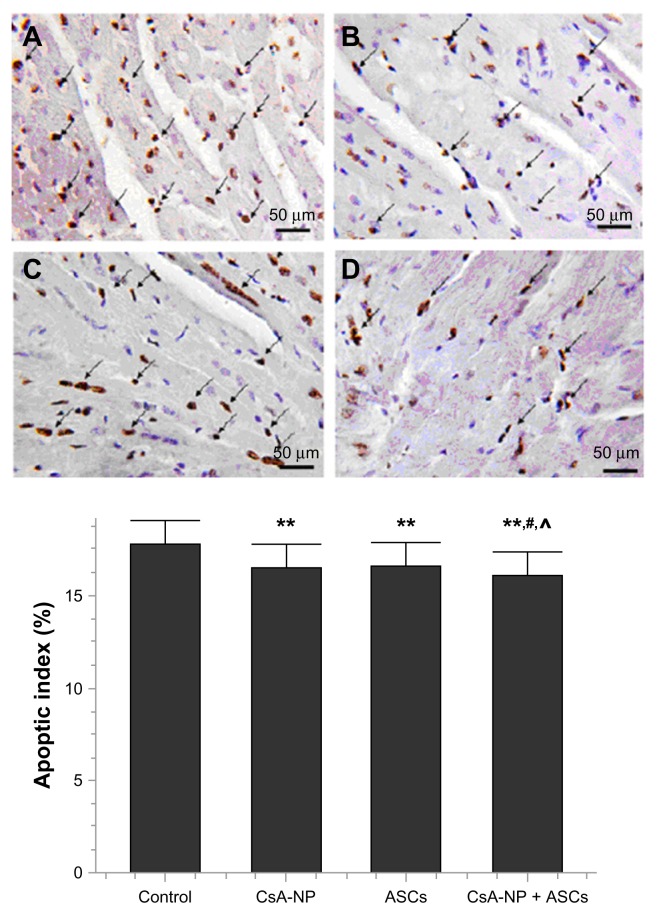
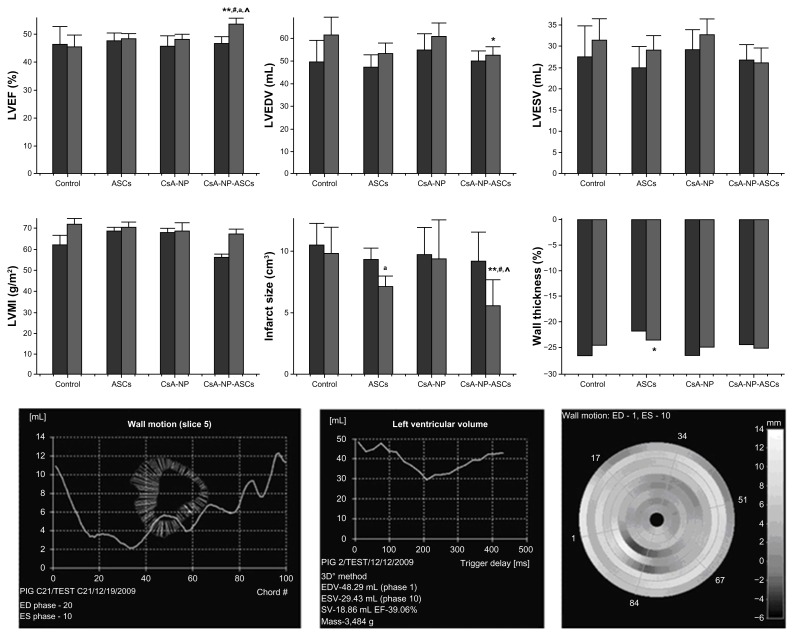
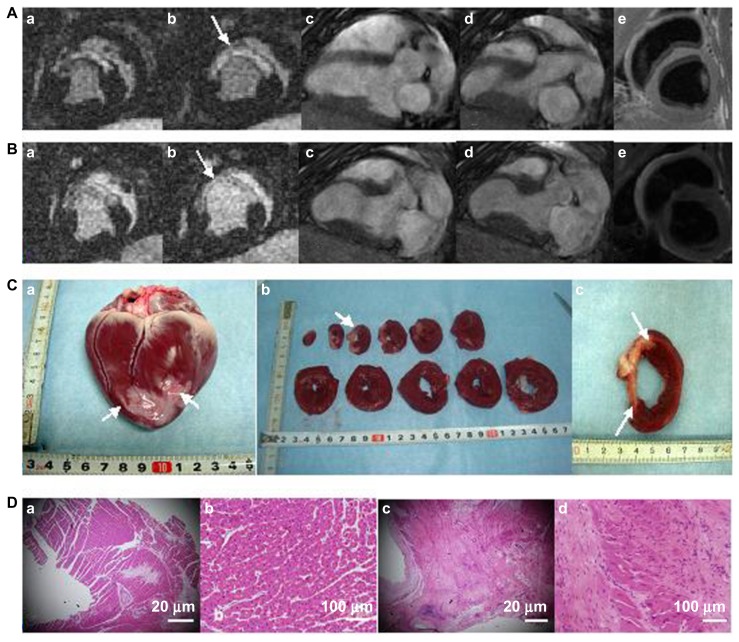
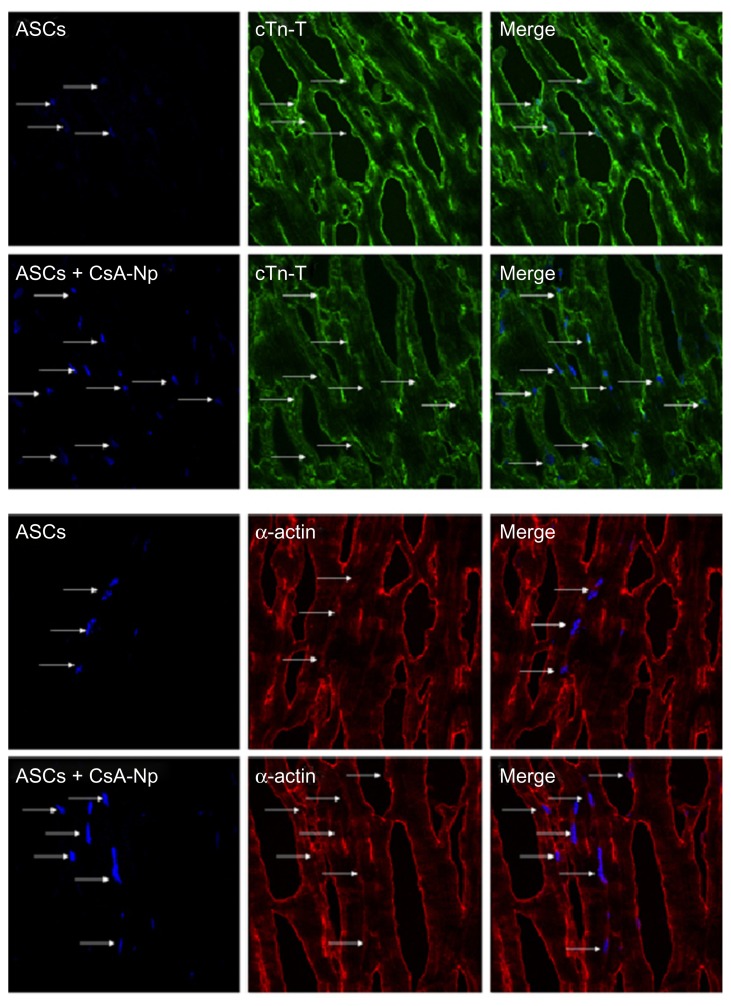
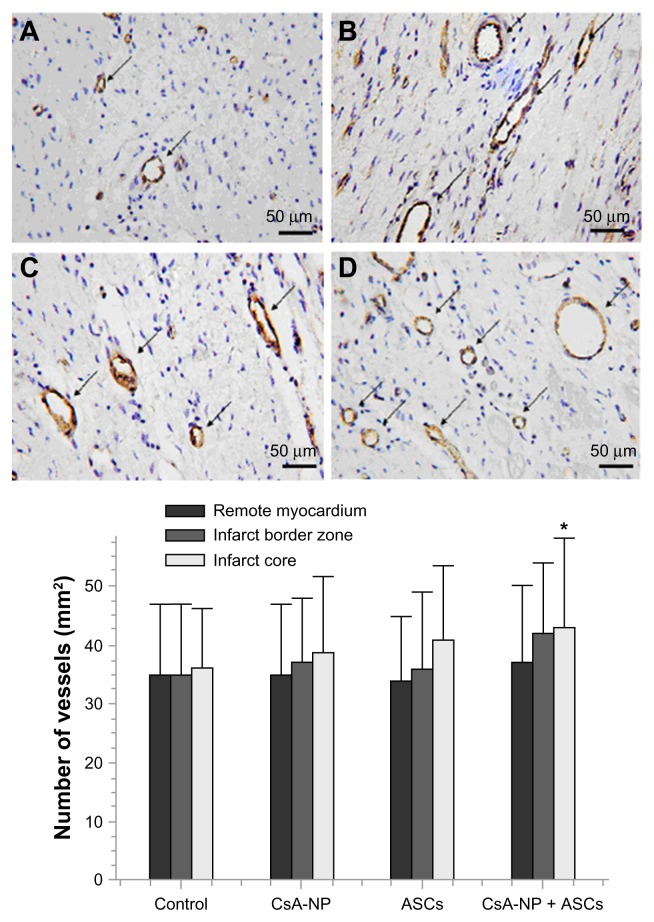
Treatment of myocardial infarction (MI) with adipose-derived stem cells (ASCs) has produced promising results. Cyclosporine A (CsA) inhibits apoptosis by preventing the opening of mitochondrial permeability transition pores. A CsA nanoparticle emulsion (CsA-NP) has lower toxicity and higher efficiency as compared to CsA. In this study, we hypothesized that a combination of ASCs and CsA-NP would enhance the therapeutic efficiency in a swine MI model. MI was induced in pig hearts by occlusion of the left anterior descending artery. The animals that survived MI were divided into four groups and 1 week later received intracoronary ASCs (ASCs, n=6), intracoronary culture media in combination with CsA-NP (CsA-NP, n=6), intracoronary ASCs in combination with CsA-NP (ASCs + CsA-NP, n=6), or remained untreated (control, n=4). Animals were sacrificed 8 weeks later and were evaluated for cardiac function by delayed-enhanced magnetic resonance imaging and immunohistopathology. We observed that the left ventricular ejection fraction (LVEF) was significantly increased in the ASCs + CsA-NP group, compared to the CsA-NP group (53.6%±2.4% versus 48.6%±1.5%, P,0.05), and the ASCs group (53.6%±2.4% versus 48.3%±1.8%, P,0.05). More importantly, the infarct size was significantly smaller in the ASCs + CsA-NP group as compared to the CsA-NP group (6.2±1.7 cm(3) versus 9.1±3.4 cm(3), P,0.05) and the ASCs group (6.2±1.7 cm(3) versus 7.5±0.6 cm(3), P,0.05). These findings were further confirmed by analysis of the expression of cardiomyocyte markers, myosin heavy chain (α-actinin) and troponin T. In addition, the CsA-NP + ASCs treatment promoted neovascularization (P,0.05) and inhibited cardiomyocyte apoptosis (P,0.01) compared to the control group. This study demonstrates that CsA-NP enhanced the therapeutic benefits of ASCs transplantation for MI.
脂肪源干细胞(ASCs)治疗心肌梗死(MI)已取得了有前景的结果。环孢素 A(CsA)通过阻止线粒体通透性转换孔的开放来抑制细胞凋亡。CsA 纳米粒乳液(CsA-NP)比 CsA 的毒性更低、效率更高。在这项研究中,我们假设 ASC 和 CsA-NP 的联合应用将提高猪 MI 模型的治疗效果。通过阻塞猪心脏的左前降支来诱导 MI。MI 存活的动物被分为四组,在 1 周后分别接受冠状动脉内 ASCs(ASCs,n=6)、与 CsA-NP 联合的冠状动脉内培养液(CsA-NP,n=6)、与 CsA-NP 联合的冠状动脉内 ASCs(ASCs+CsA-NP,n=6)或未治疗(对照组,n=4)。8 周后处死动物,通过延迟增强磁共振成像和免疫组织病理学评估心功能。我们观察到,与 CsA-NP 组相比,ASCs+CsA-NP 组的左心室射血分数(LVEF)显著增加(53.6%±2.4%比 48.6%±1.5%,P,0.05),与 ASCs 组相比(53.6%±2.4%比 48.3%±1.8%,P,0.05)。更重要的是,与 CsA-NP 组相比,ASCs+CsA-NP 组的梗死面积明显减小(6.2±1.7 cm3 比 9.1±3.4 cm3,P,0.05),与 ASCs 组相比(6.2±1.7 cm3 比 7.5±0.6 cm3,P,0.05)。这些发现通过分析心肌细胞标志物肌球蛋白重链(α-辅肌动蛋白)和肌钙蛋白 T 的表达进一步得到证实。此外,与对照组相比,CsA-NP+ASCs 治疗促进了新生血管形成(P,0.05)和抑制了心肌细胞凋亡(P,0.01)。这项研究表明,CsA-NP 增强了 ASCs 移植治疗 MI 的治疗效果。