Micro-signaling Regulation Technology Unit, RIKEN Center for Life Science Technologies, Wako, Saitama, Japan ; Japan Society for the Promotion of Science, Tokyo, Japan.
Department of Applied Biological Chemistry, Graduate School of Agricultural and Life Sciences, University of Tokyo, Tokyo, Japan ; Japan Society for the Promotion of Science, Tokyo, Japan.
PLoS One. 2013 Dec 23;8(12):e82860. doi: 10.1371/journal.pone.0082860. eCollection 2013.
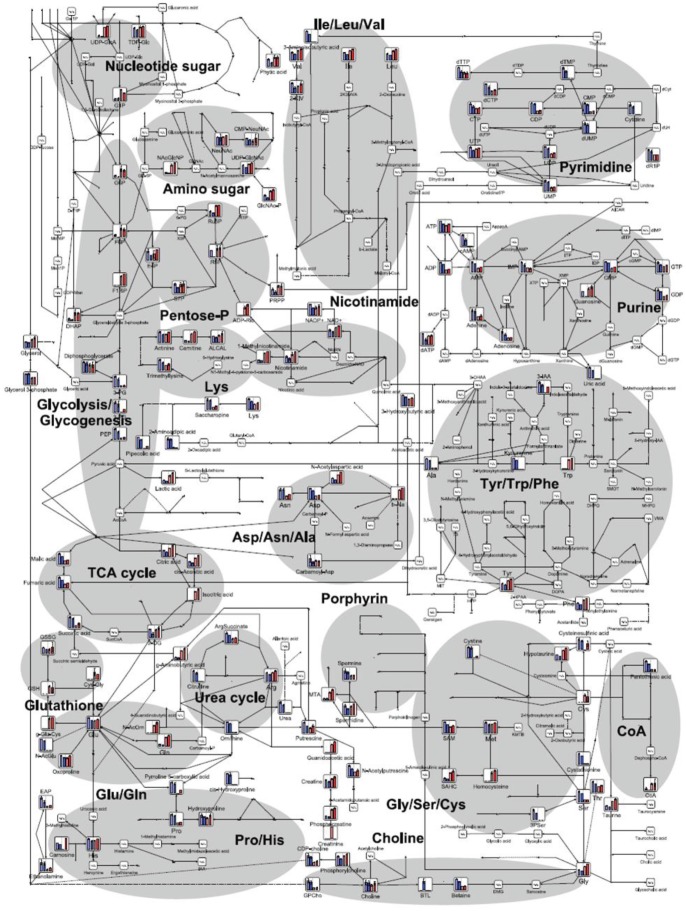
BACKGROUND/PURPOSE: Acyclic retinoid (ACR) is a promising chemopreventive agent for hepatocellular carcinoma (HCC) that selectively inhibits the growth of HCC cells (JHH7) but not normal hepatic cells (Hc). To better understand the molecular basis of the selective anti-cancer effect of ACR, we performed nuclear magnetic resonance (NMR)-based and capillary electrophoresis time-of-flight mass spectrometry (CE-TOFMS)-based metabolome analyses in JHH7 and Hc cells after treatment with ACR.
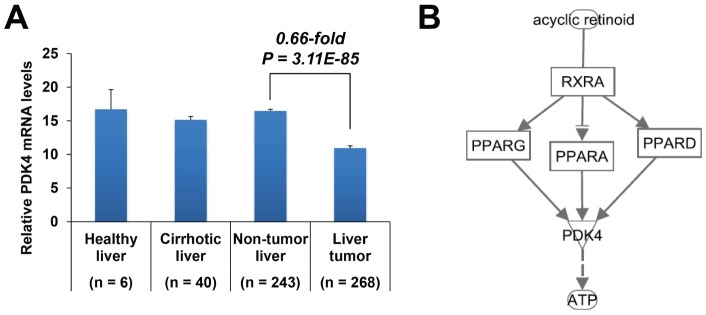
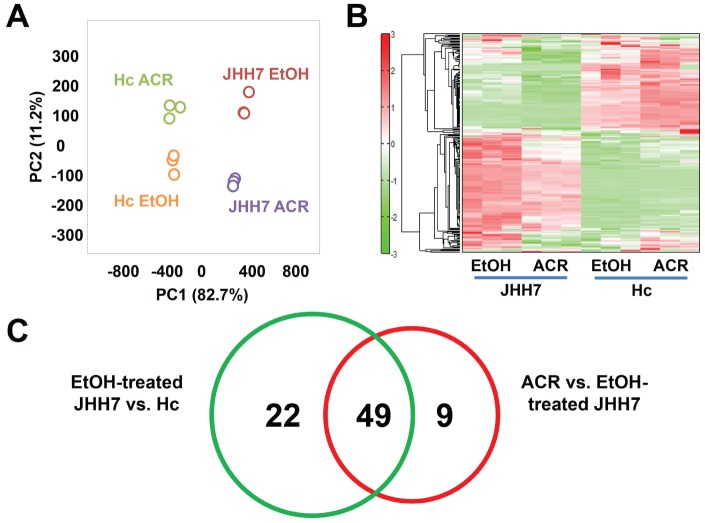
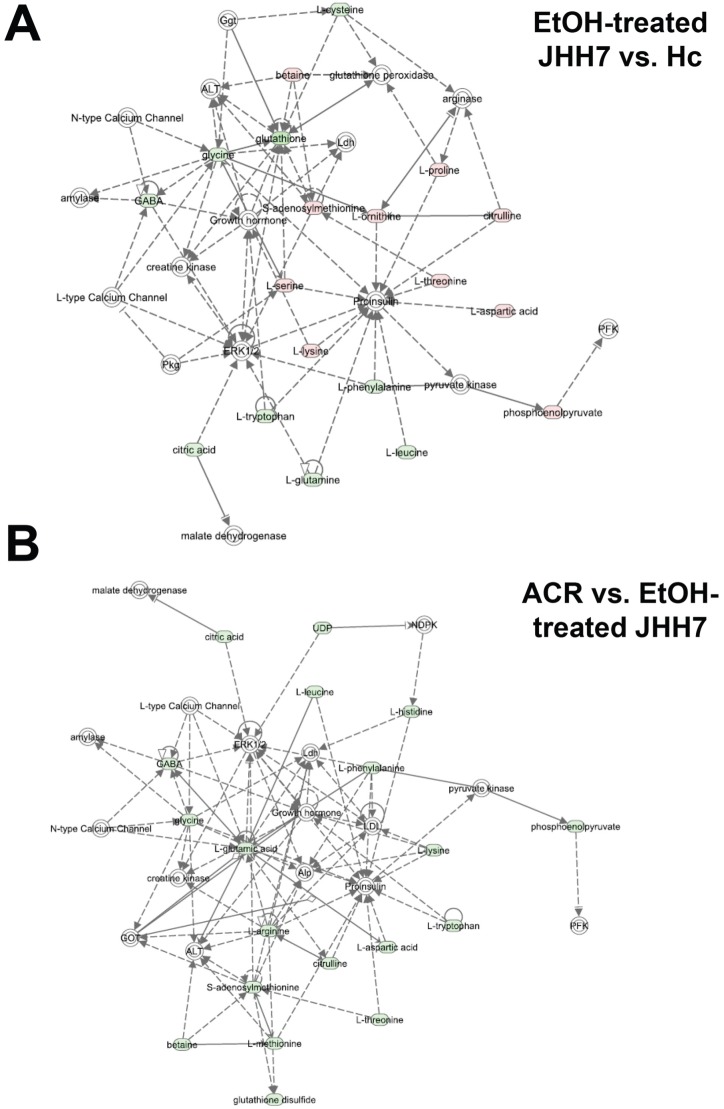
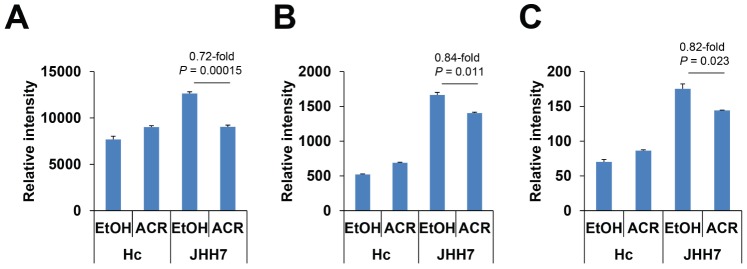
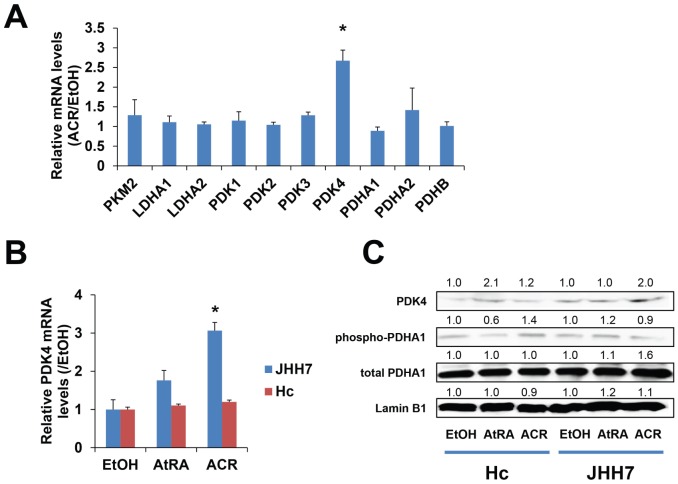
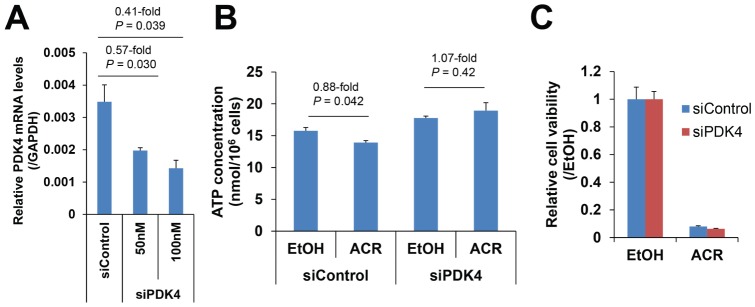
METHODOLOGY/PRINCIPAL FINDINGS: NMR-based metabolomics revealed a distinct metabolomic profile of JHH7 cells at 18 h after ACR treatment but not at 4 h after ACR treatment. CE-TOFMS analysis identified 88 principal metabolites in JHH7 and Hc cells after 24 h of treatment with ethanol (EtOH) or ACR. The abundance of 71 of these metabolites was significantly different between EtOH-treated control JHH7 and Hc cells, and 49 of these metabolites were significantly down-regulated in the ACR-treated JHH7 cells compared to the EtOH-treated JHH7 cells. Of particular interest, the increase in adenosine-5'-triphosphate (ATP), the main cellular energy source, that was observed in the EtOH-treated control JHH7 cells was almost completely suppressed in the ACR-treated JHH7 cells; treatment with ACR restored ATP to the basal levels observed in both EtOH-control and ACR-treated Hc cells (0.72-fold compared to the EtOH control-treated JHH7 cells). Moreover, real-time PCR analyses revealed that ACR significantly increased the expression of pyruvate dehydrogenase kinases 4 (PDK4), a key regulator of ATP production, in JHH7 cells but not in Hc cells (3.06-fold and 1.20-fold compared to the EtOH control, respectively).
CONCLUSIONS/SIGNIFICANCE: The results of the present study suggest that ACR may suppress the enhanced energy metabolism of JHH7 cells but not Hc cells; this occurs at least in part via the cancer-selective enhancement of PDK4 expression. The cancer-selective metabolic pathways identified in this study will be important targets of the anti-cancer activity of ACR.
背景/目的:无环视黄酸(ACR)是一种有前途的肝癌(HCC)化学预防剂,它选择性地抑制 HCC 细胞(JHH7)的生长,但不抑制正常肝细胞(Hc)。为了更好地了解 ACR 选择性抗癌作用的分子基础,我们在 ACR 处理后对 JHH7 和 Hc 细胞进行了基于核磁共振(NMR)和毛细管电泳飞行时间质谱(CE-TOFMS)的代谢组学分析。
方法/主要发现:基于 NMR 的代谢组学揭示了 JHH7 细胞在 ACR 处理后 18 小时的独特代谢组学特征,但在 ACR 处理后 4 小时则没有。CE-TOFMS 分析鉴定了 24 小时乙醇(EtOH)或 ACR 处理后 JHH7 和 Hc 细胞中的 88 种主要代谢物。这些代谢物中 71 种在 EtOH 处理的对照 JHH7 和 Hc 细胞之间的丰度有显著差异,其中 49 种在 ACR 处理的 JHH7 细胞中与 EtOH 处理的 JHH7 细胞相比显著下调。特别有趣的是,在 EtOH 处理的对照 JHH7 细胞中观察到的腺苷-5'-三磷酸(ATP)增加,即主要的细胞能量来源,在 ACR 处理的 JHH7 细胞中几乎完全被抑制;用 ACR 将 ATP 恢复到 EtOH 对照和 ACR 处理的 Hc 细胞中观察到的基础水平(与 EtOH 对照处理的 JHH7 细胞相比,为 0.72 倍)。此外,实时 PCR 分析显示,ACR 显著增加了 JHH7 细胞中丙酮酸脱氢酶激酶 4(PDK4)的表达,这是 ATP 产生的关键调节剂,但在 Hc 细胞中则没有(分别比 EtOH 对照增加 3.06 倍和 1.20 倍)。
结论/意义:本研究结果表明,ACR 可能抑制 JHH7 细胞而不是 Hc 细胞的增强能量代谢;这至少部分是通过癌症选择性增强 PDK4 表达来实现的。本研究中鉴定的癌症选择性代谢途径将是 ACR 抗癌活性的重要靶点。