Department of Vision Sciences, Toronto Western Research Institute, University Health Network, Toronto, Ontario, Canada.
Department of Vision Sciences, Toronto Western Research Institute, University Health Network, Toronto, Ontario, Canada ; Department of Ophthalmology and Vision Science, University of Toronto, Toronto, Ontario, Canada ; Department of Laboratory Medicine and Pathobiology, University of Toronto, Toronto, Ontario, Canada.
PLoS One. 2013 Dec 23;8(12):e83049. doi: 10.1371/journal.pone.0083049. eCollection 2013.
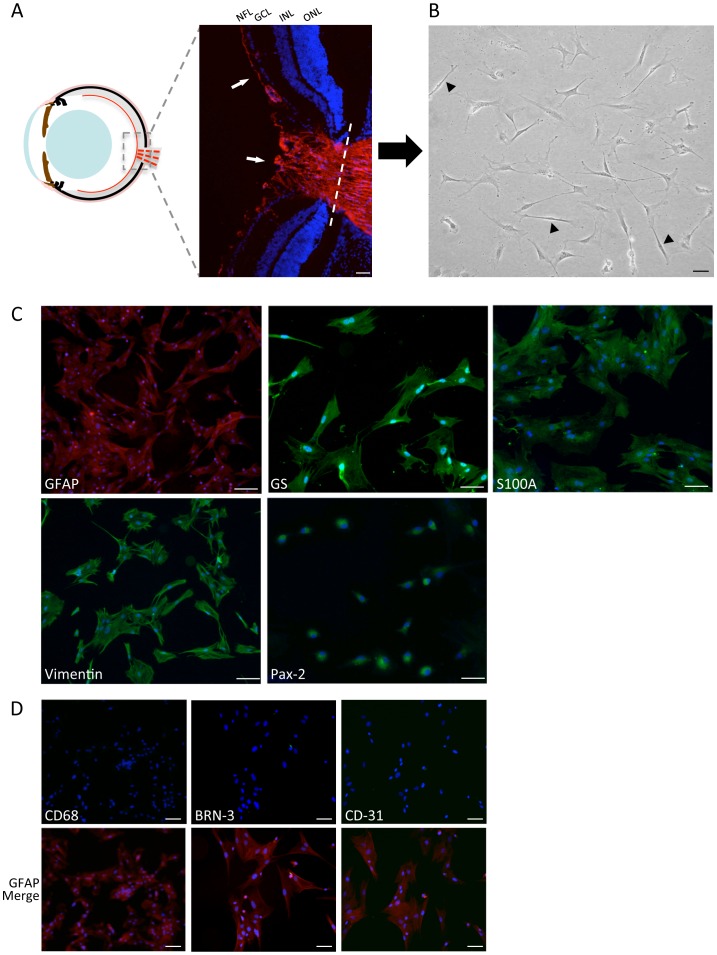
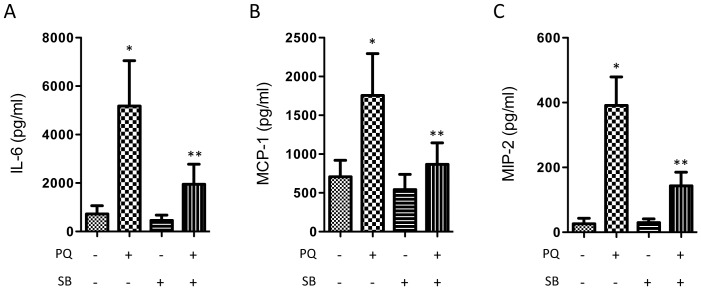
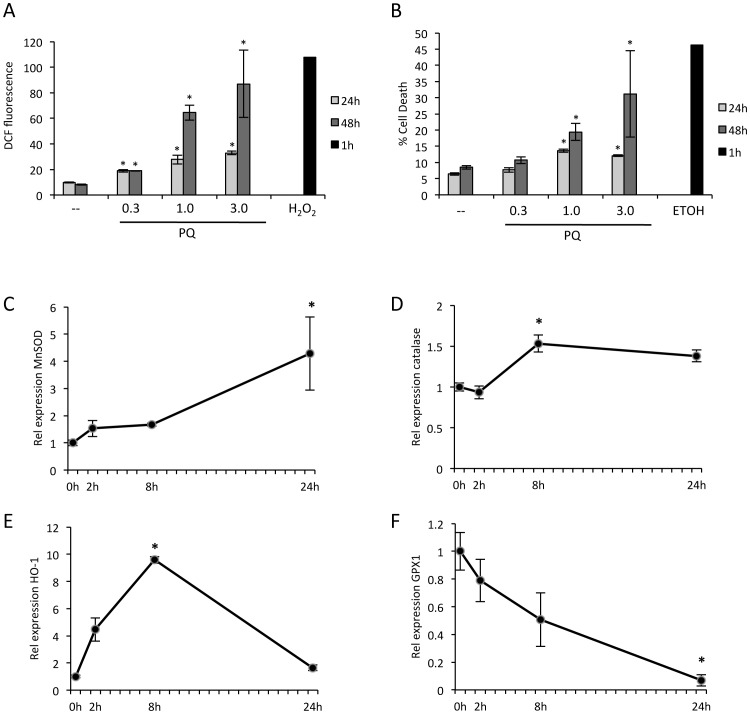
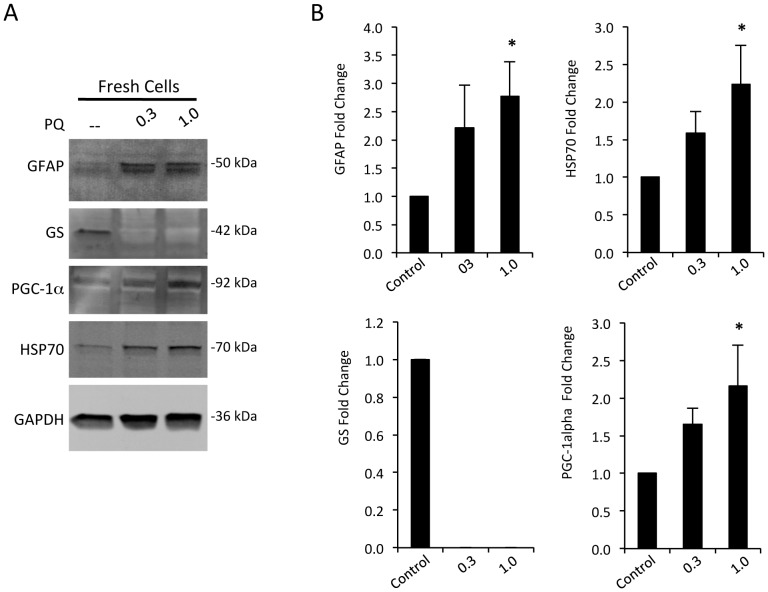
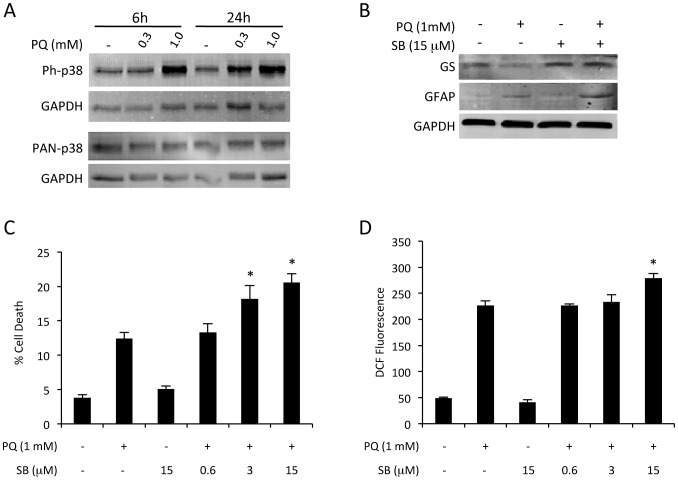
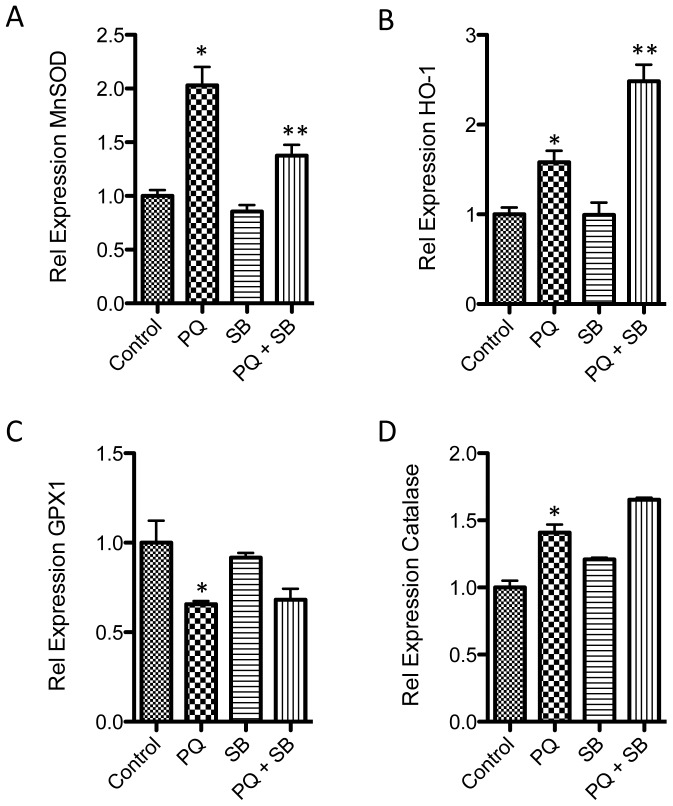
Astrocytes are the most abundant glial cell in the retinal nerve fiber layer (NFL) and optic nerve head (ONH), and perform essential roles in maintaining retinal ganglion cell (RGC) detoxification and homeostasis. Mature astrocytes are relatively quiescent, but rapidly undergo a phenotypic switch in response to insult, characterized by upregulation of intermediate filament proteins, loss of glutamate buffering, secretion of pro-inflammatory cytokines, and increased antioxidant production. These changes result in both positive and negative influences on RGCs. However, the mechanism regulating these responses is still unclear, and pharmacologic strategies to modulate select aspects of this switch have not been thoroughly explored. Here we describe a system for rapid culture of mature astrocytes from the adult rat retina that remain relatively quiescent, but respond robustly when challenged with oxidative damage, a key pathogenic stress associated with inner retinal injury. When primary astrocytes were exposed to reactive oxygen species (ROS) we consistently observed characteristic changes in activation markers, along with increased expression of detoxifying genes, and secretion of proinflammatory cytokines. This in vitro model was then used for a pilot chemical screen to target specific aspects of this switch. Increased activity of p38α and β Mitogen Activated Protein Kinases (MAPKs) were identified as a necessary signal regulating expression of MnSOD, and heme oxygenase 1 (HO-1), with consequent changes in ROS-mediated injury. Additionally, multiplex cytokine profiling detected p38 MAPK-dependent secretion of IL-6, MCP-1, and MIP-2α, which are proinflammatory signals recently implicated in damage to the inner retina. These data provide a mechanism to link increased oxidative stress to proinflammatory signaling by astrocytes, and establish this assay as a useful model to further dissect factors regulating the reactive switch.
星形胶质细胞是视网膜神经纤维层(NFL)和视神经头部(ONH)中最丰富的神经胶质细胞,在维持视网膜神经节细胞(RGC)解毒和内稳态方面发挥着重要作用。成熟的星形胶质细胞相对静止,但在受到损伤时会迅速发生表型转换,表现为中间丝蛋白上调、谷氨酸缓冲丧失、促炎细胞因子分泌增加和抗氧化剂产生增加。这些变化对 RGC 既有正面影响,也有负面影响。然而,调节这些反应的机制尚不清楚,也没有彻底探索调节这种转换的药理学策略。在这里,我们描述了一种从成年大鼠视网膜快速培养成熟星形胶质细胞的系统,这些细胞相对静止,但在受到氧化损伤挑战时会强烈反应,氧化损伤是与内视网膜损伤相关的关键致病应激。当原代星形胶质细胞暴露于活性氧(ROS)时,我们一致观察到激活标志物的特征性变化,以及解毒基因的表达增加和促炎细胞因子的分泌。然后,将该体外模型用于针对该转换的特定方面的初步化学筛选。鉴定出 p38α 和 β 丝裂原激活蛋白激酶(MAPKs)的活性增加是调节 MnSOD 和血红素加氧酶 1(HO-1)表达的必要信号,从而导致 ROS 介导的损伤发生变化。此外,多重细胞因子分析检测到 p38 MAPK 依赖性分泌白细胞介素 6(IL-6)、单核细胞趋化蛋白 1(MCP-1)和巨噬细胞炎性蛋白 1α(MIP-1α),这些促炎信号最近被认为与内视网膜损伤有关。这些数据提供了一种将氧化应激增加与星形胶质细胞的促炎信号联系起来的机制,并确立了该测定作为进一步剖析调节反应性转换的因素的有用模型。