Department of Medicine, University of California San Diego, La Jolla, California, United States of America.
Key Laboratory of Food Safety Research, Institute for Nutritional Sciences, Shanghai Institutes for Biological Sciences, Chinese Academy of Sciences, Shanghai, China ; Key Laboratory of Food Safety Risk Assessment, Ministry of Health, Beijing, China ; School of Life Science and Technology, Shanghai Tech University, Shanghai, China.
PLoS One. 2013 Dec 23;8(12):e83145. doi: 10.1371/journal.pone.0083145. eCollection 2013.
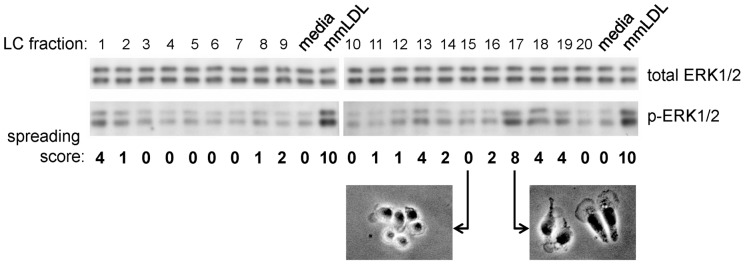
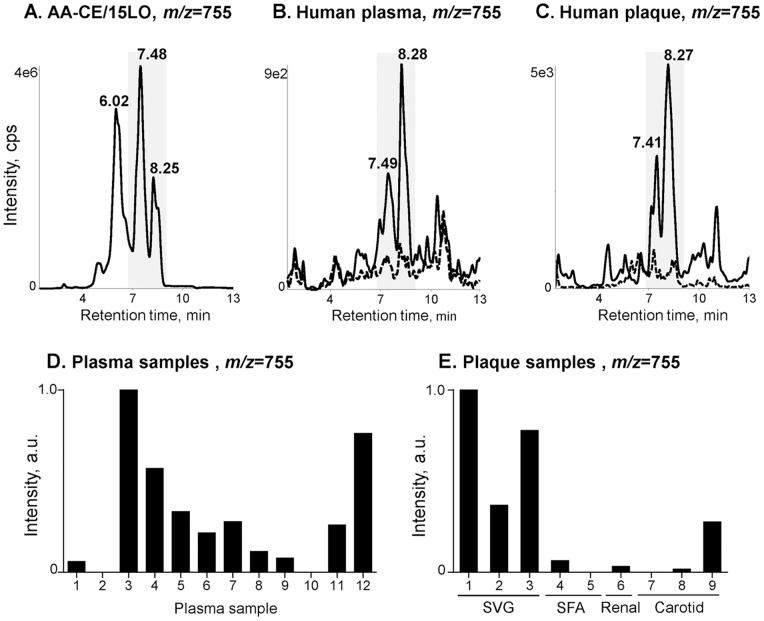
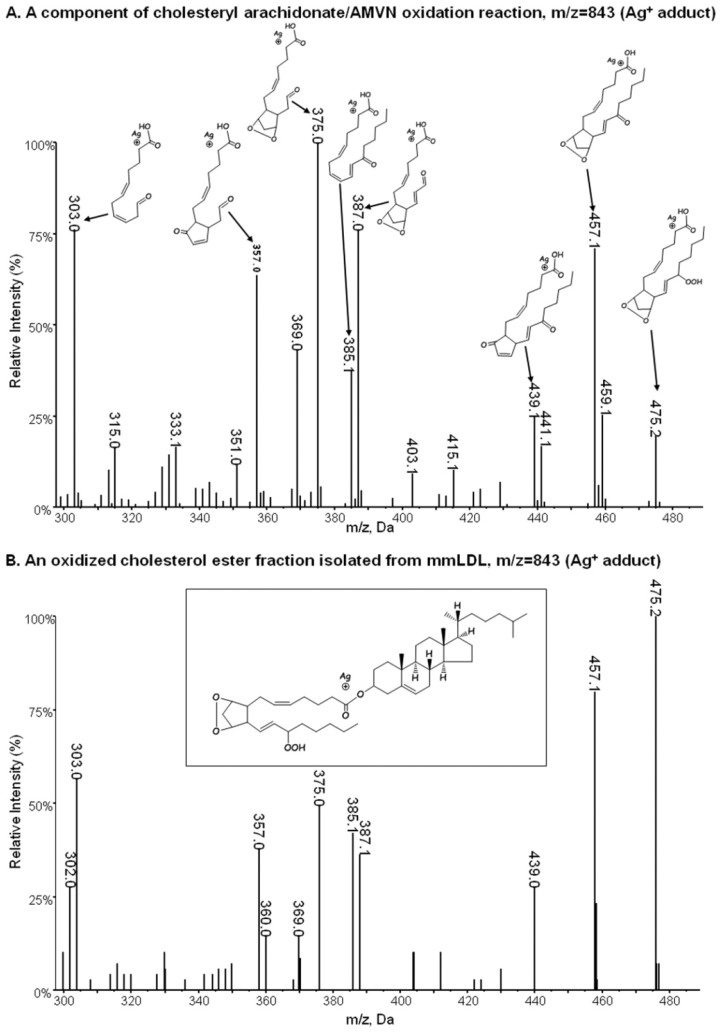
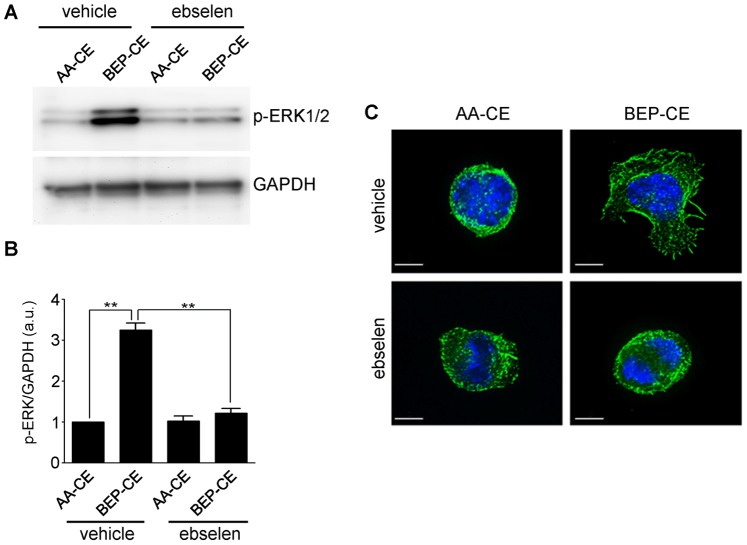
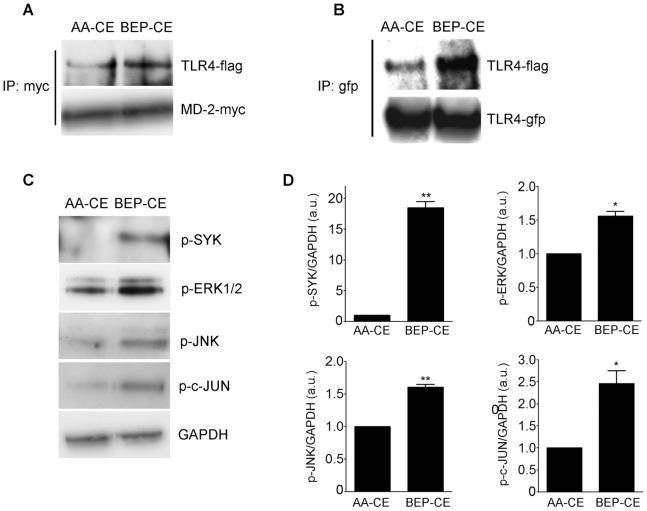
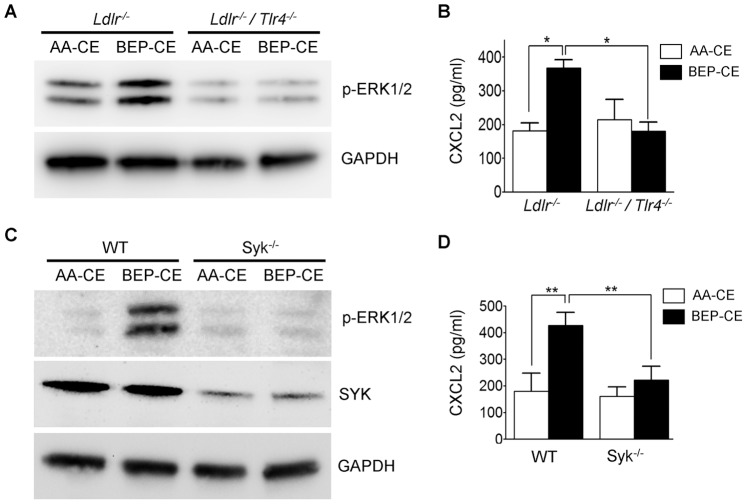
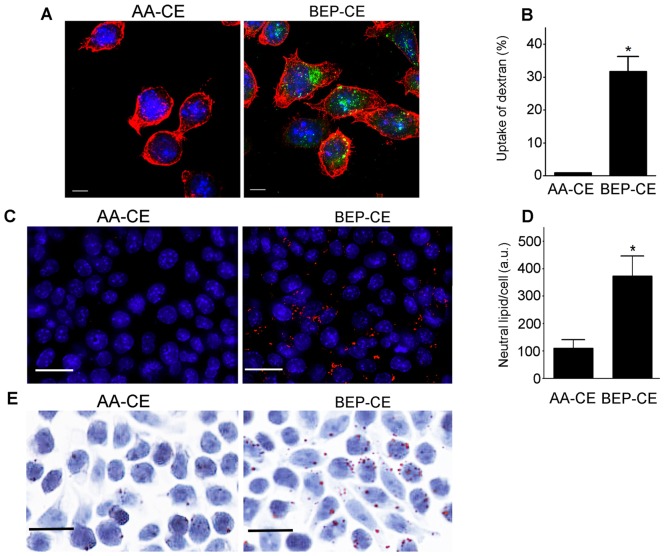
Oxidation of low-density lipoprotein (LDL) is one of the major causative mechanisms in the development of atherosclerosis. In previous studies, we showed that minimally oxidized LDL (mmLDL) induced inflammatory responses in macrophages, macropinocytosis and intracellular lipid accumulation and that oxidized cholesterol esters (OxCEs) were biologically active components of mmLDL. Here we identified a specific OxCE molecule responsible for the biological activity of mmLDL and characterized signaling pathways in macrophages in response to this OxCE. Using liquid chromatography - tandem mass spectrometry and biological assays, we identified an oxidized cholesteryl arachidonate with bicyclic endoperoxide and hydroperoxide groups (BEP-CE) as a specific OxCE that activates macrophages in a TLR4/MD-2-dependent manner. BEP-CE induced TLR4/MD-2 binding and TLR4 dimerization, phosphorylation of SYK, ERK1/2, JNK and c-Jun, cell spreading and uptake of dextran and native LDL by macrophages. The enhanced macropinocytosis resulted in intracellular lipid accumulation and macrophage foam cell formation. Bone marrow-derived macrophages isolated from TLR4 and SYK knockout mice did not respond to BEP-CE. The presence of BEP-CE was demonstrated in human plasma and in the human plaque material captured in distal protection devices during percutaneous intervention. Our results suggest that BEP-CE is an endogenous ligand that activates the TLR4/SYK signaling pathway. Because BEP-CE is present in human plasma and human atherosclerotic lesions, BEP-CE-induced and TLR4/SYK-mediated macrophage responses may contribute to chronic inflammation in human atherosclerosis.
低密度脂蛋白 (LDL) 的氧化是动脉粥样硬化发展的主要致病机制之一。在之前的研究中,我们表明,最小程度氧化的 LDL(mmLDL)诱导巨噬细胞中的炎症反应、巨胞饮作用和细胞内脂质积累,并且氧化胆固醇酯 (OxCEs) 是 mmLDL 的生物活性成分。在这里,我们确定了负责 mmLDL 生物学活性的特定 OxCE 分子,并表征了巨噬细胞中对此 OxCE 的反应信号通路。使用液相色谱-串联质谱法和生物测定法,我们鉴定出一种具有双环内过氧化物和过氧化物基团的氧化胆甾烯花生四烯酸 (BEP-CE) 是一种特定的 OxCE,它以 TLR4/MD-2 依赖性方式激活巨噬细胞。BEP-CE 诱导 TLR4/MD-2 结合和 TLR4 二聚化、SYK 的磷酸化、ERK1/2、JNK 和 c-Jun、细胞展开以及巨噬细胞摄取葡聚糖和天然 LDL。增强的巨胞饮作用导致细胞内脂质积累和巨噬细胞泡沫细胞形成。从 TLR4 和 SYK 基因敲除小鼠分离的骨髓源性巨噬细胞对 BEP-CE 没有反应。在人血浆中和经皮介入期间在远端保护装置捕获的人斑块材料中证明存在 BEP-CE。我们的结果表明,BEP-CE 是一种激活 TLR4/SYK 信号通路的内源性配体。因为 BEP-CE 存在于人血浆和人动脉粥样硬化病变中,所以 BEP-CE 诱导和 TLR4/SYK 介导的巨噬细胞反应可能有助于人类动脉粥样硬化的慢性炎症。