Hossain Md Shamim, Ifuku Masataka, Take Sachiko, Kawamura Jun, Miake Kiyotaka, Katafuchi Toshihiko
Department of Integrative Physiology, Graduate School of Medical Sciences, Kyushu University, Fukuoka, Japan.
Central Research Institute, Marudai Food Co. Ltd., Osaka, Japan.
PLoS One. 2013 Dec 20;8(12):e83508. doi: 10.1371/journal.pone.0083508. eCollection 2013.
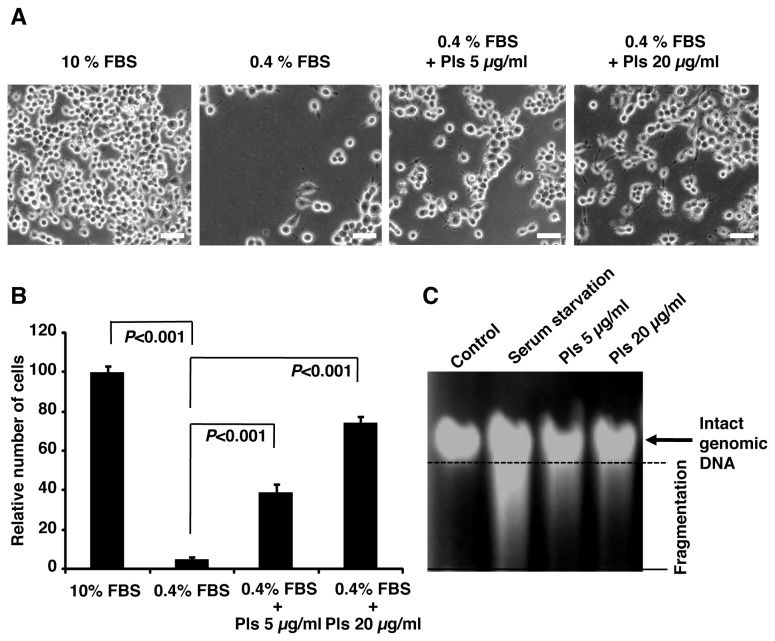
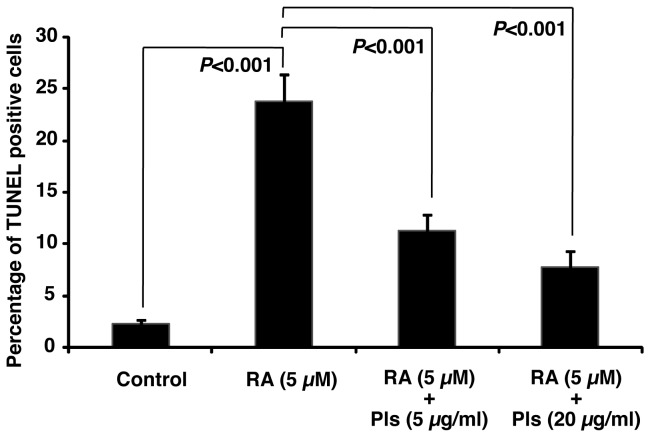
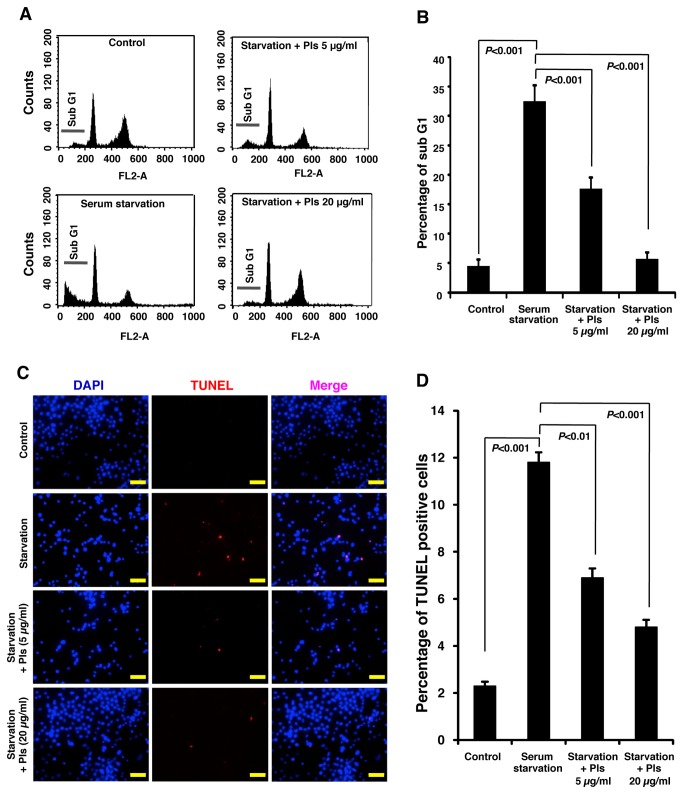
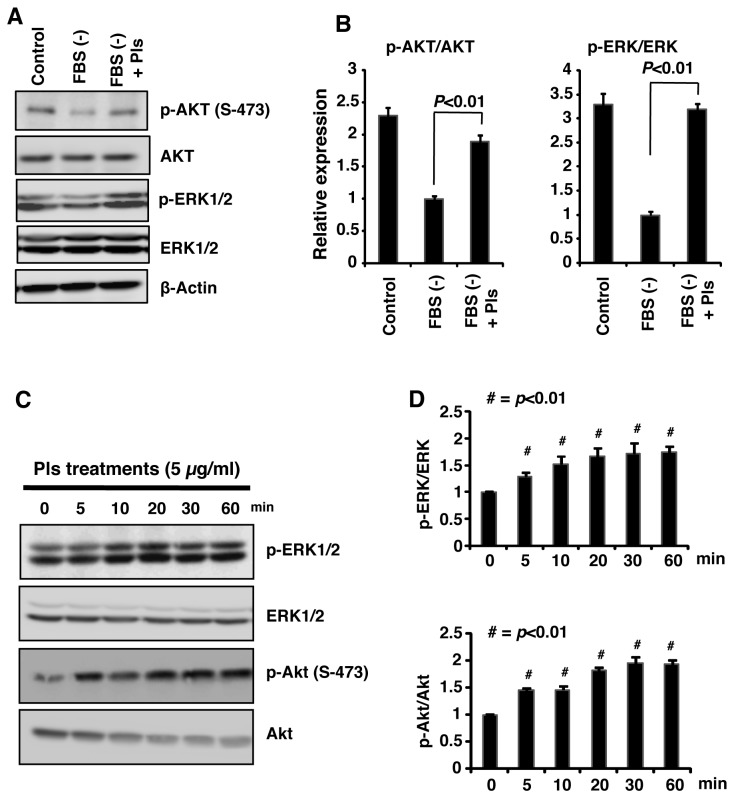
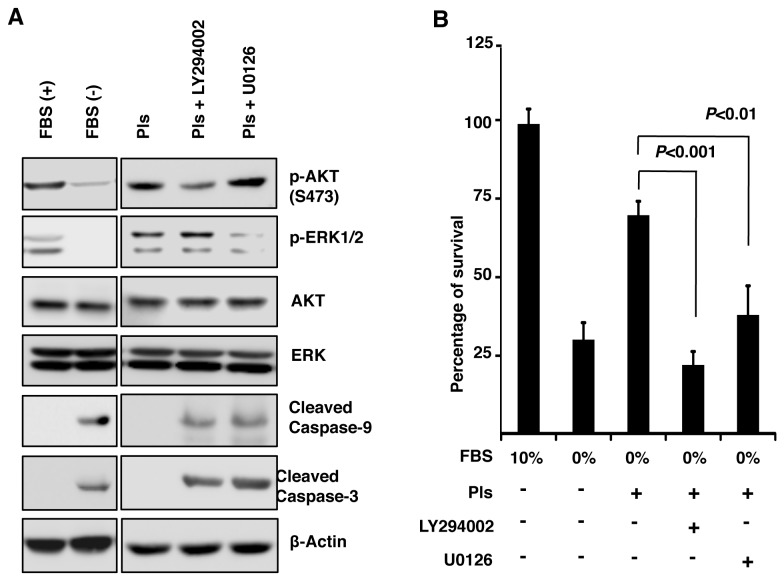
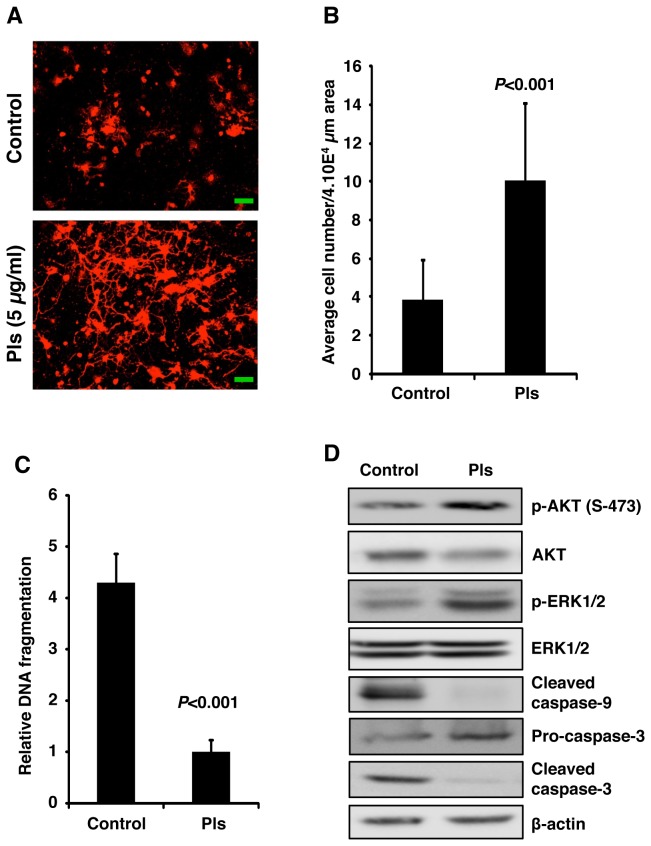
Neuronal cells are susceptible to many stresses, which will cause the apoptosis and neurodegenerative diseases. The precise molecular mechanism behind the neuronal protection against these apoptotic stimuli is necessary for drug discovery. In the present study, we have found that plasmalogens (Pls), which are glycerophospholipids containing vinyl ether linkage at sn-1 position, can protect the neuronal cell death upon serum deprivation. Interestingly, caspse-9, but not caspase-8 and caspase-12, was cleaved upon the serum starvation in Neuro-2A cells. Pls treatments effectively reduced the activation of caspase-9. Furthermore, cellular signaling experiments showed that Pls enhanced phosphorylation of the phosphoinositide 3-kinase (PI3K)-dependent serine/threonine-specific protein kinase AKT and extracellular-signal-regulated kinases ERK1/2. PI3K/AKT inhibitor LY294002 and MAPK/ERK kinase (MEK) inhibitor U0126 treatments study clearly indicated that Pls-mediated cell survival was dependent on the activation of these kinases. In addition, Pls also inhibited primary mouse hippocampal neuronal cell death induced by nutrient deprivation, which was associated with the inhibition of caspase-9 and caspase-3 cleavages. It was reported that Pls content decreased in the brain of the Alzheimer's patients, which indicated that the reduction of Pls content could endanger neurons. The present findings, taken together, suggest that Pls have an anti-apoptotic action in the brain. Further studies on precise mechanisms of Pls-mediated protection against cell death may lead us to establish a novel therapeutic approach to cure neurodegenerative disorders.
神经元细胞易受多种应激影响,这会导致细胞凋亡和神经退行性疾病。了解神经元抵御这些凋亡刺激背后的确切分子机制对于药物研发至关重要。在本研究中,我们发现缩醛磷脂(Pls),即sn-1位含有乙烯醚键的甘油磷脂,能够在血清剥夺时保护神经元细胞免于死亡。有趣的是,在Neuro-2A细胞血清饥饿时,半胱天冬酶-9(caspase-9)而非半胱天冬酶-8和半胱天冬酶-12会被切割。缩醛磷脂处理有效地降低了半胱天冬酶-9的激活。此外,细胞信号实验表明,缩醛磷脂增强了磷酸肌醇3-激酶(PI3K)依赖性丝氨酸/苏氨酸特异性蛋白激酶AKT和细胞外信号调节激酶ERK1/2的磷酸化。PI3K/AKT抑制剂LY294002和丝裂原活化蛋白激酶/细胞外信号调节激酶(MEK)抑制剂U0126的处理研究清楚地表明,缩醛磷脂介导的细胞存活依赖于这些激酶的激活。此外,缩醛磷脂还抑制了营养剥夺诱导的原代小鼠海马神经元细胞死亡,这与半胱天冬酶-9和半胱天冬酶-3切割的抑制有关。据报道,阿尔茨海默病患者大脑中的缩醛磷脂含量降低,这表明缩醛磷脂含量的减少可能危及神经元。综上所述,本研究结果表明缩醛磷脂在大脑中具有抗凋亡作用。对缩醛磷脂介导的细胞死亡保护的确切机制进行进一步研究,可能会引导我们建立一种治疗神经退行性疾病的新方法。