Beury-Cirou Amélie, Tannières Mélanie, Minard Corinne, Soulère Laurent, Rasamiravaka Tsiry, Dodd Robert H, Queneau Yves, Dessaux Yves, Guillou Catherine, Vandeputte Olivier M, Faure Denis
Institut des Sciences du Végétal (ISV) UPR 2355, Centre National de la Recherche Scientifique, Gif-sur-Yvette, France ; Seeds Innovation Protection Research and Environment (SIPRE), Comité Nord Plants de Pommes de Terre (CNPPT), Achicourt, France.
Institut des Sciences du Végétal (ISV) UPR 2355, Centre National de la Recherche Scientifique, Gif-sur-Yvette, France.
PLoS One. 2013 Dec 23;8(12):e83564. doi: 10.1371/journal.pone.0083564. eCollection 2013.
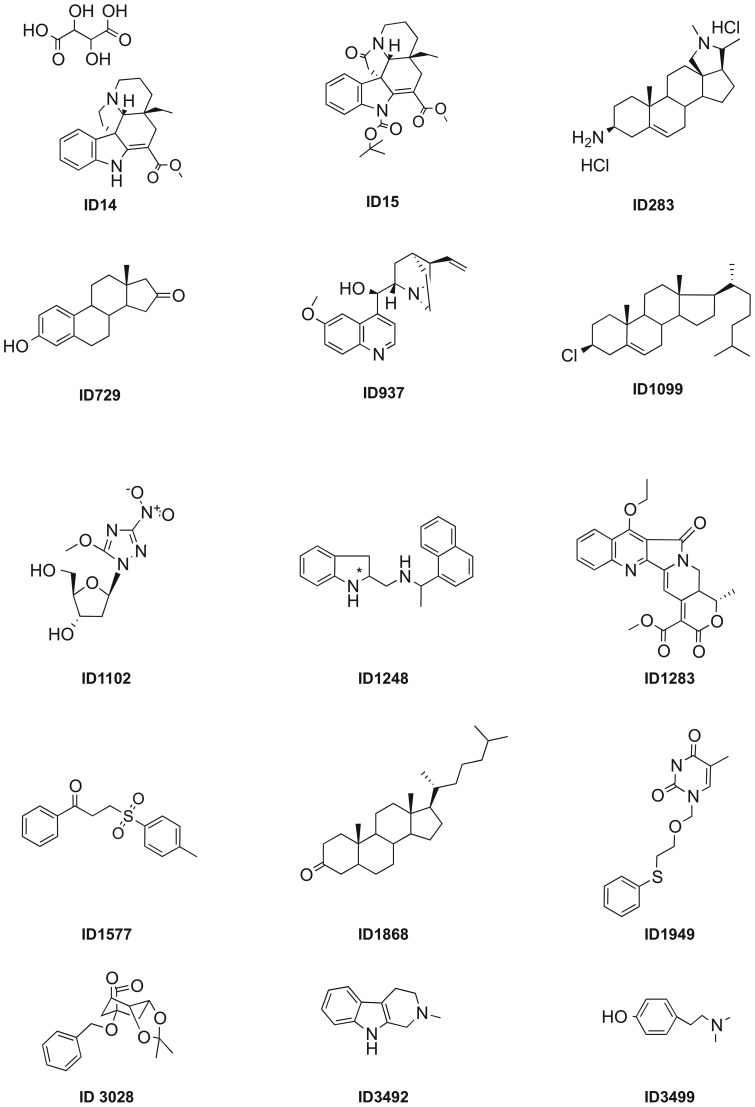
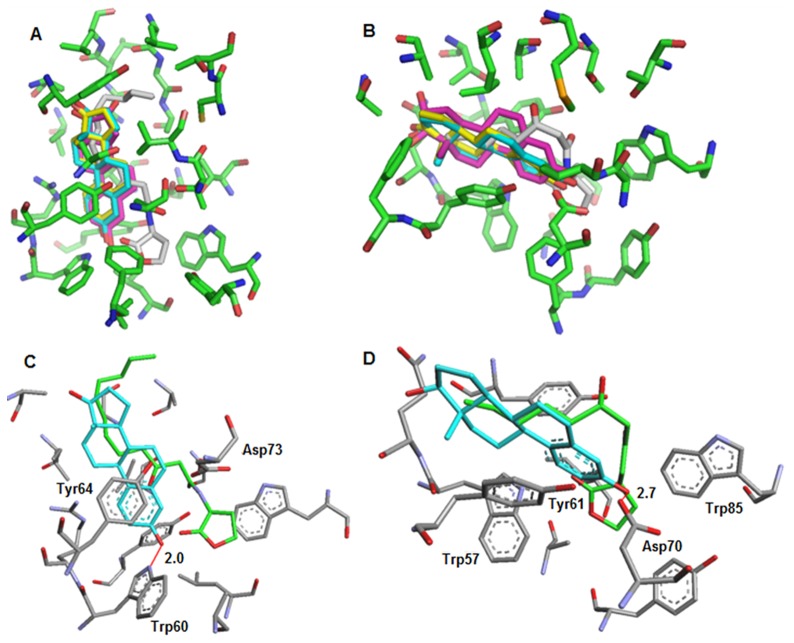
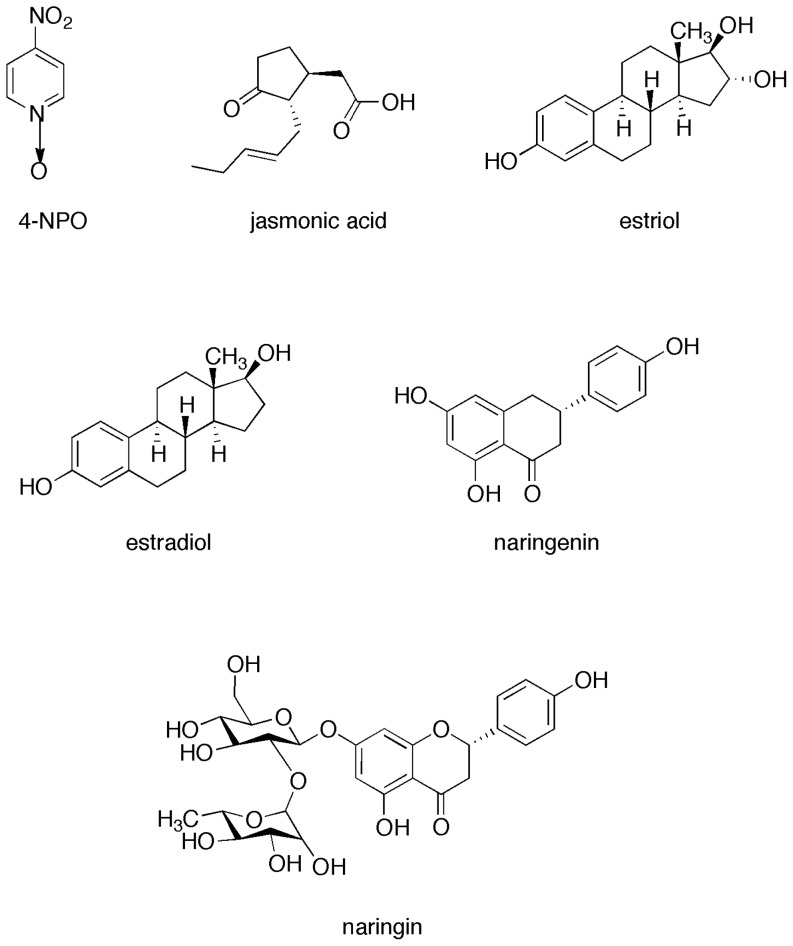
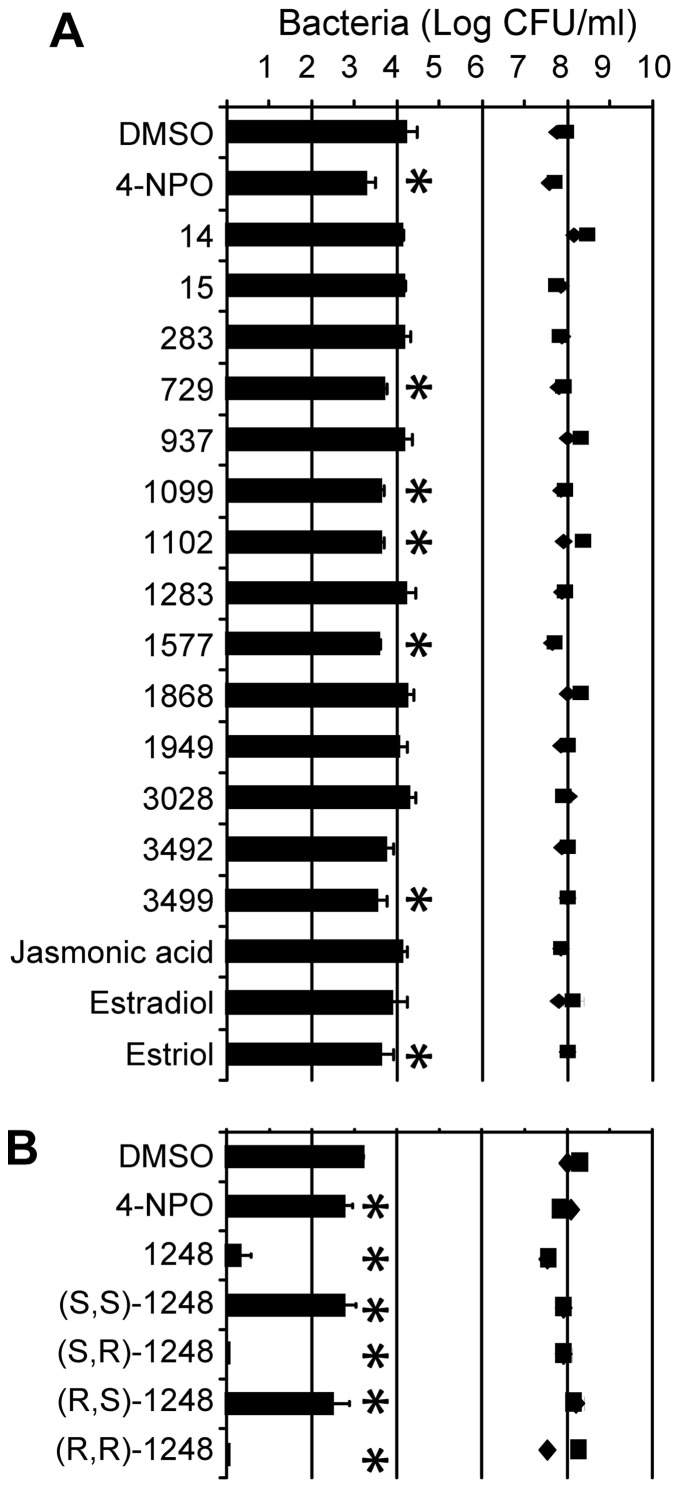
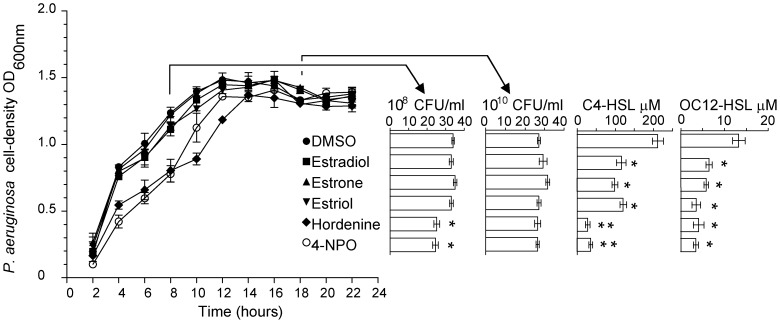
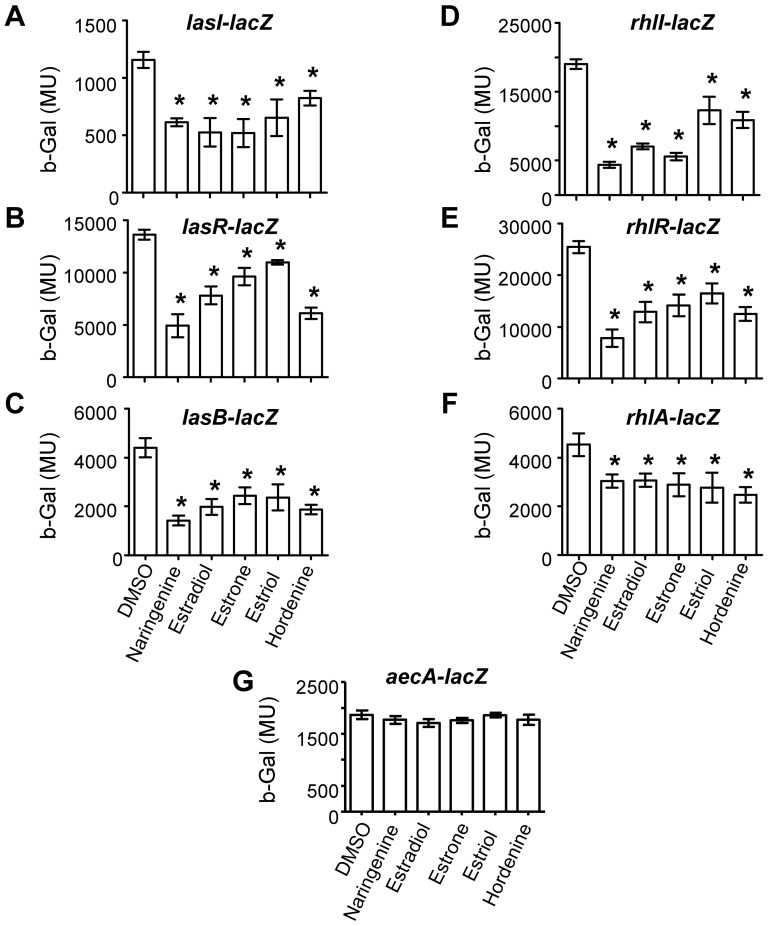
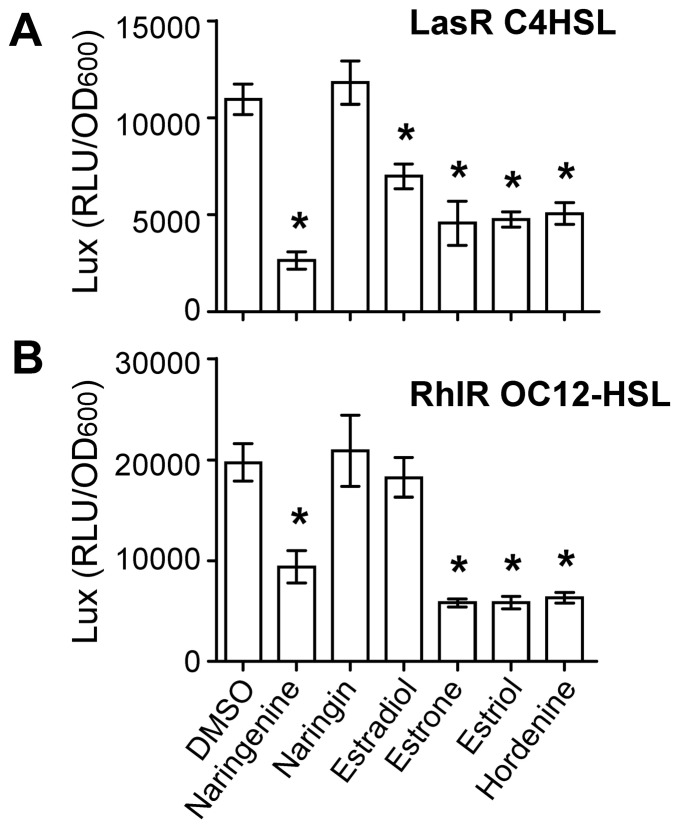
N-acylhomoserine lactone (AHL)-mediated quorum-sensing (QS) regulates virulence functions in plant and animal pathogens such as Agrobacterium tumefaciens and Pseudomonas aeruginosa. A chemolibrary of more than 3500 compounds was screened using two bacterial AHL-biosensors to identify QS-inhibitors (QSIs). The purity and structure of 15 QSIs selected through this screening were verified using HPLC MS/MS tools and their activity tested on the A. tumefaciens and P. aeruginosa bacterial models. The IC50 value of the identified QSIs ranged from 2.5 to 90 µg/ml, values that are in the same range as those reported for the previously identified QSI 4-nitropyridine-N-oxide (IC50 24 µg/ml). Under the tested culture conditions, most of the identified QSIs did not exhibit bacteriostatic or bactericidal activities. One third of the tested QSIs, including the plant compound hordenine and the human sexual hormone estrone, decreased the frequency of the QS-regulated horizontal transfer of the tumor-inducing (Ti) plasmid in A. tumefaciens. Hordenine, estrone as well as its structural relatives estriol and estradiol, also decreased AHL accumulation and the expression of six QS-regulated genes (lasI, lasR, lasB, rhlI, rhlR, and rhlA) in cultures of the opportunist pathogen P. aeruginosa. Moreover, the ectopic expression of the AHL-receptors RhlR and LasR of P. aeruginosa in E. coli showed that their gene-regulatory activity was affected by the QSIs. Finally, modeling of the structural interactions between the human hormones and AHL-receptors LasR of P. aeruginosa and TraR of A. tumefaciens confirmed the competitive binding capability of the human sexual hormones. This work indicates potential interferences between bacterial and eukaryotic hormonal communications.
N-酰基高丝氨酸内酯(AHL)介导的群体感应(QS)调节植物和动物病原体(如根癌土壤杆菌和铜绿假单胞菌)中的毒力功能。使用两种细菌AHL生物传感器筛选了一个包含3500多种化合物的化学文库,以鉴定群体感应抑制剂(QSI)。通过该筛选选择的15种QSI的纯度和结构使用HPLC MS/MS工具进行了验证,并在根癌土壤杆菌和铜绿假单胞菌细菌模型上测试了它们的活性。鉴定出的QSI的IC50值范围为2.5至90μg/ml,与先前鉴定的QSI 4-硝基吡啶-N-氧化物(IC50 24μg/ml)报道的值处于同一范围。在测试的培养条件下,大多数鉴定出的QSI没有表现出抑菌或杀菌活性。三分之一的测试QSI,包括植物化合物大麦碱和人类性激素雌酮,降低了根癌土壤杆菌中QS调节的致瘤(Ti)质粒水平转移的频率。大麦碱、雌酮及其结构类似物雌三醇和雌二醇,也降低了机会致病菌铜绿假单胞菌培养物中AHL的积累以及六个QS调节基因(lasI、lasR、lasB、rhlI、rhlR和rhlA)的表达。此外,铜绿假单胞菌的AHL受体RhlR和LasR在大肠杆菌中的异位表达表明它们的基因调控活性受到QSI的影响。最后,人类激素与铜绿假单胞菌的AHL受体LasR和根癌土壤杆菌的TraR之间的结构相互作用建模证实了人类性激素的竞争结合能力。这项工作表明细菌和真核生物激素通讯之间存在潜在干扰。