Castillo Paula, Pietrantonio Patricia V
Department of Entomology, Texas A&M University, College Station, Texas, United States of America.
PLoS One. 2013 Dec 20;8(12):e83966. doi: 10.1371/journal.pone.0083966. eCollection 2013.
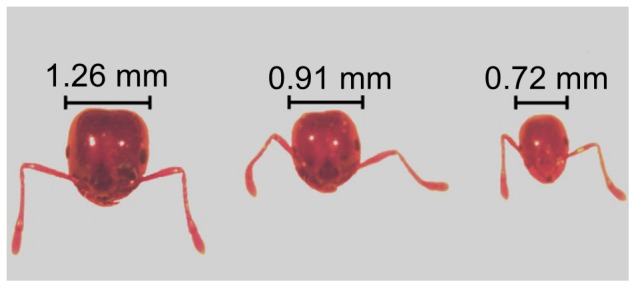
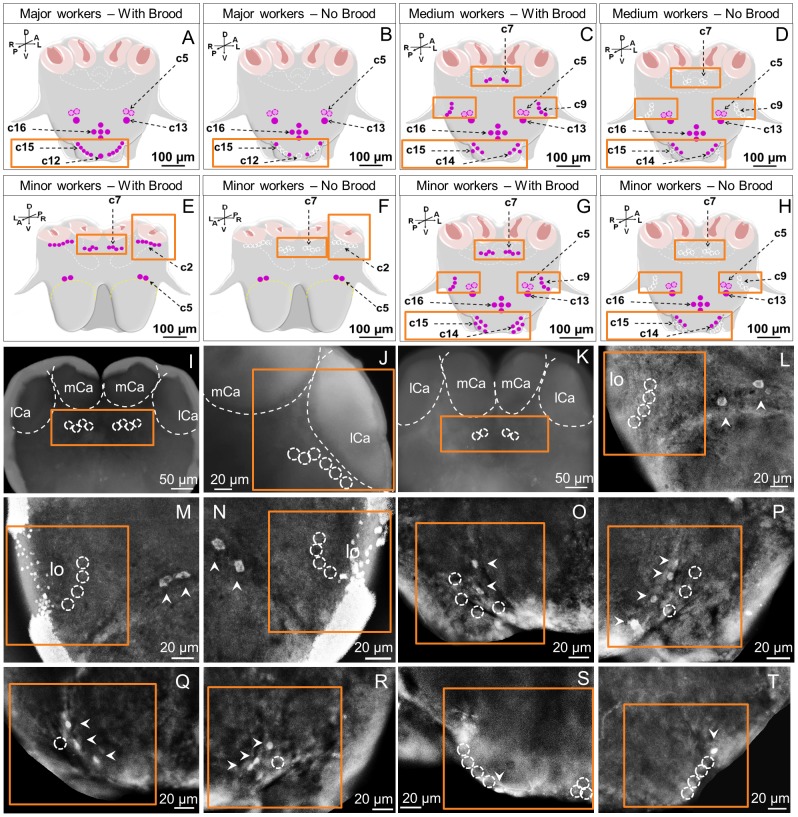
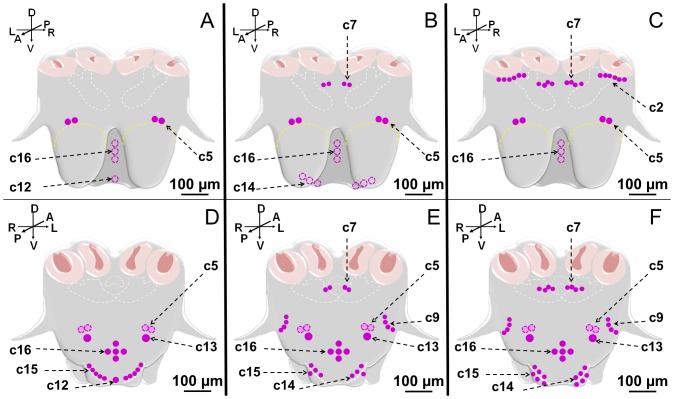
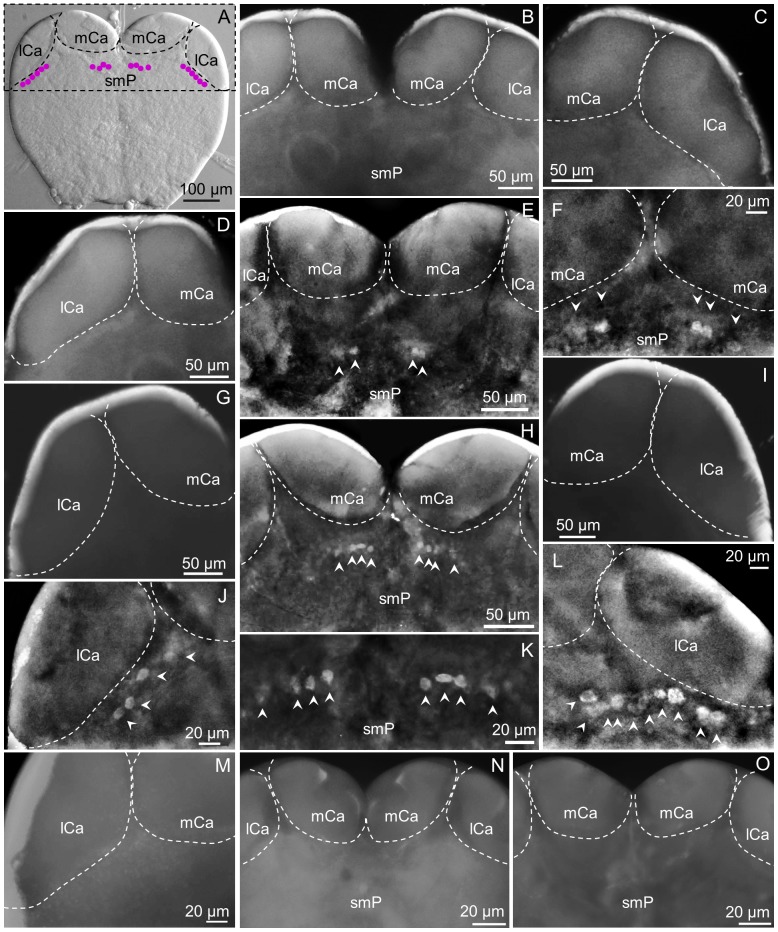
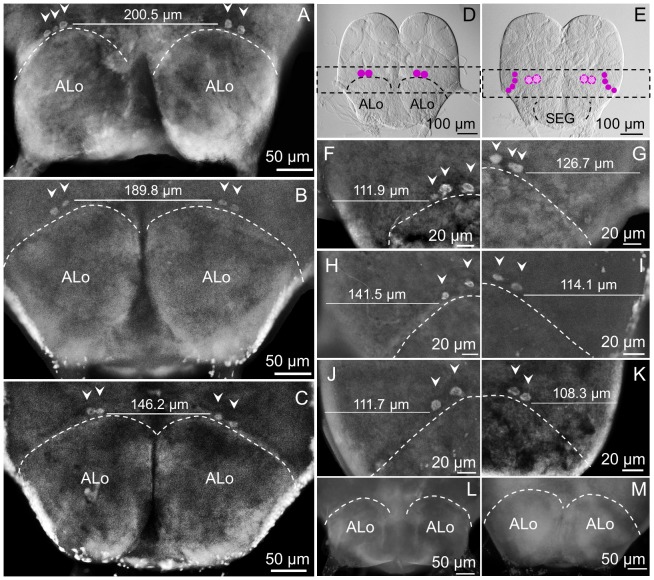
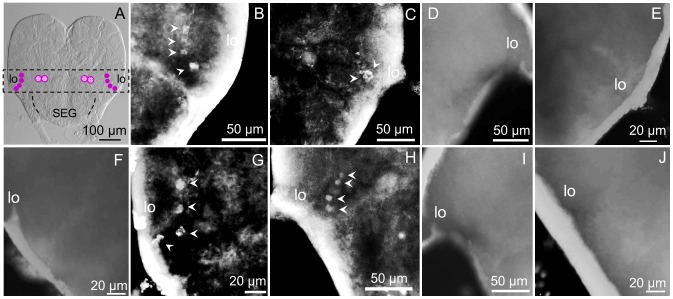
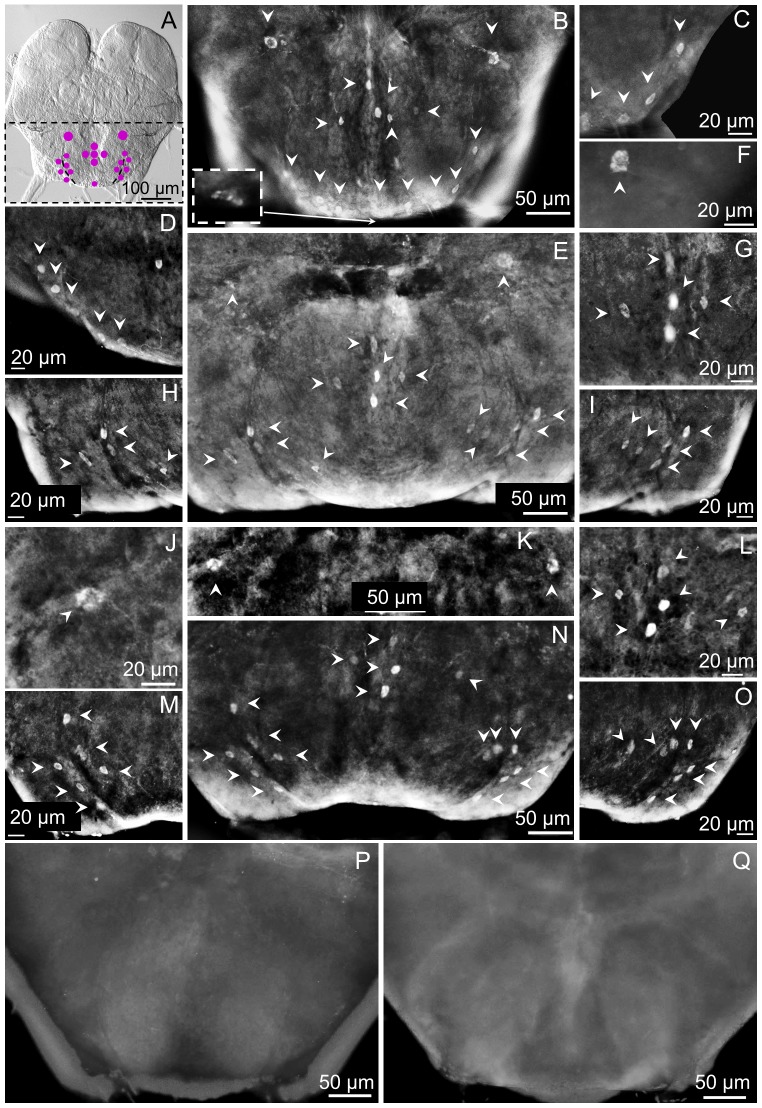
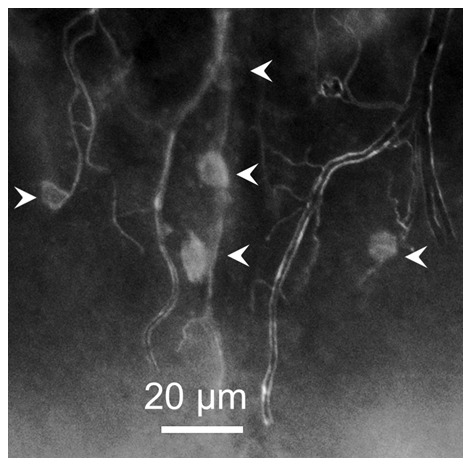
In the red imported fire ant, Solenopsis invicta Buren, the neuronal and molecular mechanisms related to worker division of labor are poorly understood. Workers from different subcastes (major, medium and minors) perform different tasks, which are loosely associated with their size. We hypothesized that the short neuropeptide F (sNPF) signaling system (NPY-like) could be involved in mechanisms of worker division of labor and sensing or responding to colony nutritional requirements. Thus, we investigated the expression of the short neuropeptide F receptor (sNPFR) in the brain and subesophageal ganglion (SEG) of workers from colonies with and without brood. Across worker subcastes a total of 9 clusters of immunoreactive sNPFR cells were localized in the brain and the subesophageal ganglion (SEG); some of these cells were similar to those observed previously in the queen. Worker brain sNPFR cell clusters were found in the protocerebrum near mushroom bodies, in the central complex and in the lateral horn. Other sNPFR immunoreactive cells were found at the edge of the antennal lobes. Across subcastes, we observed both a constant and a differential pattern of sNPFR clusters, with a higher number of sNPFR cells found in minor than in major workers. Those sNPFR cells detected in all worker subcastes appear to be involved in olfaction or SEG functions. The differential expression of clusters in subcastes suggests that sNPFR signaling is involved in regulating behaviors associated with specific subcastes and thus, division of labor. Some sNPFR cells appear to be involved in nutrient sensing and/or brood care, feeding behavior and locomotion. In colonies without brood, workers showed a lower cluster number, and an overall reduced sNPFR signal. Our results suggest the sNPF signaling system is a candidate for the neurobiological control of worker division of labor and sensing brood presence, perhaps correlating with protein requirements and availability.
在红火蚁(Solenopsis invicta Buren)中,与工蚁劳动分工相关的神经元和分子机制尚不清楚。来自不同亚等级(大型、中型和小型)的工蚁执行不同的任务,这些任务与其体型大致相关。我们推测,短神经肽F(sNPF)信号系统(类神经肽Y)可能参与工蚁劳动分工以及感知或响应蚁群营养需求的机制。因此,我们研究了有幼虫和无幼虫蚁群中工蚁大脑和咽下神经节(SEG)中短神经肽F受体(sNPFR)的表达。在所有工蚁亚等级中,总共9簇免疫反应性sNPFR细胞定位于大脑和咽下神经节(SEG);其中一些细胞与之前在蚁后中观察到的细胞相似。在靠近蘑菇体的前脑、中央复合体和侧角发现了工蚁大脑sNPFR细胞簇。在触角叶边缘也发现了其他sNPFR免疫反应性细胞。在所有亚等级中,我们观察到sNPFR簇既有恒定模式也有差异模式,小型工蚁中发现的sNPFR细胞数量多于大型工蚁。在所有工蚁亚等级中检测到的那些sNPFR细胞似乎参与嗅觉或SEG功能。亚等级中簇的差异表达表明,sNPFR信号传导参与调节与特定亚等级相关的行为,从而参与劳动分工。一些sNPFR细胞似乎参与营养感知和/或育幼、取食行为和运动。在无幼虫的蚁群中,工蚁的细胞簇数量较少,且sNPFR信号总体减少。我们的结果表明,sNPF信号系统是工蚁劳动分工和感知幼虫存在的神经生物学控制的候选者,可能与蛋白质需求和可获得性相关。