Larsen Anett K, Nymo Ingebjørg H, Briquemont Benjamin, Sørensen Karen K, Godfroid Jacques
Section for Arctic Veterinary Medicine, Department of Food Safety and Infection Biology, Norwegian School of Veterinary Science, Tromsø, Norway ; The Fram Centre, High North Research Centre for Climate and the Environment, Tromsø, Norway.
Faculty of Science, Catholic University of Louvain, Louvain-la-Neuve, Belgium.
PLoS One. 2013 Dec 20;8(12):e84861. doi: 10.1371/journal.pone.0084861. eCollection 2013.
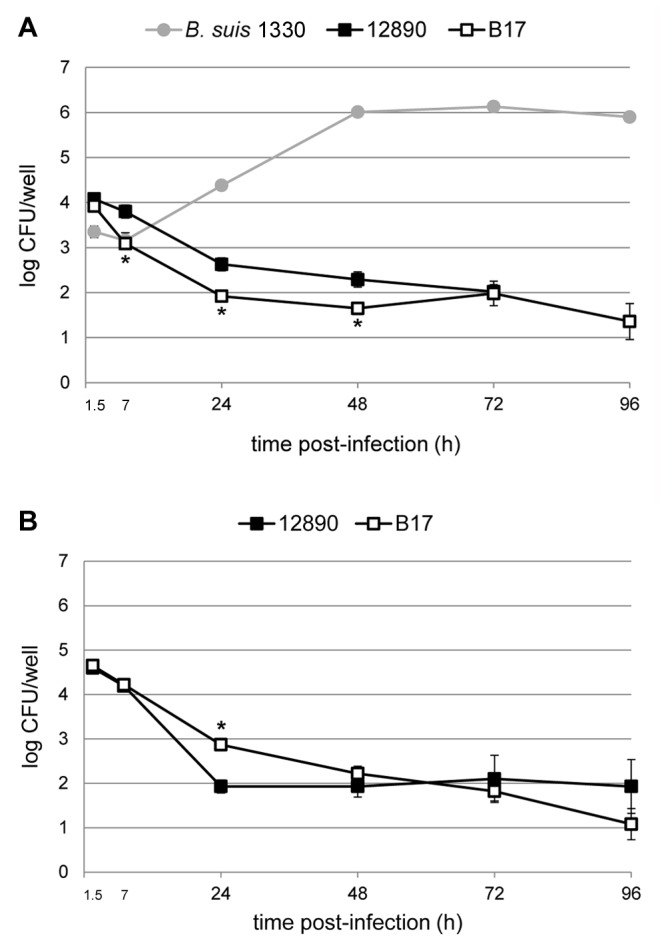
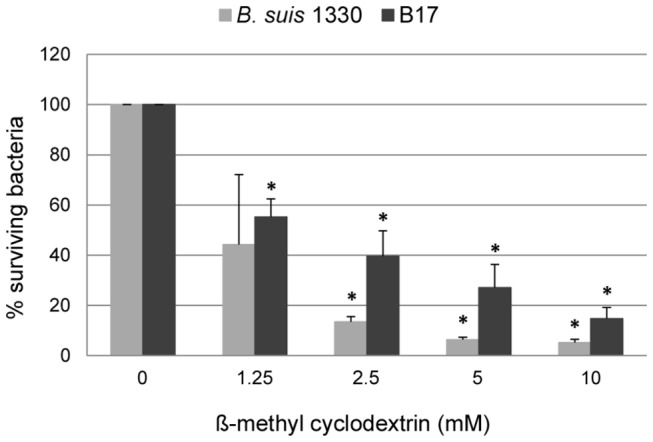
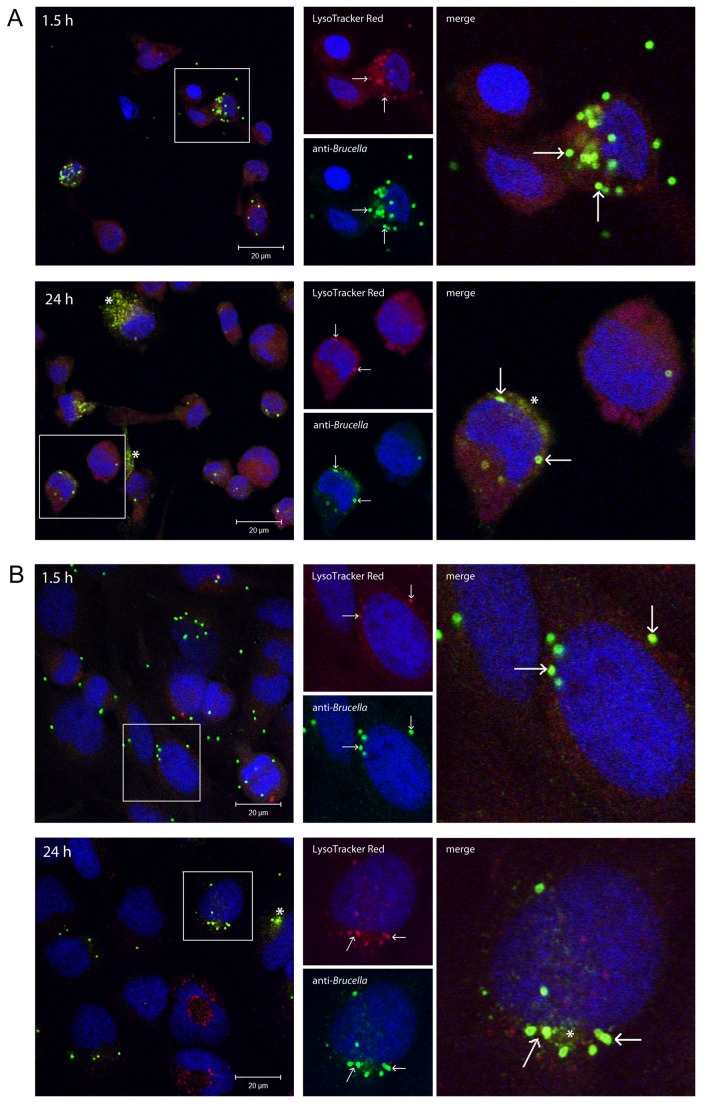
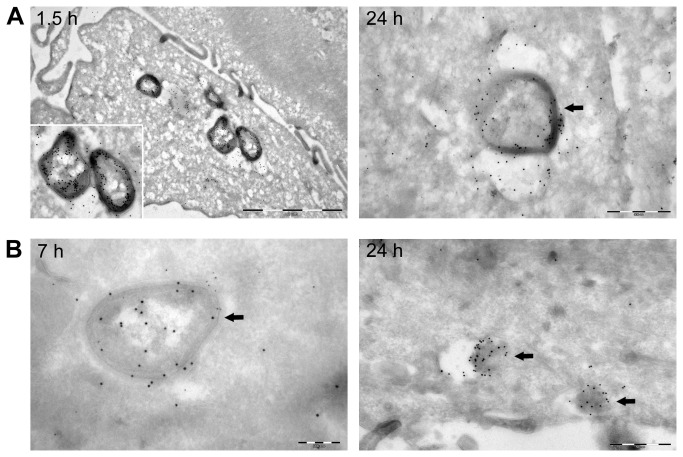
Marine mammal Brucella spp. have been isolated from pinnipeds (B. pinnipedialis) and cetaceans (B. ceti) from around the world. Although the zoonotic potential of marine mammal brucellae is largely unknown, reports of human disease exist. There are few studies of the mechanisms of bacterial intracellular invasion and multiplication involving the marine mammal Brucella spp. We examined the infective capacity of two genetically different B. pinnipedialis strains (reference strain; NTCT 12890 and a hooded seal isolate; B17) by measuring the ability of the bacteria to enter and replicate in cultured phagocytes and epithelial cells. Human macrophage-like cells (THP-1), two murine macrophage cell lines (RAW264.7 and J774A.1), and a human malignant epithelial cell line (HeLa S3) were challenged with bacteria in a gentamicin protection assay. Our results show that B. pinnipedialis is internalized, but is then gradually eliminated during the next 72-96 hours. Confocal microscopy revealed that intracellular B. pinnipedialis hooded seal strain colocalized with lysosomal compartments at 1.5 and 24 hours after infection. Intracellular presence of B. pinnipedialis hooded seal strain was verified by transmission electron microscopy. By using a cholesterol-scavenging lipid inhibitor, entrance of B. pinnipedialis hooded seal strain in human macrophages was significantly reduced by 65.8 % (± 17.3), suggesting involvement of lipid-rafts in intracellular entry. Murine macrophages invaded by B. pinnipedialis do not release nitric oxide (NO) and intracellular bacterial presence does not induce cell death. In summary, B. pinnipedialis hooded seal strain can enter human and murine macrophages, as well as human epithelial cells. Intracellular entry of B. pinnipedialis hooded seal strain involves, but seems not to be limited to, lipid-rafts in human macrophages. Brucella pinnipedialis does not multiply or survive for prolonged periods intracellulary.
世界各地的鳍足类动物(海狗布鲁氏菌)和鲸类动物(鲸布鲁氏菌)中均分离出了海洋哺乳动物布鲁氏菌属。尽管海洋哺乳动物布鲁氏菌的人畜共患病潜力在很大程度上尚不清楚,但已有人类疾病的报道。关于涉及海洋哺乳动物布鲁氏菌属的细菌细胞内侵袭和繁殖机制的研究很少。我们通过测量细菌进入培养的吞噬细胞和上皮细胞并在其中复制的能力,检测了两种基因不同的海狗布鲁氏菌菌株(参考菌株;NTCT 12890和一只冠海豹分离株;B17)的感染能力。在庆大霉素保护试验中,用人巨噬细胞样细胞(THP-1)、两种小鼠巨噬细胞系(RAW264.7和J774A.1)以及一种人恶性上皮细胞系(HeLa S3)对细菌进行攻击。我们的结果表明,海狗布鲁氏菌被内化,但在接下来的72 - 96小时内逐渐被清除。共聚焦显微镜显示,感染后1.5小时和24小时,细胞内的海狗布鲁氏菌冠海豹菌株与溶酶体区室共定位。通过透射电子显微镜证实了细胞内存在海狗布鲁氏菌冠海豹菌株。通过使用一种清除胆固醇的脂质抑制剂,海狗布鲁氏菌冠海豹菌株进入人巨噬细胞的能力显著降低了65.8%(±17.3),表明脂筏参与了细胞内进入过程。被海狗布鲁氏菌侵袭的小鼠巨噬细胞不释放一氧化氮(NO),并且细胞内细菌的存在不会诱导细胞死亡。总之,海狗布鲁氏菌冠海豹菌株可以进入人及小鼠巨噬细胞以及人上皮细胞。海狗布鲁氏菌冠海豹菌株的细胞内进入涉及但似乎不限于人巨噬细胞中的脂筏。海狗布鲁氏菌在细胞内不会长时间繁殖或存活。