Neagu Monica, Constantin Carolina, Martin Diana, Albulescu Lucian, Iacob Nicusor, Ighigeanu Daniel
Immunology Department, Immunobiology Laboratory, "Victor Babes" National Institute of Pathology, 99-101 Splaiul Independentei, sector 5, Bucharest 050096, Romania.
National Institute for Laser, Plasma and Radiation Physics, 409 Atomistilor Street, Magurele 077125, Romania.
Radiol Res Pract. 2013;2013:414816. doi: 10.1155/2013/414816. Epub 2013 Nov 26.
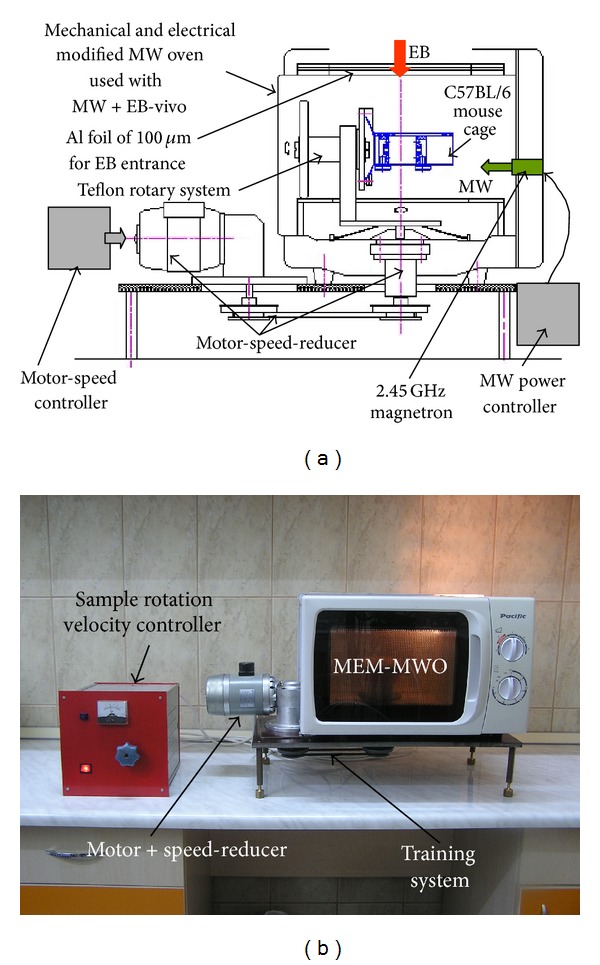
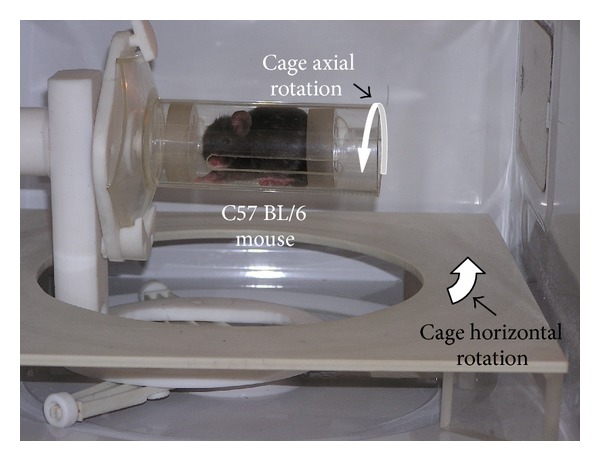
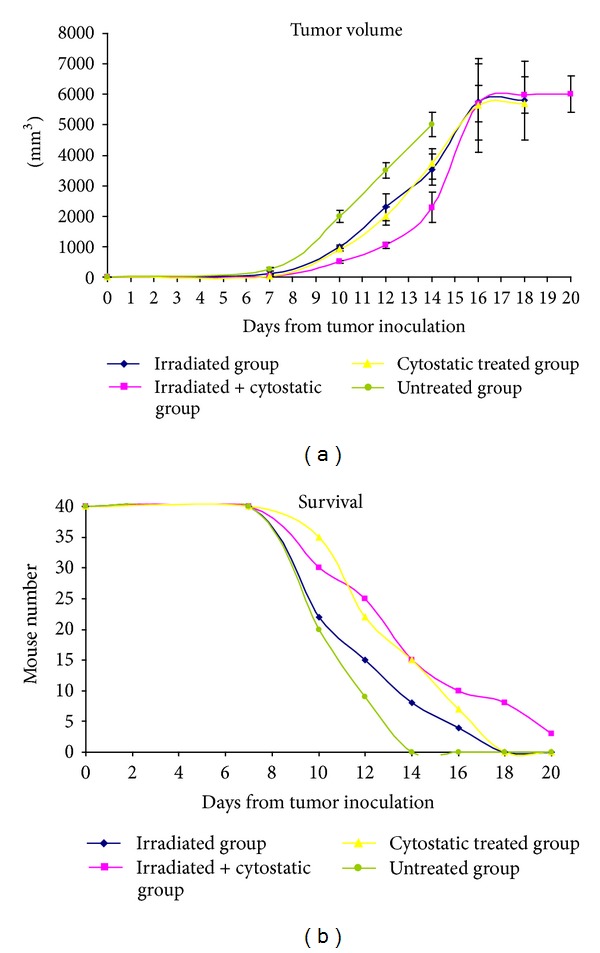
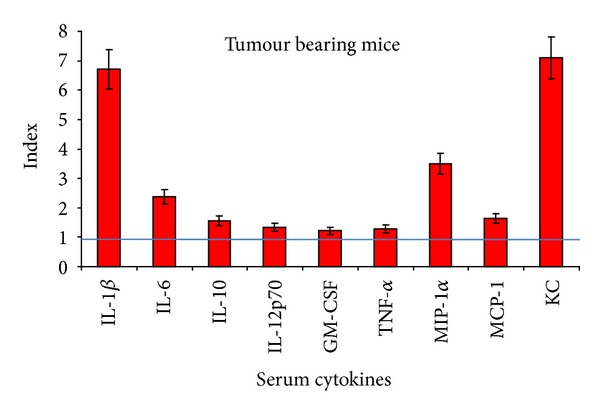
A cutaneous melanoma mouse model was used to test the efficacy of a new therapeutical approach that uses low doses of cytostatics in conjunction with mild whole body microwave exposure of 2.45 GHz in order to enhance cytostatics antitumoral effect. Materials and Methods. A microwave exposure system for C57BL/6 mouse whole body microwave irradiation was designed; groups of 40 mice (males and females) bearing experimental tumours were subjected to a combined therapy comprising low doses of dacarbazine in combination with mild whole body irradiation. Clinical parameters and serum cytokine testing using xMAP technology were performed. Results. The group that was subjected to combined therapy, microwave and cytostatic, had the best clinical evolution in terms of overall survival, tumour volume, and metastatic potential. At day 14 the untreated group had 100% mortality, while in the combined therapy group 40% of mice were surviving. Quantifying serum IL-1 β , IL-6, IL-10, IL-12 (p70), IFN- γ , GM-CSF, TNF- α , MIP-1 α , MCP-1, and KC during tumorigenesis and therapy found that the combined experimental therapy decreases all the inflammatory cytokines, except chemokine MCP-1 that was found increased, suggesting an increase of the anti-tumoral immune response triggered by the combined therapy. The overall metastatic process is decreased in the combined therapy group.
使用皮肤黑色素瘤小鼠模型来测试一种新治疗方法的疗效,该方法使用低剂量的细胞抑制剂并结合2.45 GHz的轻度全身微波照射,以增强细胞抑制剂的抗肿瘤效果。材料与方法。设计了一种用于C57BL/6小鼠全身微波照射的微波暴露系统;将40只患有实验性肿瘤的小鼠(雄性和雌性)分组,接受包括低剂量达卡巴嗪与轻度全身照射相结合的联合治疗。使用xMAP技术进行临床参数和血清细胞因子检测。结果。接受微波和细胞抑制剂联合治疗的组在总生存期、肿瘤体积和转移潜能方面具有最佳的临床进展。在第14天,未治疗组的死亡率为100%,而联合治疗组有40%的小鼠存活。在肿瘤发生和治疗过程中对血清白细胞介素-1β、白细胞介素-6、白细胞介素-10、白细胞介素-12(p70)、干扰素-γ、粒细胞-巨噬细胞集落刺激因子、肿瘤坏死因子-α、巨噬细胞炎性蛋白-1α、单核细胞趋化蛋白-1和KC进行定量分析发现,联合实验治疗降低了所有炎性细胞因子,但单核细胞趋化蛋白-1增加,这表明联合治疗引发的抗肿瘤免疫反应增强。联合治疗组的总体转移过程有所减少。