Institute of Microbiology, Chinese Academy of Sciences, Beijing, China.
BMC Genomics. 2013 Dec 30;14:933. doi: 10.1186/1471-2164-14-933.
Throughout the long history of industrial and academic research, many microbes have been isolated, characterized and preserved (whenever possible) in culture collections. With the steady accumulation in observational data of biodiversity as well as microbial sequencing data, bio-resource centers have to function as data and information repositories to serve academia, industry, and regulators on behalf of and for the general public. Hence, the World Data Centre for Microorganisms (WDCM) started to take its responsibility for constructing an effective information environment that would promote and sustain microbial research data activities, and bridge the gaps currently present within and outside the microbiology communities.
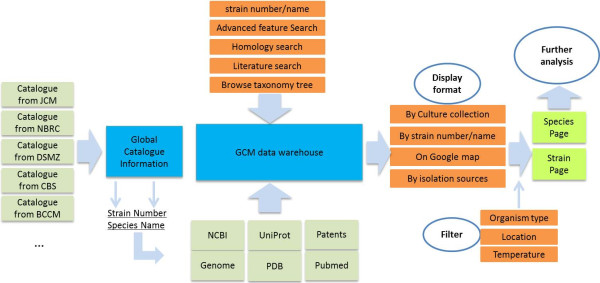
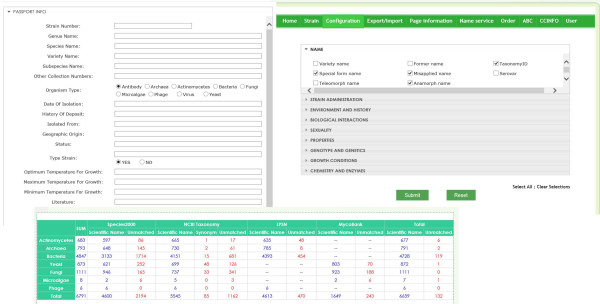
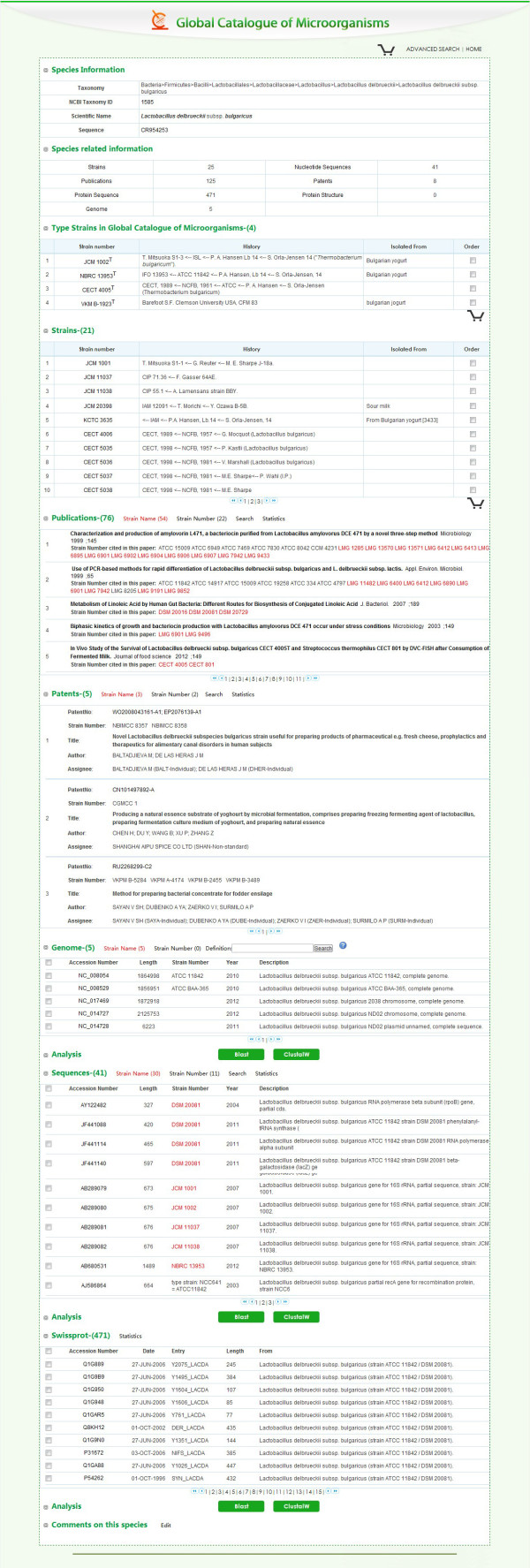
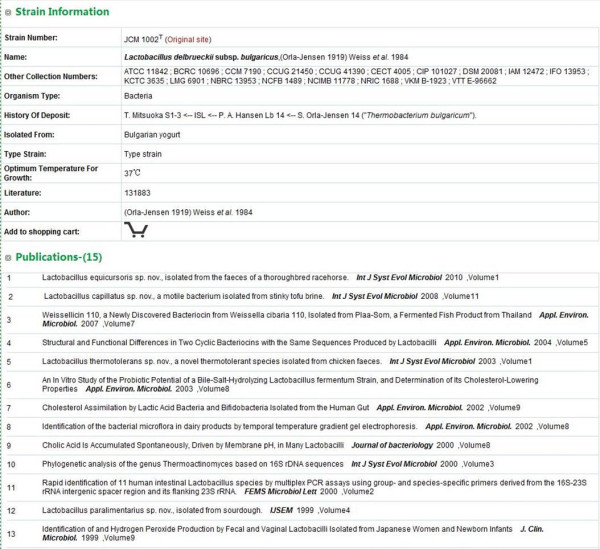
Strain catalogue information was collected from collections by online submission. We developed tools for automatic extraction of strain numbers and species names from various sources, including Genbank, Pubmed, and SwissProt. These new tools connect strain catalogue information with the corresponding nucleotide and protein sequences, as well as to genome sequence and references citing a particular strain. All information has been processed and compiled in order to create a comprehensive database of microbial resources, and was named Global Catalogue of Microorganisms (GCM). The current version of GCM contains information of over 273,933 strains, which includes 43,436 bacterial, fungal and archaea species from 52 collections in 25 countries and regions.A number of online analysis and statistical tools have been integrated, together with advanced search functions, which should greatly facilitate the exploration of the content of GCM.
A comprehensive dynamic database of microbial resources has been created, which unveils the resources preserved in culture collections especially for those whose informatics infrastructures are still under development, which should foster cumulative research, facilitating the activities of microbiologists world-wide, who work in both public and industrial research centres. This database is available from http://gcm.wfcc.info.
纵观工业和学术研究的漫长历史,许多微生物已经被分离、鉴定并保存在培养物保藏中心(只要有可能)。随着生物多样性观测数据和微生物测序数据的不断积累,生物资源中心必须充当数据和信息存储库,代表学术界、工业界和监管机构为公众服务。因此,世界微生物数据中心(WDCM)开始承担构建有效信息环境的责任,以促进和维持微生物研究数据活动,并弥合微生物学领域内外目前存在的差距。
从各收藏单位通过在线提交收集了菌株目录信息。我们开发了从各种来源(包括 Genbank、Pubmed 和 SwissProt)自动提取菌株编号和物种名称的工具。这些新工具将菌株目录信息与相应的核苷酸和蛋白质序列以及基因组序列和引用特定菌株的参考文献联系起来。所有信息都经过处理和编译,以创建一个全面的微生物资源数据库,并将其命名为全球微生物目录(GCM)。GCM 的当前版本包含超过 273,933 株的信息,其中包括来自 25 个国家和地区的 52 个收藏单位的 43,436 个细菌、真菌和古菌物种。已经集成了许多在线分析和统计工具以及高级搜索功能,这将极大地方便对 GCM 内容的探索。
创建了一个全面的微生物资源动态数据库,揭示了培养物保藏中心保存的资源,特别是那些信息基础设施仍在发展中的资源,这应该有助于累积研究,促进世界各地微生物学家的活动,他们在公共和工业研究中心工作。该数据库可从 http://gcm.wfcc.info 获得。