School of Biomedical Engineering, Tianjin Medical University, Tianjin, China.
Department of Anesthesiology, Tianjin Medical University General Hospital, Tianjin, China.
PLoS One. 2013 Dec 27;8(12):e83653. doi: 10.1371/journal.pone.0083653. eCollection 2013.
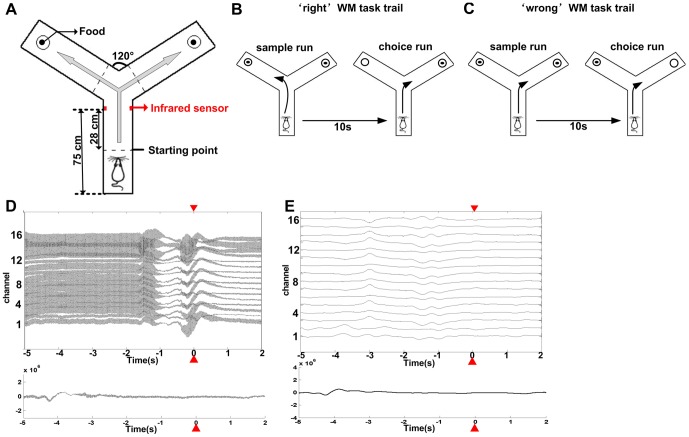
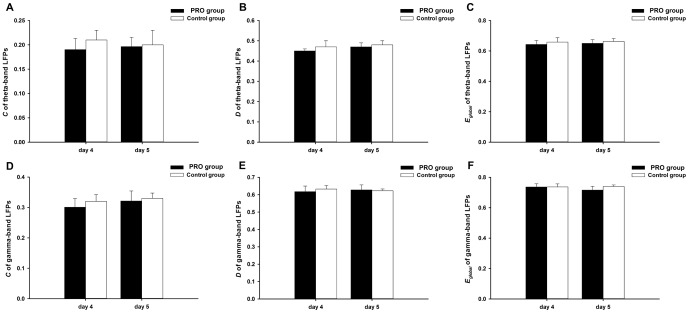
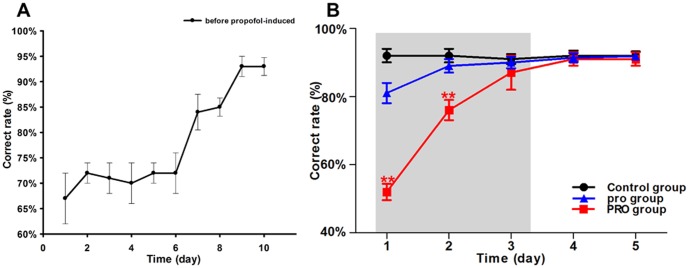
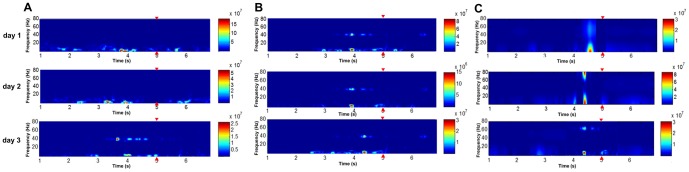
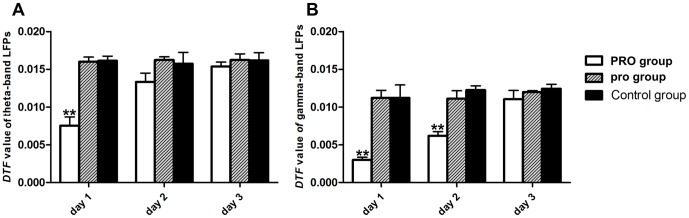
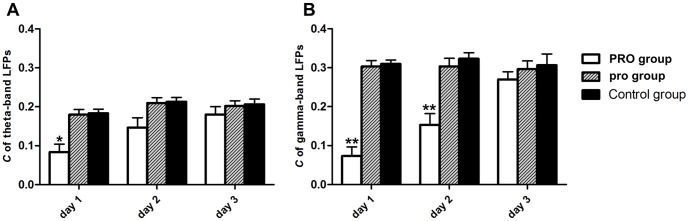
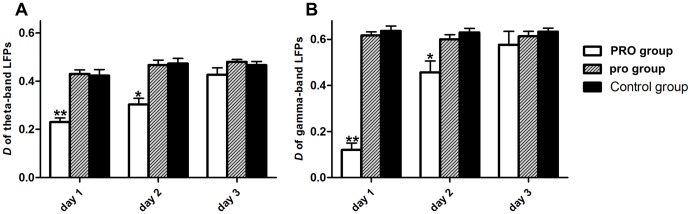
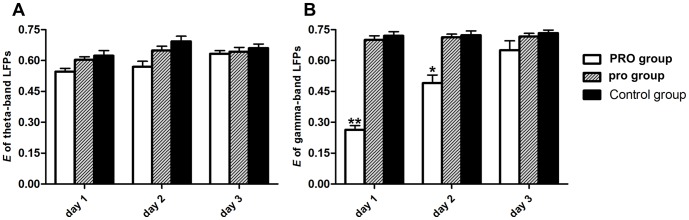
Working memory (WM) refers to the temporary storage and manipulation of information necessary for performance of complex cognitive tasks. There is a growing interest in whether and how propofol anesthesia inhibits WM function. The aim of this study is to investigate the possible inhibition mechanism of propofol anesthesia based on the functional connections of multi-local field potentials (LFPs) and behavior during WM tasks. Adult SD rats were randomly divided into 3 groups: pro group (0.5 mg · kg(-1) · min(-1),2 h), PRO group (0.9 mg·kg(-1) · min(-1), 2 h) and control group. The experimental data were 16-channel LFPs obtained at prefrontal cortex with implanted microelectrode array in SD rats during WM tasks in Y-maze at 24, 48, 72, 96, 120 hours (day 1-day 5) after propofol anesthesia, and the behavior results of WM were recoded at the same time. Directed transfer function (DTF) method was applied to analyze the connections among LFPs directly. Furthermore, the causal networks were identified by DTF. The clustering coefficient (C), network density (D) and global efficiency (Eglobal ) were selected to describe the functional connectivity quantitatively. The results show that: comparing with the control group, the LFPs functional connectivity in pro group were no significantly difference (p>0.05); the connectivity in PRO group were significantly decreased (p<0.05 at 24 hours, p<0.05 at 48 hours), while no significant difference at 72, 96 and 120 hours for rats (p>0.05), which were consistent with the behavior results. These findings could lead to improved understanding the mechanism of inhibition of anesthesia on WM functions from the view of connections among LFPs.
工作记忆(WM)是指执行复杂认知任务所需的信息的临时存储和操作。人们越来越关注异丙酚麻醉是否以及如何抑制 WM 功能。本研究旨在基于 WM 任务期间多局部场电位(LFPs)和行为的功能连接,探讨异丙酚麻醉抑制的可能机制。成年 SD 大鼠随机分为 3 组:pro 组(0.5mg·kg-1·min-1,2h)、PRO 组(0.9mg·kg-1·min-1,2h)和对照组。实验数据为 SD 大鼠在 Y 迷宫中进行 WM 任务时前额叶皮层植入微电极阵列获得的 16 通道 LFPs,在异丙酚麻醉后 24、48、72、96、120 小时(第 1-5 天),同时记录 WM 的行为结果。应用有向传递函数(DTF)方法直接分析 LFPs 之间的连接。此外,通过 DTF 确定因果网络。选择聚类系数(C)、网络密度(D)和全局效率(Eglobal)来定量描述功能连接。结果表明:与对照组相比,pro 组 LFPs 的功能连接无显著差异(p>0.05);PRO 组的连接明显降低(24 小时时 p<0.05,48 小时时 p<0.05),而 72、96 和 120 小时时大鼠无显著差异(p>0.05),这与行为结果一致。这些发现可能有助于从 LFPs 之间的连接角度,提高对麻醉抑制 WM 功能机制的理解。