Gao Ruimin, Wan Zi Yi, Wong Sek-Man
Department of Biological Sciences, National University of Singapore, Singapore.
Department of Biological Sciences, National University of Singapore, Singapore ; Temasek Life Sciences Laboratory, Singapore ; National University of Singapore Suzhou Research Institute, Jiangsu, China.
PLoS One. 2013 Dec 30;8(12):e85476. doi: 10.1371/journal.pone.0085476. eCollection 2013.
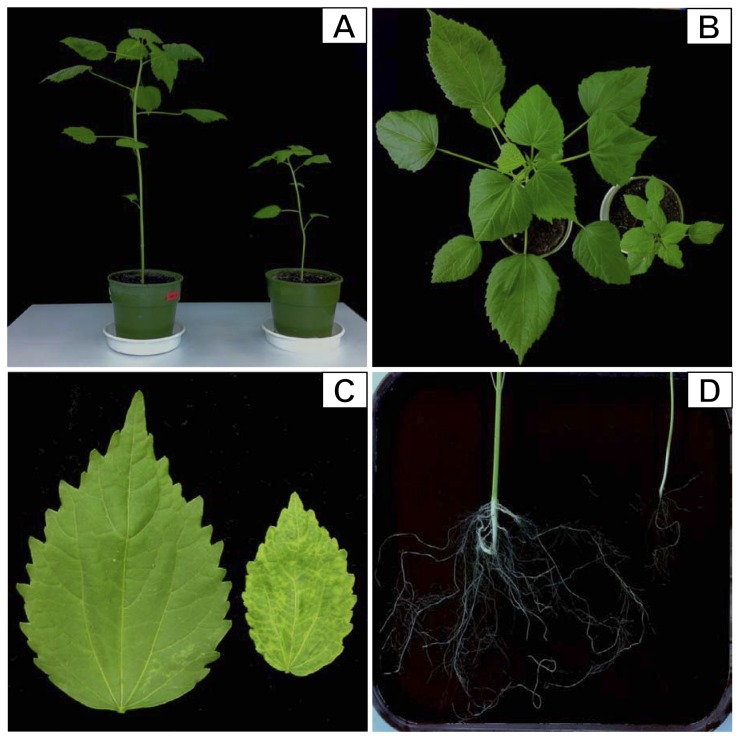
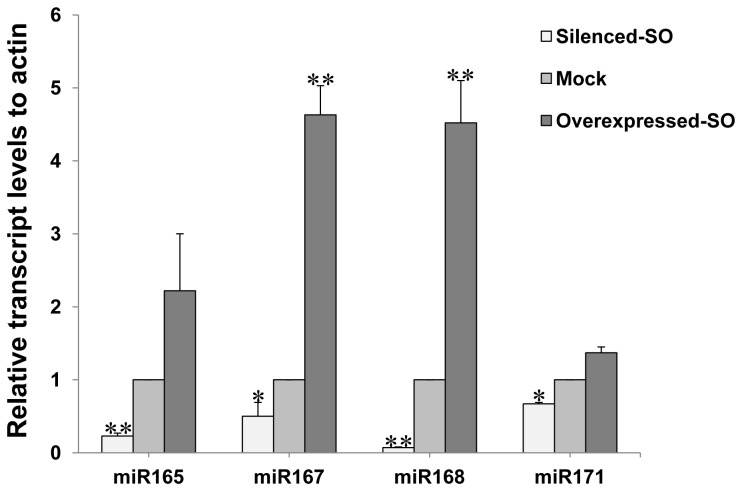
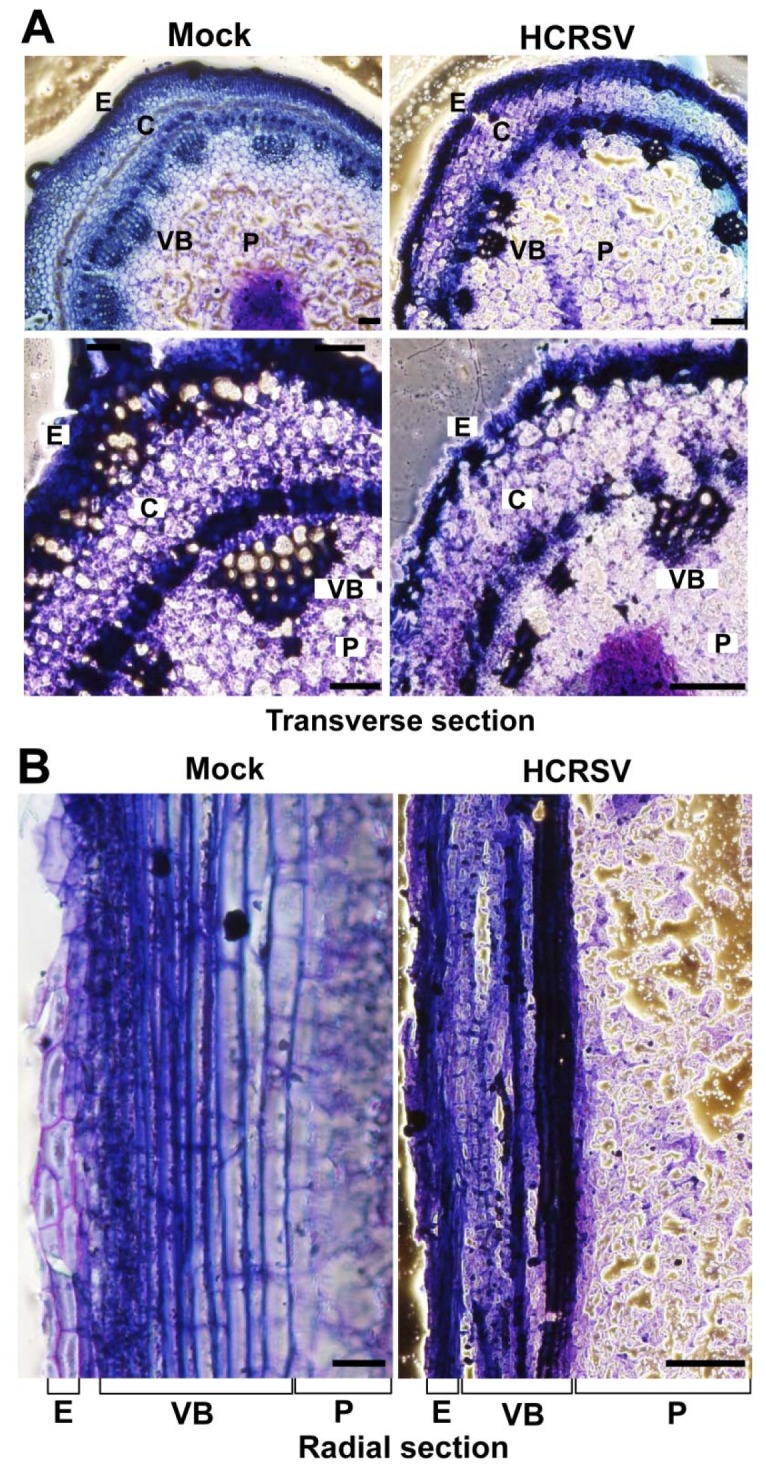
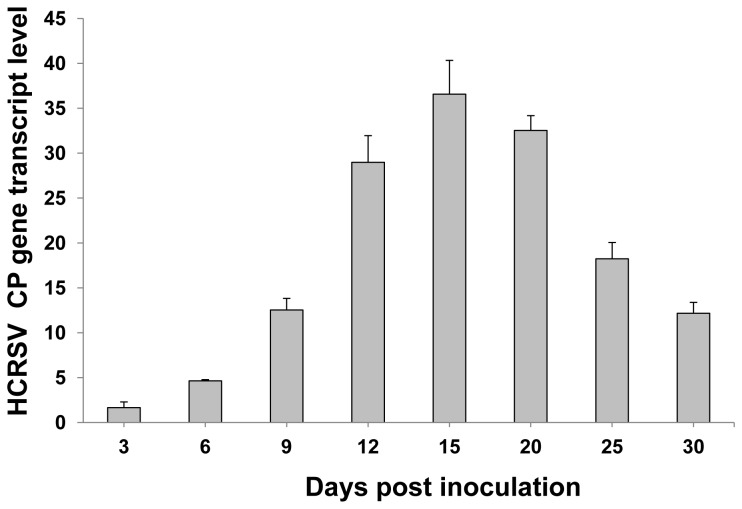
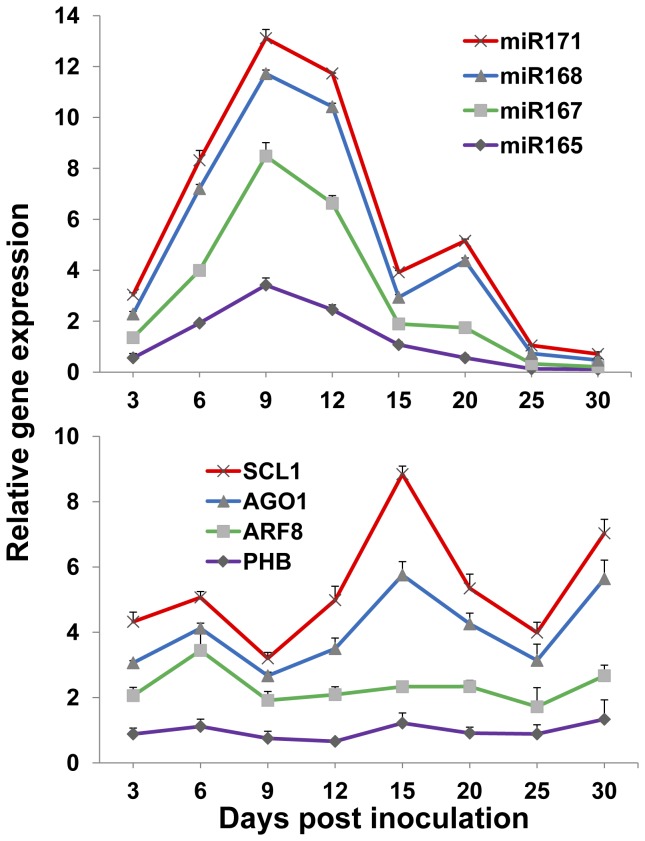
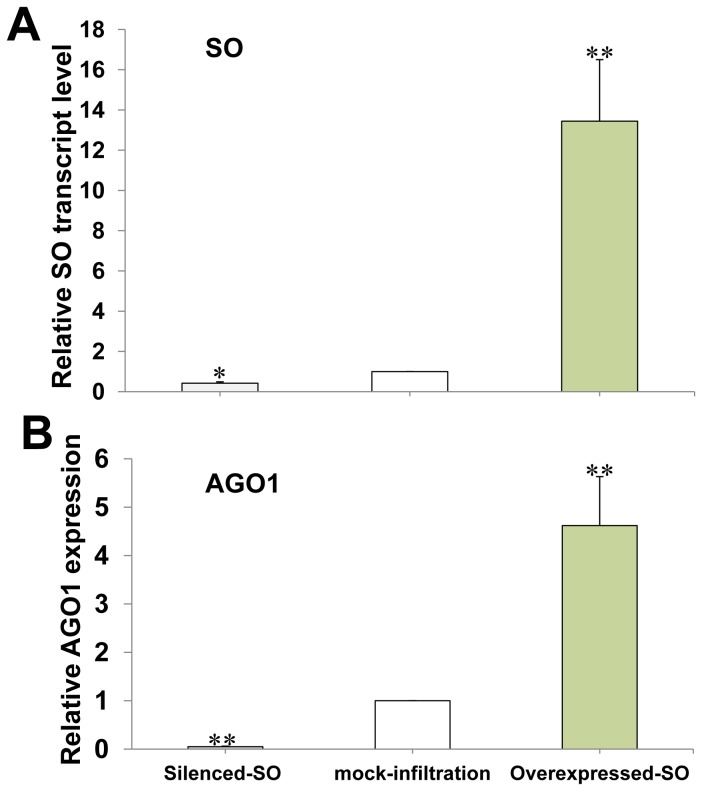
Virus infection may cause a multiplicity of symptoms in their host including discoloration, distortion and growth retardation. Hibiscus chlorotic ringspot virus (HCRSV) infection was studied using kenaf (Hibiscus cannabinus L.), a non-wood fiber-producing crop in this study. Infection by HCRSV reduced the fiber yield and concomitant economic value of kenaf. We investigated kenaf growth retardation and fluctuations of four selected miRNAs after HCRSV infection. Vegetative growth (including plant height, leaf size and root development) was severely retarded. From the transverse and radial sections of the mock and HCRSV-infected kenaf stem, the vascular bundles of HCRSV-infected plants were severely disrupted. In addition, four conserved plant developmental and defence related microRNAs (miRNAs) (miR165, miR167, miR168 and miR171) and their respective target genes phabulosa (PHB), auxin response factor 8 (ARF8), argonaute 1 (AGO1) and scarecrow-like protein 1 (SCL1) displayed variation in expression levels after HCRSV infection. Compared with the mock inoculated kenaf plants, miR171 and miR168 and their targets SCL1 and AGO1 showed greater fluctuations after HCRSV infection. As HCRSV upregulates plant SO transcript in kenaf and upregulated AGO1 in HCRSV-infected plants, the expression level of AGO1 transcript was further investigated under sulfite oxidase (SO) overexpression or silencing condition. Interestingly, the four selected miRNAs were also up- or down-regulated upon overexpression or silencing of SO. Plant growth retardation and fluctuation of four conserved miRNAs are correlated to HCRSV infection.
病毒感染可能会在其宿主中引发多种症状,包括变色、变形和生长迟缓。在本研究中,使用红麻(Hibiscus cannabinus L.)这种非木纤维作物对木槿褪绿环斑病毒(HCRSV)感染进行了研究。HCRSV感染降低了红麻的纤维产量以及相应的经济价值。我们研究了HCRSV感染后红麻的生长迟缓情况以及四种选定miRNA的波动情况。营养生长(包括株高、叶片大小和根系发育)严重受阻。从接种了模拟物和HCRSV的红麻茎的横向和径向切片来看,感染HCRSV的植物维管束严重受损。此外,四种保守的与植物发育和防御相关的微小RNA(miRNA)(miR165、miR167、miR168和miR171)及其各自的靶基因phabulosa(PHB)、生长素响应因子8(ARF8)、AGO1和稻草人样蛋白1(SCL1)在HCRSV感染后表达水平出现变化。与接种模拟物的红麻植株相比,miR171和miR168及其靶基因SCL1和AGO1在HCRSV感染后波动更大。由于HCRSV上调了红麻中植物SO转录本,且在感染HCRSV的植物中上调了AGO1,因此在亚硫酸盐氧化酶(SO)过表达或沉默条件下进一步研究了AGO1转录本的表达水平。有趣的是,在SO过表达或沉默时,这四种选定的miRNA也会上调或下调。植物生长迟缓以及四种保守miRNA的波动与HCRSV感染相关。