Aburto-Oropeza Octavio, Dominguez-Guerrero Isaí, Cota-Nieto José, Plomozo-Lugo Tomás
Departamento de Biología Marina, Universidad Autónoma de Baja California Sur, Carretera al sur km 5.5, La Paz, 23081 Mexico ; Center for Marine Biodiversity and Conservation, Scripps Institution of Oceanography, 9500 Gilman Drive, La Jolla, CA 92093-0202 USA.
Departamento de Biología Marina, Universidad Autónoma de Baja California Sur, Carretera al sur km 5.5, La Paz, 23081 Mexico.
Mar Biol. 2009;156(12):2461-2472. doi: 10.1007/s00227-009-1271-5. Epub 2009 Aug 8.
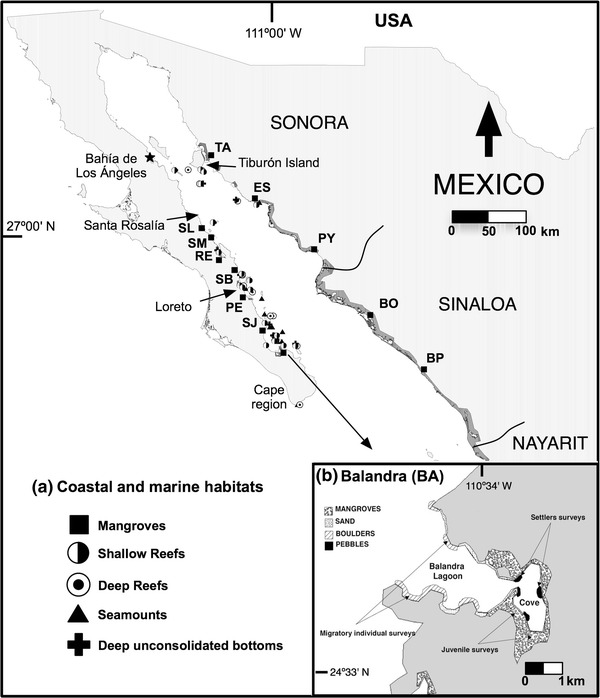
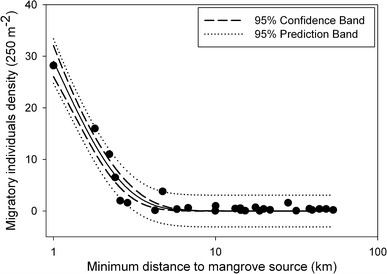
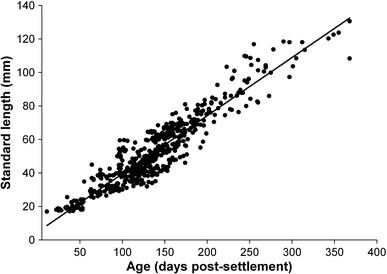
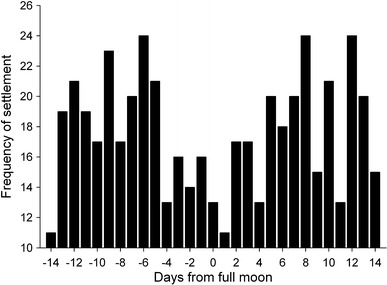
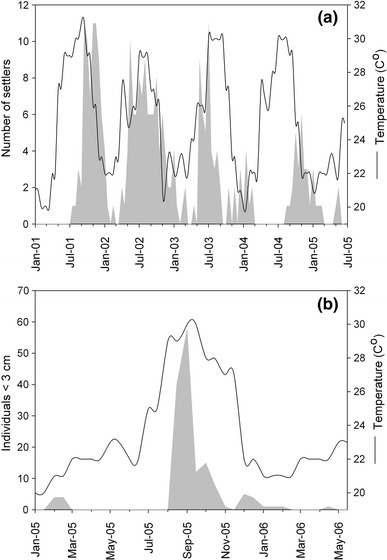
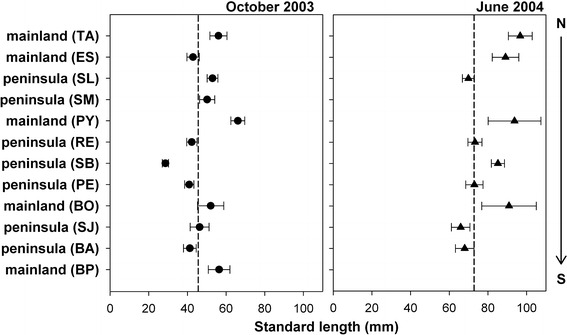
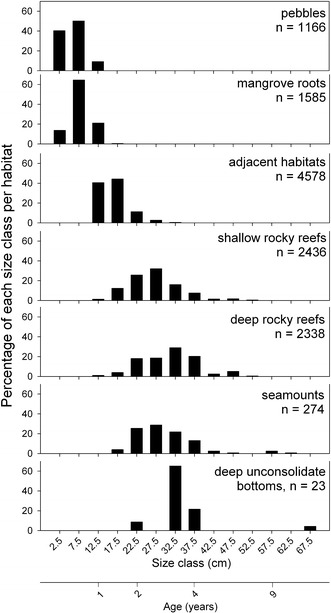
We examined recruitment and ontogenetic habitat shifts of the yellow snapper in the Gulf of California, by conducting surveys and collections in multiple mangrove sites and major marine coastal habitats from 1998 to 2007. Over 1,167 juvenile individuals were collected and 516 otoliths were aged to describe the temporal pattern of the settlement. recruits in mangroves, where juveniles remain until they are approximately 100 mm in length or 300-days-old. Back-calculated settlement dates and underwater surveys indicated a major recruitment peak during September and October, around 8 days before and after the full moon. The majority of mangrove sites in the Gulf of California had a similar average size at the beginning of the settlement season for the cohort of 2003; although there were significant differences in individual sizes at the end of the nursery stage. When sub-adults leave mangroves, they live in shallow rocky reefs and later become abundant in deeper rocky reefs. The density of migratory individuals (10-20 cm SL) decreased exponentially as the distance between a reef and a nearby mangrove site increased. This finding has important implications for local fishery regulations and coastal management plans.
我们通过在1998年至2007年期间对多个红树林地点和主要海洋海岸栖息地进行调查与采集,研究了加利福尼亚湾黄鳍鲷的补充和个体发育过程中的栖息地转移情况。共采集了1167只以上的幼鱼个体,并对516颗耳石进行了年龄鉴定,以描述定居的时间模式。幼鱼在红树林中生长,直到体长约100毫米或300日龄。通过反推计算得出的定居日期和水下调查表明,主要补充高峰出现在9月和10月,在满月前后约8天。加利福尼亚湾的大多数红树林地点在2003年群体定居季节开始时平均大小相似;尽管在育苗阶段结束时个体大小存在显著差异。当亚成体离开红树林后,它们生活在浅岩石礁中,后来在更深的岩石礁中数量增多。随着礁石与附近红树林地点之间距离的增加,洄游个体(体长10 - 20厘米)的密度呈指数下降。这一发现对当地渔业法规和海岸管理计划具有重要意义。