Sahani Mayurbhai Himatbhai, Itakura Eisuke, Mizushima Noboru
Department of Physiology and Cell Biology; Tokyo Medical and Dental University; Tokyo, Japan; Department of Biochemistry and Molecular Biology; Graduate School and Faculty of Medicine; University of Tokyo; Tokyo, Japan.
Department of Physiology and Cell Biology; Tokyo Medical and Dental University; Tokyo, Japan.
Autophagy. 2014 Mar;10(3):431-41. doi: 10.4161/auto.27344. Epub 2014 Jan 3.
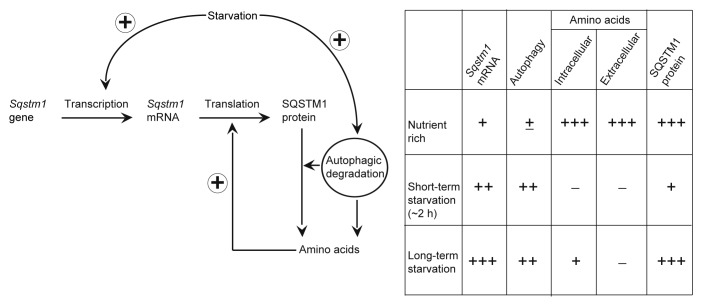
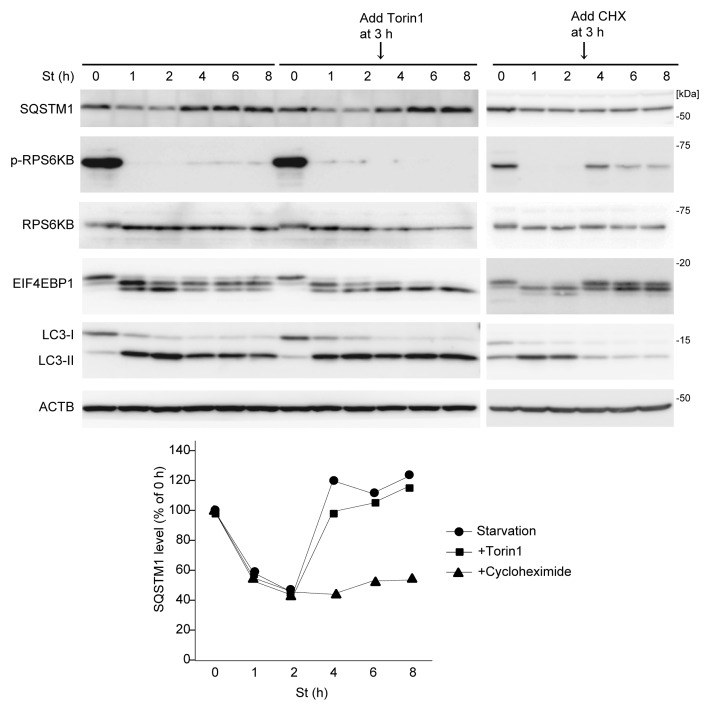
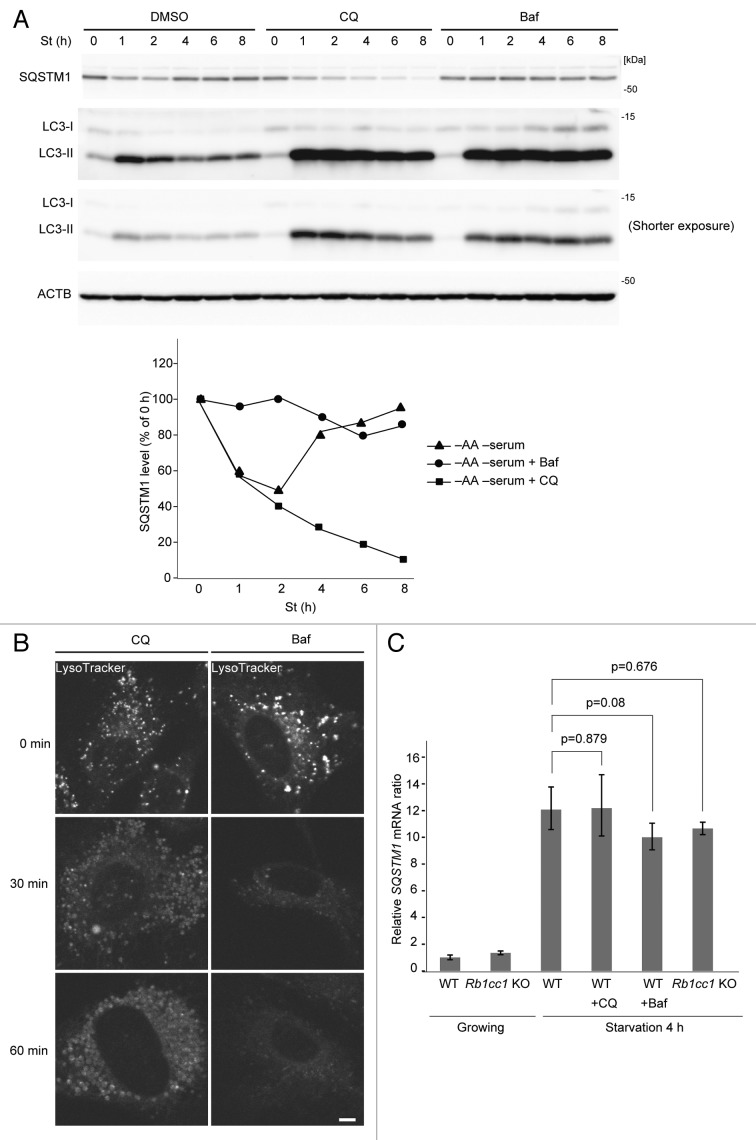
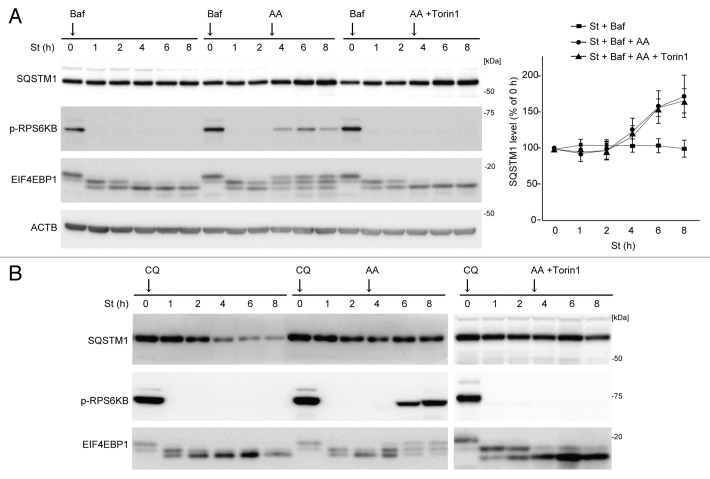
SQSTM1/p62 (sequestosome 1) is a multifunctional signaling molecule, involved in a variety of cellular pathways. SQSTM1 is one of the best-known autophagic substrates, and is therefore widely used as an indicator of autophagic degradation. Here we report that the expression level of SQSTM1 can be restored during prolonged starvation. Upon starvation, SQSTM1 is initially degraded by autophagy. However, SQSTM1 is restored back to basal levels during prolonged starvation in mouse embryonic fibroblasts and HepG2 cells, but not in HeLa and HEK293 cells. Restoration of SQSTM1 depends on its transcriptional upregulation, which is triggered by amino acid starvation. Furthermore, amino acids derived from the autophagy-lysosome pathway are used for de novo synthesis of SQSTM1 under starvation conditions. The restoration of SQSTM1 is independent of reactivation of MTORC1 (mechanistic target of rapamycin complex 1). These results suggest that the expression level of SQSTM1 in starved cells is determined by at least 3 factors: autophagic degradation, transcriptional upregulation, and availability of lysosomal-derived amino acids. The results of this study also indicate that the expression level of SQSTM1 does not always inversely correlate with autophagic activity.
SQSTM1/p62(聚集体蛋白1)是一种多功能信号分子,参与多种细胞信号通路。SQSTM1是最著名的自噬底物之一,因此被广泛用作自噬降解的指标。在此我们报告,在长期饥饿期间,SQSTM1的表达水平能够恢复。饥饿时,SQSTM1最初通过自噬被降解。然而,在小鼠胚胎成纤维细胞和HepG2细胞的长期饥饿过程中,SQSTM1恢复至基础水平,但在HeLa细胞和HEK293细胞中则不然。SQSTM1的恢复依赖于其转录上调,这是由氨基酸饥饿触发的。此外,在饥饿条件下,源自自噬 - 溶酶体途径的氨基酸被用于SQSTM1的从头合成。SQSTM1的恢复独立于MTORC1(雷帕霉素机制靶点复合物1)的重新激活。这些结果表明,饥饿细胞中SQSTM1的表达水平由至少三个因素决定:自噬降解、转录上调以及溶酶体衍生氨基酸的可用性。本研究结果还表明,SQSTM1的表达水平并不总是与自噬活性呈负相关。