Yamanaka H, Yokoyama C, Mizuma H, Kurai S, Finnema S J, Halldin C, Doi H, Onoe H
Bio-Function Imaging Team, RIKEN Center for Life Science Technologies, 6-7-3 Minatojima-Minamimachi, Chuo-ku, Kobe, Japan.
Labelling Chemistry Team, Division of Bio-function Dynamics Imaging, RIKEN Center for Life Science Technologies, 6-7-3 Minatojima-Minamimachi, Chuo-ku, Kobe, Japan.
Transl Psychiatry. 2014 Jan 7;4(1):e342. doi: 10.1038/tp.2013.112.
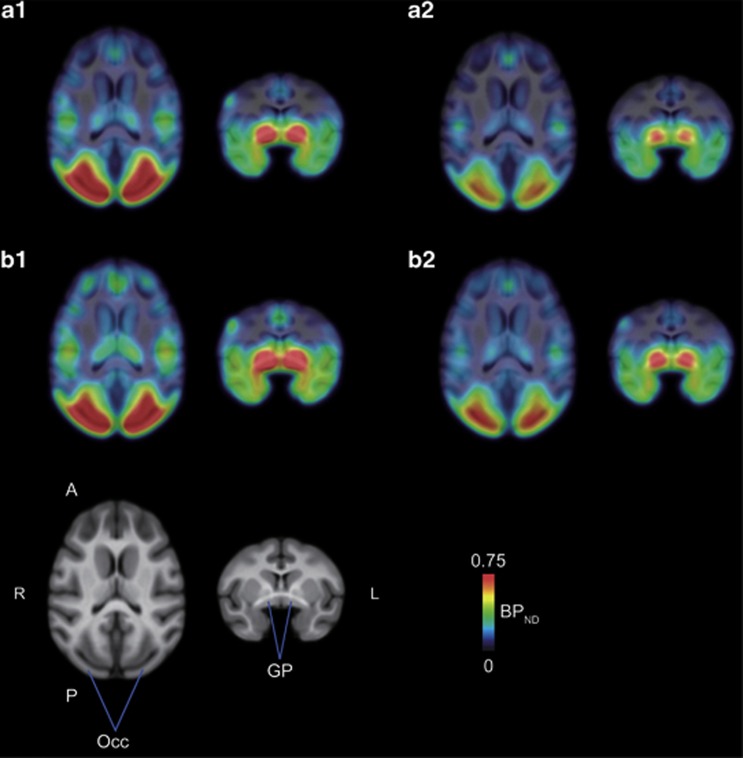
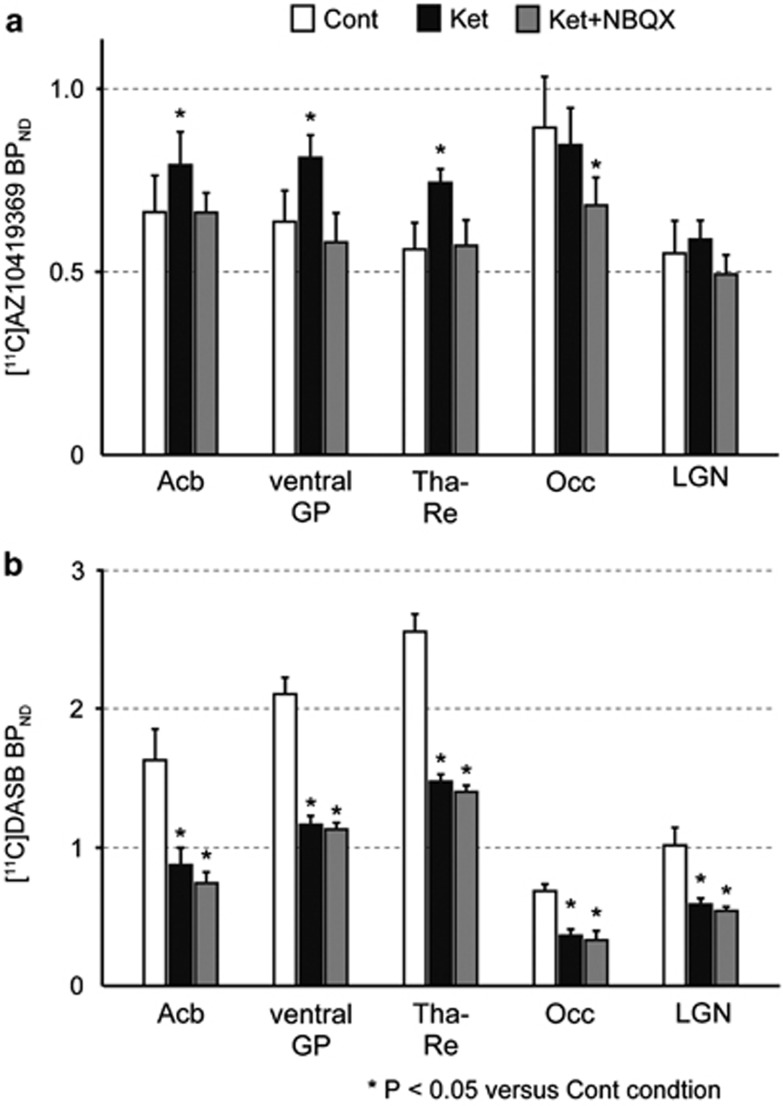
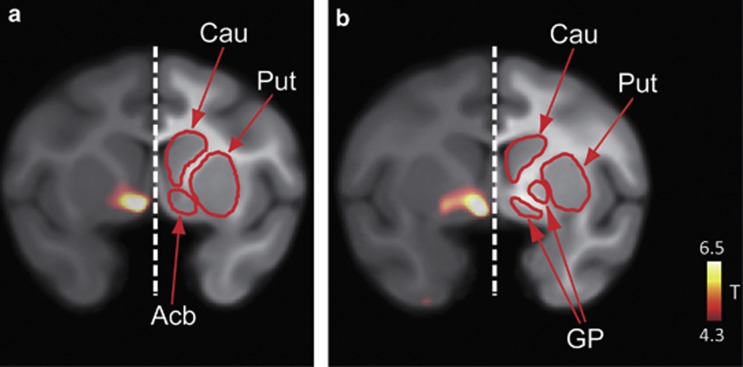
Ketamine is a unique anesthetic reagent known to produce various psychotic symptoms. Ketamine has recently been reported to elicit a long-lasting antidepressant effect in patients with major depression. Although recent studies provide insight into the molecular mechanisms of the effects of ketamine, the antidepressant mechanism has not been fully elucidated. To understand the involvement of the brain serotonergic system in the actions of ketamine, we performed a positron emission tomography (PET) study on non-human primates. Four rhesus monkeys underwent PET studies with two serotonin (5-HT)-related PET radioligands, [(11)C]AZ10419369 and [(11)C]DASB, which are highly selective for the 5-HT1B receptor and serotonin transporter (SERT), respectively. Voxel-based analysis using standardized brain images revealed that ketamine administration significantly increased 5-HT1B receptor binding in the nucleus accumbens and ventral pallidum, whereas it significantly reduced SERT binding in these brain regions. Fenfluramine, a 5-HT releaser, significantly decreased 5-HT1B receptor binding, but no additional effect was observed when it was administered with ketamine. Furthermore, pretreatment with 2,3-dihydroxy-6-nitro-7-sulfamoylbenzo(f)quinoxaline (NBQX), a potent antagonist of the glutamate α-amino-3-hydroxy-5-methylisoxazole-4-propionic acid (AMPA) receptor, blocked the action of ketamine on the 5-HT1B receptor but not SERT binding. This indicates the involvement of AMPA receptor activation in ketamine-induced alterations of 5-HT1B receptor binding. Because NBQX is known to block the antidepressant effect of ketamine in rodents, alterations in the serotonergic neurotransmission, particularly upregulation of postsynaptic 5-HT1B receptors in the nucleus accumbens and ventral pallidum may be critically involved in the antidepressant action of ketamine.
氯胺酮是一种已知会产生各种精神症状的独特麻醉剂。最近有报道称氯胺酮对重度抑郁症患者具有持久的抗抑郁作用。尽管最近的研究对氯胺酮作用的分子机制有了深入了解,但其抗抑郁机制尚未完全阐明。为了了解大脑5-羟色胺能系统在氯胺酮作用中的参与情况,我们对非人类灵长类动物进行了正电子发射断层扫描(PET)研究。四只恒河猴使用两种与5-羟色胺(5-HT)相关的PET放射性配体进行PET研究,即[(11)C]AZ10419369和[(11)C]DASB,它们分别对5-HT1B受体和5-羟色胺转运体(SERT)具有高度选择性。使用标准化脑图像进行基于体素的分析显示,给予氯胺酮后显著增加了伏隔核和腹侧苍白球中5-HT1B受体的结合,而在这些脑区中显著降低了SERT的结合。5-羟色胺释放剂芬氟拉明显著降低了5-HT1B受体的结合,但与氯胺酮一起给药时未观察到额外作用。此外,用谷氨酸α-氨基-3-羟基-5-甲基异恶唑-4-丙酸(AMPA)受体的强效拮抗剂2,3-二羟基-6-硝基-7-氨磺酰基苯并(f)喹喔啉(NBQX)预处理可阻断氯胺酮对5-HT1B受体的作用,但不影响SERT的结合。这表明AMPA受体激活参与了氯胺酮诱导的5-HT1B受体结合改变。由于已知NBQX可阻断氯胺酮在啮齿动物中的抗抑郁作用,5-羟色胺能神经传递的改变,特别是伏隔核和腹侧苍白球中突触后5-HT1B受体的上调可能在氯胺酮的抗抑郁作用中起关键作用。