Animal Evolutionary Ecology, Department of Biology, Faculty of Science, University of Tübingen, Auf der Morgenstelle 28, D-72076, Tübingen, Germany.
Front Zool. 2014 Jan 8;11(1):1. doi: 10.1186/1742-9994-11-1.
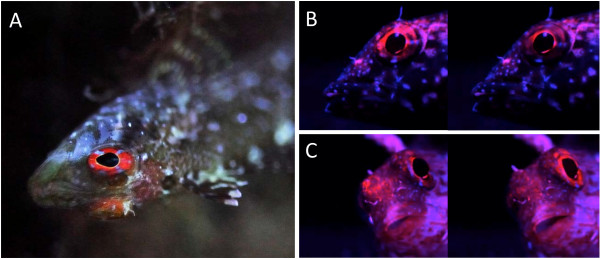
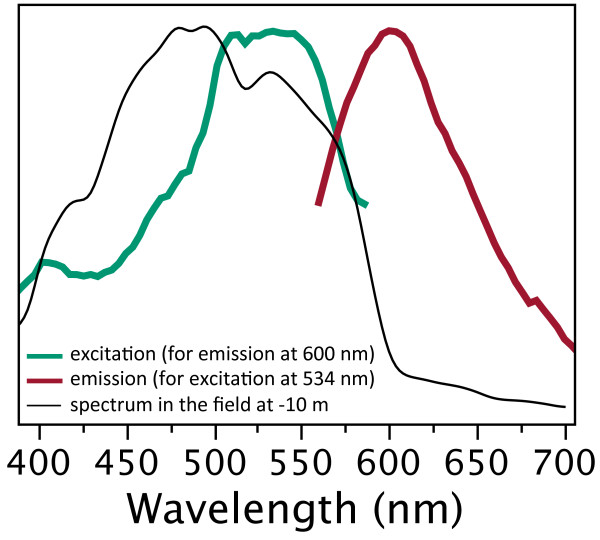
Animal colouration is a trade-off between being seen by intended, intra- or inter-specific receivers while not being seen by the unintended. Many fishes solve this problem by adaptive colouration. Here, we investigate whether this also holds for fluorescent pigments. In those aquatic environments in which the ambient light is dominated by bluish light, red fluorescence can generate high-contrast signals. The marine, cryptic fish Tripterygion delaisi inhabits such environments and has a bright red-fluorescent iris that can be rapidly up- and down-regulated. Here, we described the physiological and cellular mechanism of this phenomenon using a neurostimulation treatment with KCl and histology.
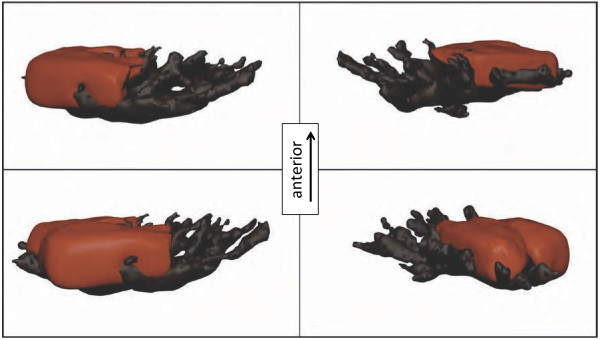
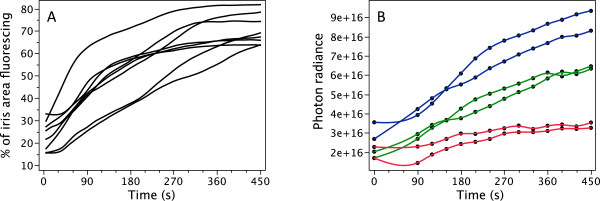
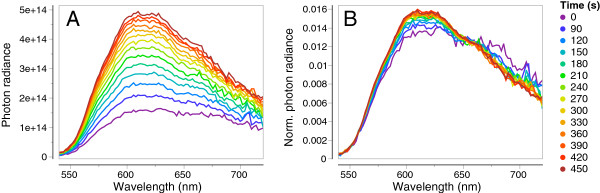
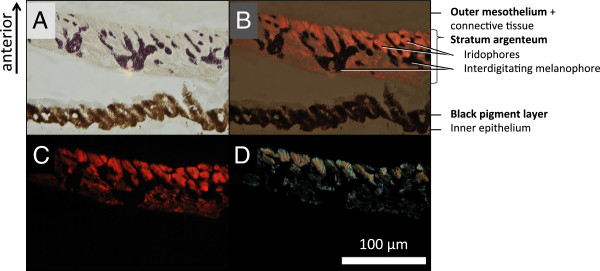
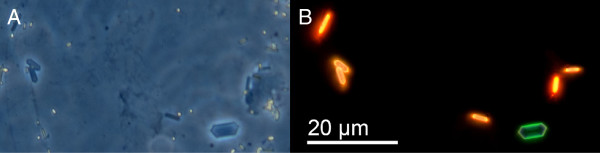
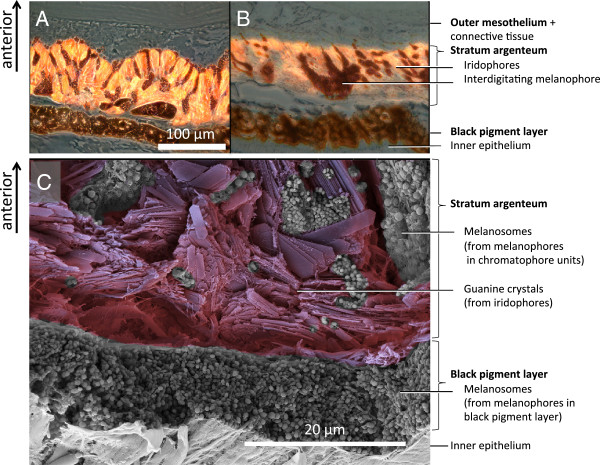
KCl-treatment revealed that eye fluorescence regulation is achieved through dispersal and aggregation of black-pigmented melanosomes within melanophores. Histology showed that globular, fluorescent iridophores on the anterior side of the iris are grouped and each group is encased by finger-like extensions of a single posterior melanophore. Together they form a so-called chromatophore unit. By dispersal and aggregation of melanosomes into and out of the peripheral membranous extensions of the melanophore, the fluorescent iridophores are covered or revealed on the anterior (outside) of the iris.
T. delaisi possesses a well-developed mechanism to control the fluorescent emission from its eyes, which may be advantageous given its cryptic lifestyle. This is the first time chromatophore units are found to control fluorescent emission in marine teleost fishes. We expect other fluorescent fish species to use similar mechanisms in the iris or elsewhere in the body. In contrast to a previously described mechanism based on dendritic fluorescent chromatophores, chromatophore units control fluorescent emission through the cooperation between two chromatophore types: an emitting and an occluding type. The discovery of a second mechanism for fluorescence modulation strengthens our view that fluorescence is a relevant and adaptive component of fish colouration.
动物的颜色是在被预期的、种内或种间的接收者看到和不被非预期的接收者看到之间的权衡。许多鱼类通过适应性着色来解决这个问题。在这里,我们研究荧光色素是否也存在这种情况。在环境光主要由蓝光主导的水生环境中,红色荧光可以产生高对比度的信号。海洋中隐蔽的鱼类三鳍鱼(Tripterygion delaisi)生活在这样的环境中,它有一个明亮的红色荧光虹膜,可以快速上调和下调。在这里,我们使用 KCl 神经刺激处理和组织学描述了这种现象的生理和细胞机制。
KCl 处理表明,眼睛荧光调节是通过黑色素细胞内的黑色色素黑素小体的分散和聚集来实现的。组织学显示,虹膜前部的球状荧光虹彩细胞聚集在一起,每个虹彩细胞都被单个后黑色素细胞的指状延伸所包围。它们一起形成了所谓的色胞单位。通过黑素小体分散和聚集到黑色素细胞的外围膜状延伸中,荧光虹彩细胞在前部(外部)的虹膜上被覆盖或显现。
三鳍鱼拥有一种发达的机制来控制眼睛的荧光发射,考虑到其隐蔽的生活方式,这可能是有利的。这是第一次发现色胞单位控制海洋硬骨鱼类的荧光发射。我们预计其他荧光鱼类会在其虹膜或身体其他部位使用类似的机制。与以前基于树突状荧光色胞的机制不同,色胞单位通过两种色胞类型的合作来控制荧光发射:一种发射型和一种遮挡型。发现第二种荧光调节机制,加强了我们对荧光是鱼类颜色的一个相关和适应性组成部分的观点。