Department of Microbiology and Immunology, Biosciences Institute, Univ Estadual Paulista (UNESP), Distrito de Rubião Júnior s/n, 18618-000 Botucatu, São Paulo, Brazil.
BMC Neurosci. 2014 Jan 9;15:8. doi: 10.1186/1471-2202-15-8.
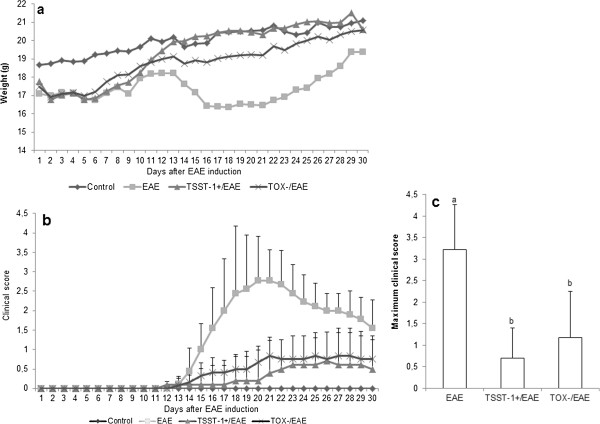
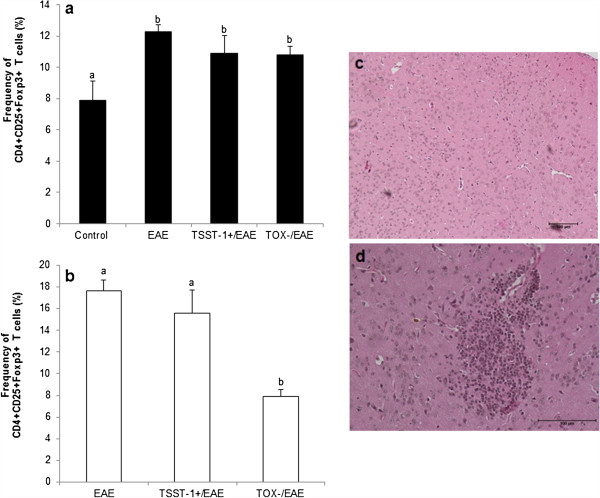
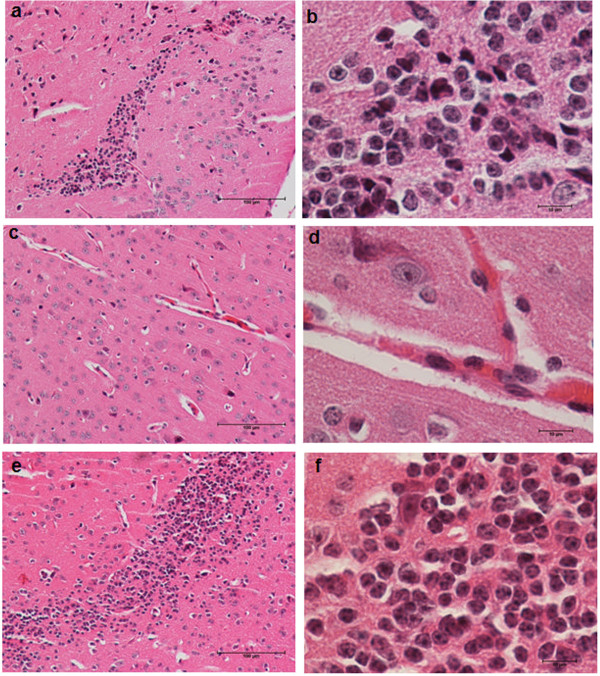
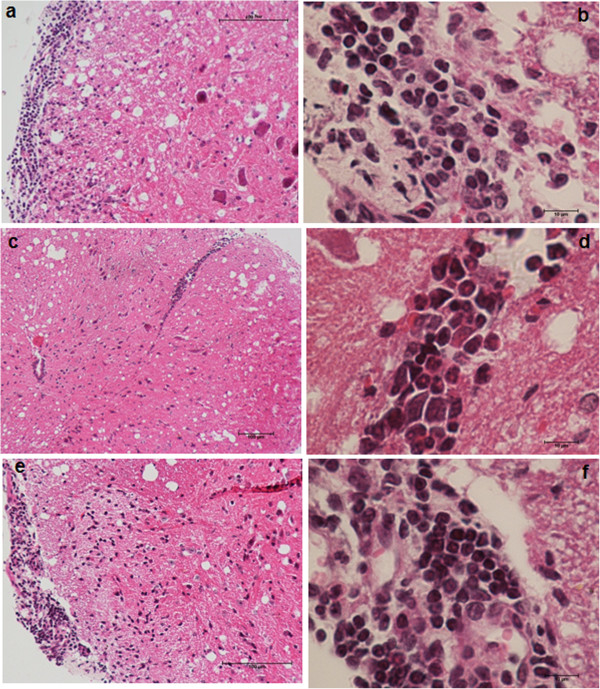
Bacterial superantigens are potent T cell activators that can activate T cells with specificity for antigens of the central nervous system (CNS). In this study, we compared the effect of two S. aureus strains on experimental autoimmune encephalomyelitis (EAE) development. C57BL/6 female mice were infected with S. aureus ATCC 51650, which produces toxic shock syndrome toxin 1 (TSST-1+) or S. aureus ATCC 43300, which does not produce toxins (TOX-). Three days later, the animals were subjected to EAE induction by immunization with myelin oligodendrocyte glycoprotein (MOG). The weight variation, disease incidence and clinical score were recorded daily. Cytokines and Foxp3+ regulatory T cells in the brain were evaluated during the acute disease phase. Cytokines and Foxp3+ regulatory T cells in the spleen and histopathological analysis of the CNS were assessed during the chronic stage.
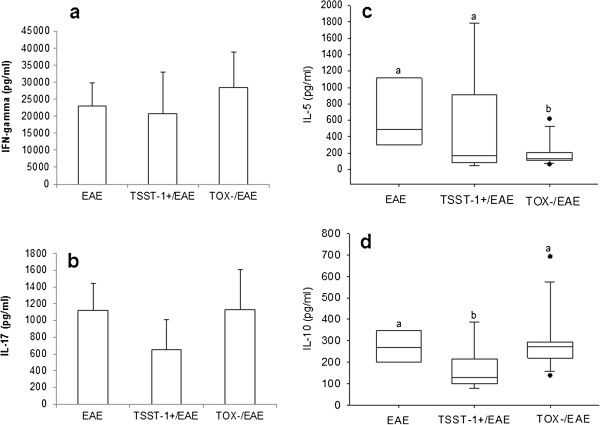
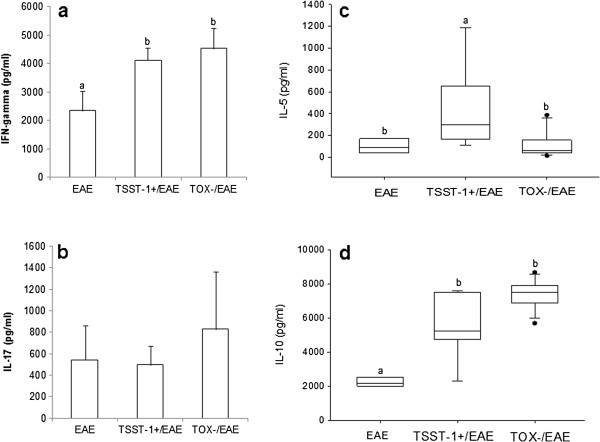
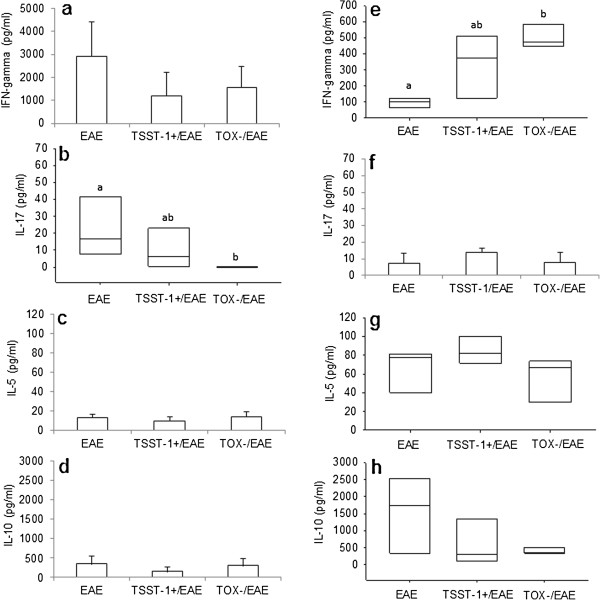
Previous infection with both strains similarly decreased the clinical score; however, only the TSST-1+ strain clearly diminished inflammation in the CNS. The infections also modulated cytokine production in the spleen and CNS. Reduced production of IL-5 and IL-10 was detected in MOG-stimulated spleen cultures in the TOX- and TSST-1+ infected groups, respectively. In S. aureus stimulated cultures, there was an increased production of IFN-γ and IL-10 in both infected groups and an increased level of IL-5 in the TSST-1+ group. CNS infiltrating cell cultures from previously infected mice produced less IL-17 in response to MOG and more IFN-γ in response to S. aureus stimulation.
These results indicated that both strains attenuated clinical EAE manifestations, but only TSST-1 clearly decreased CNS inflammation.
细菌超抗原是一种强效的 T 细胞激活剂,能够特异性激活针对中枢神经系统(CNS)抗原的 T 细胞。在本研究中,我们比较了两种金黄色葡萄球菌菌株对实验性自身免疫性脑脊髓炎(EAE)发展的影响。C57BL/6 雌性小鼠感染金黄色葡萄球菌 ATCC 51650,该菌产生毒性休克综合征毒素 1(TSST-1+)或金黄色葡萄球菌 ATCC 43300,该菌不产生毒素(TOX)。三天后,用髓鞘少突胶质细胞糖蛋白(MOG)免疫诱导动物发生 EAE。每天记录体重变化、疾病发生率和临床评分。在急性疾病期评估大脑中的细胞因子和 Foxp3+调节性 T 细胞。在慢性期评估脾脏中的细胞因子和 Foxp3+调节性 T 细胞以及中枢神经系统的组织病理学分析。
两种菌株的既往感染同样降低了临床评分;然而,只有 TSST-1+菌株明显减轻了中枢神经系统的炎症。感染还调节了脾脏和中枢神经系统中的细胞因子产生。在 MOG 刺激的脾脏培养物中,TOX-和 TSST-1+感染组分别检测到 IL-5 和 IL-10 的产生减少。在金黄色葡萄球菌刺激的培养物中,两组感染组 IFN-γ和 IL-10 的产生增加,TSST-1+组的 IL-5 水平增加。先前感染的小鼠中枢神经系统浸润细胞培养物对 MOG 的反应产生较少的 IL-17,对金黄色葡萄球菌刺激的反应产生更多的 IFN-γ。
这些结果表明,两种菌株均减轻了临床 EAE 表现,但只有 TSST-1 明显减轻了中枢神经系统炎症。