Zan Jindong, Liu Yue, Fuqua Clay, Hill Russell T
Institute of Marine and Environmental Technology, University of Maryland Center for Environmental Science, 701 E Pratt St., Baltimore, MD 21202, USA.
Int J Mol Sci. 2014 Jan 7;15(1):654-69. doi: 10.3390/ijms15010654.
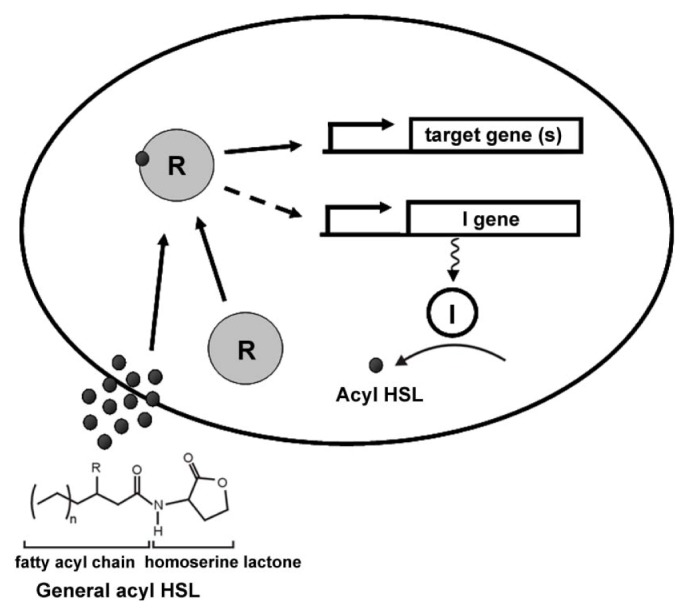
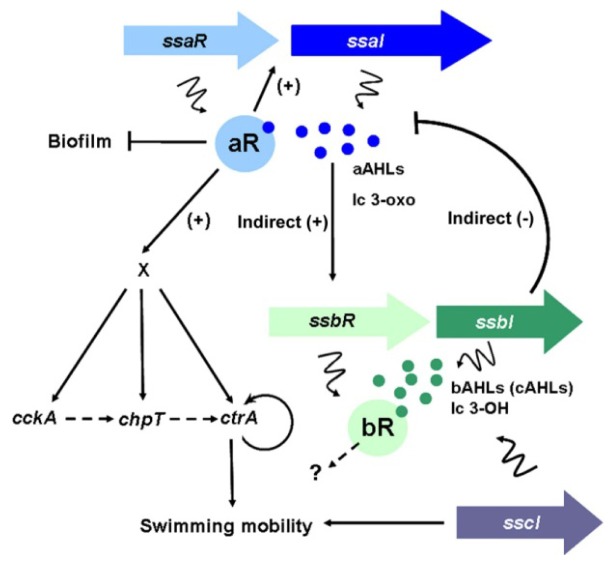
Members of the Roseobacter clade are ecologically important and numerically abundant in coastal environments and can associate with marine invertebrates and nutrient-rich marine snow or organic particles, on which quorum sensing (QS) may play an important role. In this review, we summarize current research progress on roseobacterial acyl-homoserine lactone-based QS, particularly focusing on three relatively well-studied representatives, Phaeobacter inhibens DSM17395, the marine sponge symbiont Ruegeria sp. KLH11 and the dinoflagellate symbiont Dinoroseobacter shibae. Bioinformatic survey of luxI homologues revealed that over 80% of available roseobacterial genomes encode at least one luxI homologue, reflecting the significance of QS controlled regulatory pathways in adapting to the relevant marine environments. We also discuss several areas that warrant further investigation, including studies on the ecological role of these diverse QS pathways in natural environments.
玫瑰杆菌属的成员在生态方面具有重要意义,在沿海环境中数量众多,并且可以与海洋无脊椎动物以及富含营养的海洋雪或有机颗粒相互作用,群体感应(QS)可能在其中发挥重要作用。在本综述中,我们总结了目前关于基于酰基高丝氨酸内酯的玫瑰杆菌群体感应的研究进展,特别关注三个研究相对充分的代表菌株,即抑制嗜盐杆菌DSM17395、海洋海绵共生菌鲁杰氏菌属KLH11和甲藻共生菌希氏海杆菌。对luxI同源物的生物信息学调查显示,超过80%的现有玫瑰杆菌基因组编码至少一种luxI同源物,这反映了群体感应控制的调控途径在适应相关海洋环境中的重要性。我们还讨论了几个值得进一步研究的领域,包括对这些不同群体感应途径在自然环境中的生态作用的研究。