• 文献检索
  • 文档翻译
  • 深度研究
  • 学术资讯
  • Suppr Zotero 插件Zotero 插件
  • 邀请有礼
  • 套餐&价格
  • 历史记录
应用&插件
Suppr Zotero 插件Zotero 插件浏览器插件Mac 客户端Windows 客户端微信小程序
定价
高级版会员购买积分包购买API积分包
服务
文献检索文档翻译深度研究API 文档MCP 服务
关于我们
关于 Suppr公司介绍联系我们用户协议隐私条款
关注我们

Suppr 超能文献

核心技术专利:CN118964589B侵权必究
粤ICP备2023148730 号-1Suppr @ 2026

文献检索

告别复杂PubMed语法,用中文像聊天一样搜索,搜遍4000万医学文献。AI智能推荐,让科研检索更轻松。

立即免费搜索

文件翻译

保留排版,准确专业,支持PDF/Word/PPT等文件格式,支持 12+语言互译。

免费翻译文档

深度研究

AI帮你快速写综述,25分钟生成高质量综述,智能提取关键信息,辅助科研写作。

立即免费体验

新热带区锥蝽亚科(半翅目:猎蝽科)形态多样性和物种组合的大规模模式。

Large-scale patterns in morphological diversity and species assemblages in Neotropical Triatominae (Heteroptera: Reduviidae).

作者信息

Fergnani Paula Nilda, Ruggiero Adriana, Ceccarelli Soledad, Menu Frédéric, Rabinovich Jorge

机构信息

Laboratorio Ecotono, Centro Regional Universitario Bariloche, Instituto de Investigaciones en Biodiversidad y Medioambiente, Universidad Nacional del Comahue, Argentina, San Carlos de BarilocheRío Negro.

Centro de Estudios Parasitológicos y de Vectores, Universidad Nacional de La Plata, Argentina, La PlataBuenos Aires.

出版信息

Mem Inst Oswaldo Cruz. 2013 Dec;108(8):997-1008. doi: 10.1590/0074-0276130369.

DOI:10.1590/0074-0276130369
PMID:24402152
原文链接:https://pmc.ncbi.nlm.nih.gov/articles/PMC4005556/
Abstract

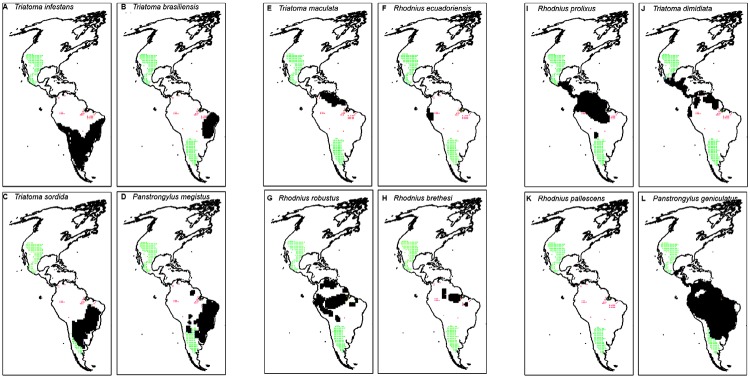
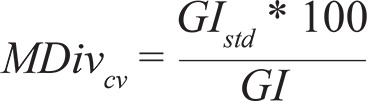
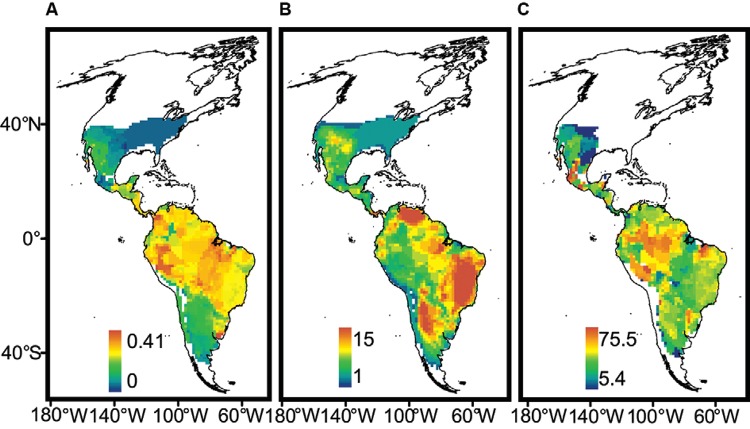
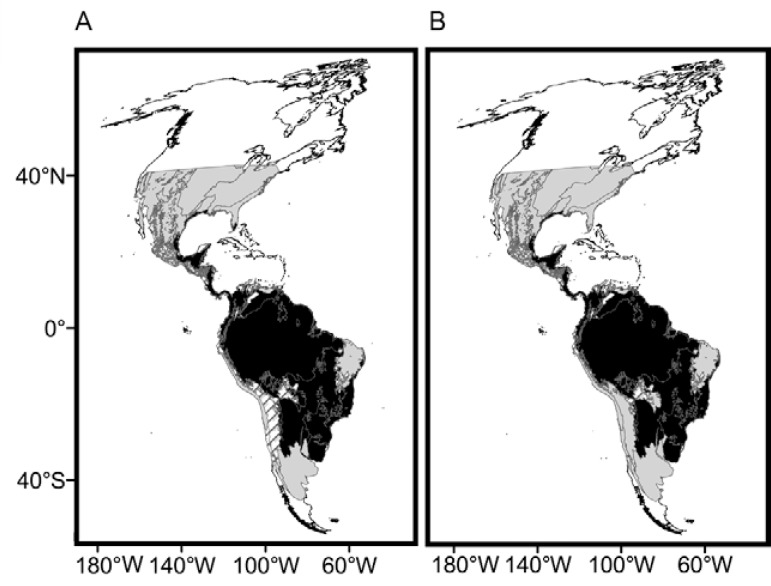
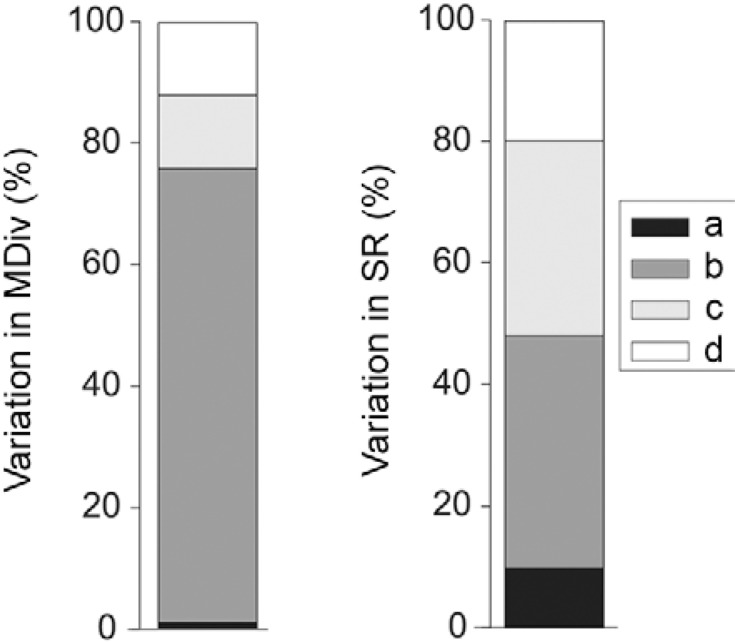
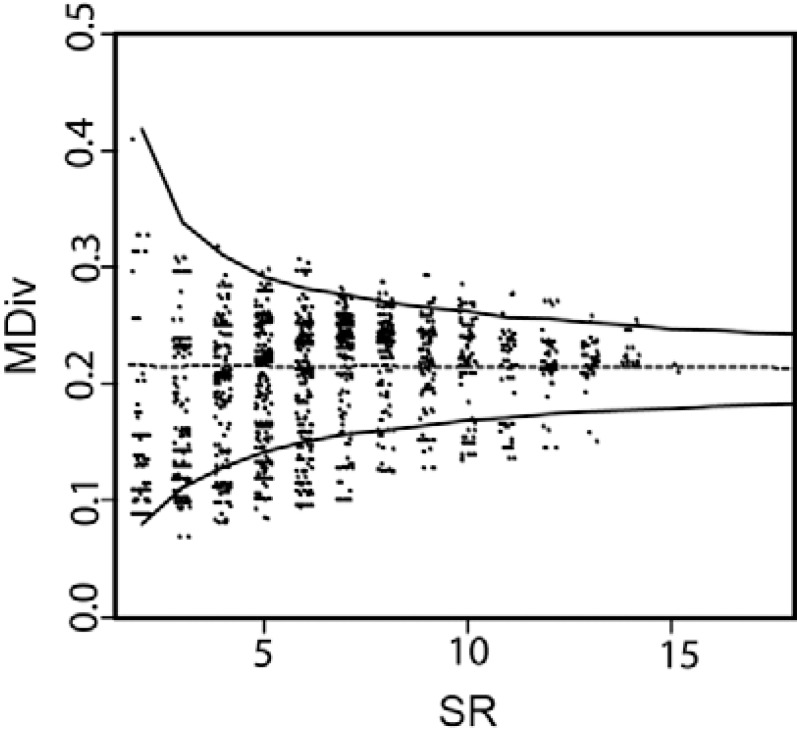
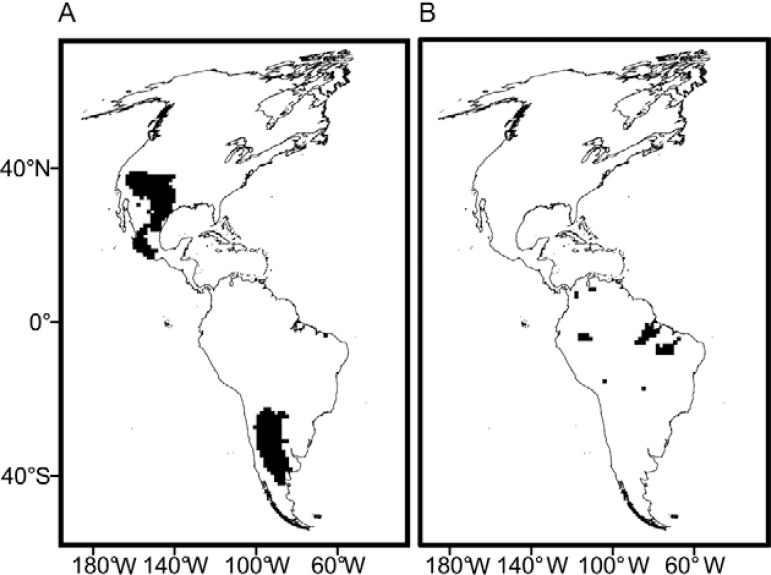
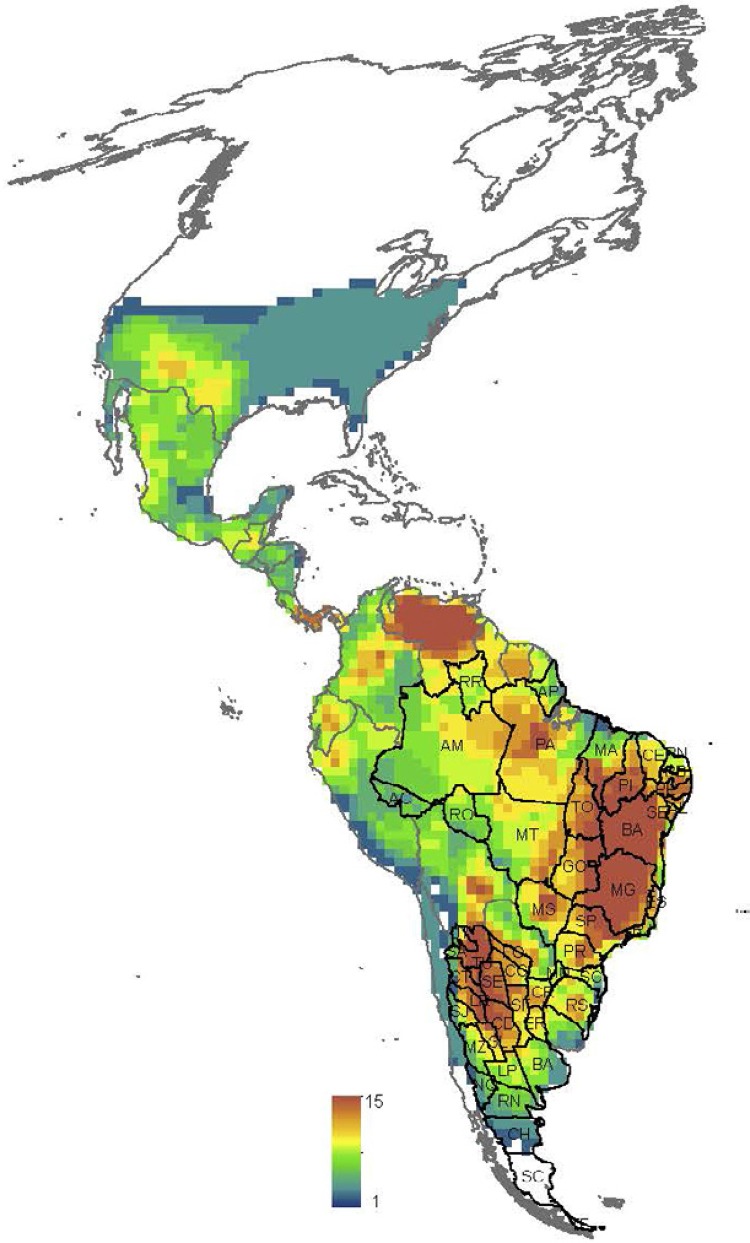
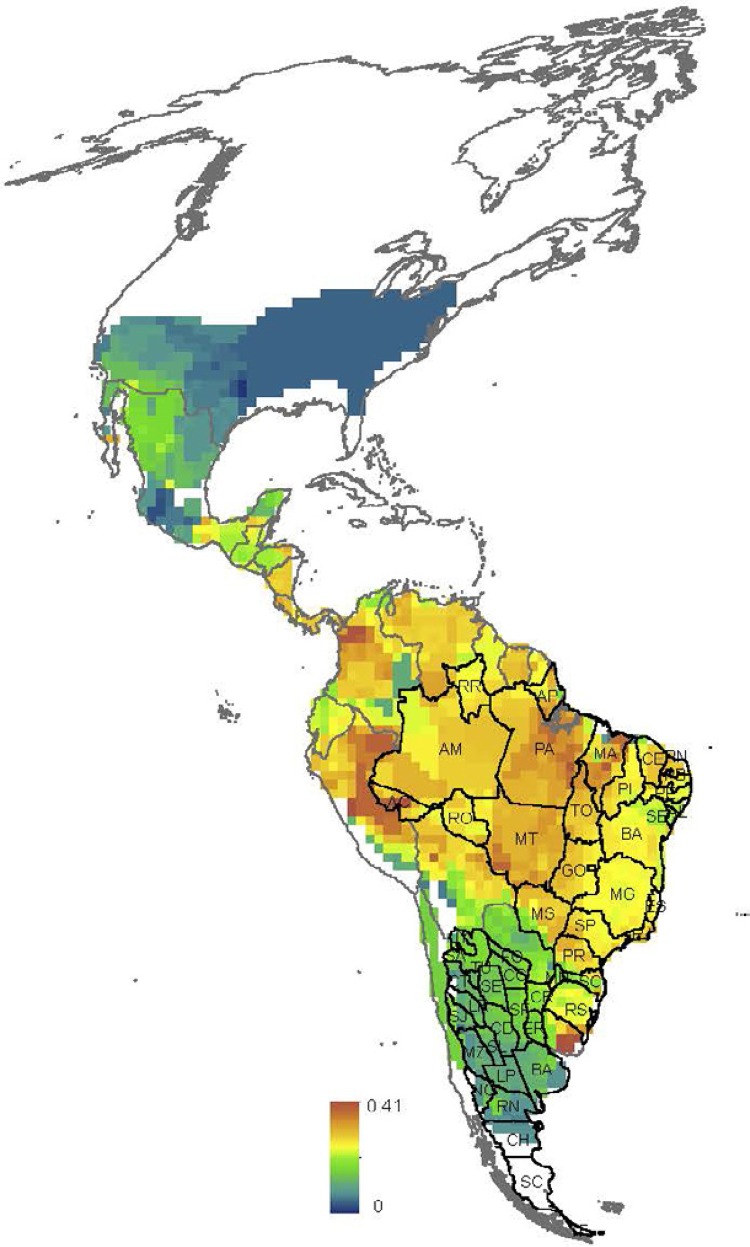
We analysed the spatial variation in morphological diversity (MDiv) and species richness (SR) for 91 species of Neotropical Triatominae to determine the ecological relationships between SR and MDiv and to explore the roles that climate, productivity, environmental heterogeneity and the presence of biomes and rivers may play in the structuring of species assemblages. For each 110 km x 110 km-cell on a grid map of America, we determined the number of species (SR) and estimated the mean Gower index (MDiv) based on 12 morphological attributes. We performed bootstrapping analyses of species assemblages to identify whether those assemblages were more similar or dissimilar in their morphology than expected by chance. We applied a multi-model selection procedure and spatial explicit analyses to account for the association of diversity-environment relationships. MDiv and SR both showed a latitudinal gradient, although each peaked at different locations and were thus not strictly spatially congruent. SR decreased with temperature variability and MDiv increased with mean temperature, suggesting a predominant role for ambient energy in determining Triatominae diversity. Species that were more similar than expected by chance co-occurred near the limits of the Triatominae distribution in association with changes in environmental variables. Environmental filtering may underlie the structuring of species assemblages near their distributional limits.

摘要

我们分析了91种新热带区锥蝽亚科昆虫的形态多样性(MDiv)和物种丰富度(SR)的空间变化,以确定SR和MDiv之间的生态关系,并探讨气候、生产力、环境异质性以及生物群落和河流的存在在物种组合结构中可能发挥的作用。对于美洲网格地图上每110 km×110 km的单元格,我们确定了物种数量(SR),并基于12个形态学属性估计了平均高尔指数(MDiv)。我们对物种组合进行了自抽样分析,以确定这些组合在形态上是否比随机预期的更相似或更不相似。我们应用了多模型选择程序和空间明确分析来解释多样性与环境关系的关联。MDiv和SR均呈现出纬度梯度,尽管它们在不同位置达到峰值,因此在空间上并非严格一致。SR随温度变异性降低,MDiv随平均温度升高,这表明环境能量在决定锥蝽亚科多样性方面起主要作用。在锥蝽亚科分布极限附近,比随机预期更相似的物种与环境变量的变化共同出现。环境过滤可能是物种组合在其分布极限附近结构形成的基础。
https://cdn.ncbi.nlm.nih.gov/pmc/blobs/4ba9/4005556/2ab5ce084d48/0074-0276-mioc-108-08-00997-gf14.jpg
https://cdn.ncbi.nlm.nih.gov/pmc/blobs/4ba9/4005556/3f626f18c5ce/0074-0276-mioc-108-08-00997-ee01.jpg
https://cdn.ncbi.nlm.nih.gov/pmc/blobs/4ba9/4005556/9c4283d8a424/0074-0276-mioc-108-08-00997-ee02.jpg
https://cdn.ncbi.nlm.nih.gov/pmc/blobs/4ba9/4005556/78549795c3ae/0074-0276-mioc-108-08-00997-gf01.jpg
https://cdn.ncbi.nlm.nih.gov/pmc/blobs/4ba9/4005556/dbb32cc88742/0074-0276-mioc-108-08-00997-gf02.jpg
https://cdn.ncbi.nlm.nih.gov/pmc/blobs/4ba9/4005556/284cd2289874/0074-0276-mioc-108-08-00997-gf03.jpg
https://cdn.ncbi.nlm.nih.gov/pmc/blobs/4ba9/4005556/f3ecfd5814b9/0074-0276-mioc-108-08-00997-gf04.jpg
https://cdn.ncbi.nlm.nih.gov/pmc/blobs/4ba9/4005556/533a3c30c082/0074-0276-mioc-108-08-00997-gf05.jpg
https://cdn.ncbi.nlm.nih.gov/pmc/blobs/4ba9/4005556/12b02c45b40a/0074-0276-mioc-108-08-00997-gf06.jpg
https://cdn.ncbi.nlm.nih.gov/pmc/blobs/4ba9/4005556/210762e95931/0074-0276-mioc-108-08-00997-ee03.jpg
https://cdn.ncbi.nlm.nih.gov/pmc/blobs/4ba9/4005556/8e10c4738e61/0074-0276-mioc-108-08-00997-gf07.jpg
https://cdn.ncbi.nlm.nih.gov/pmc/blobs/4ba9/4005556/b34425d1a0bc/0074-0276-mioc-108-08-00997-gf08.jpg
https://cdn.ncbi.nlm.nih.gov/pmc/blobs/4ba9/4005556/419d8711aec6/0074-0276-mioc-108-08-00997-gf09.jpg
https://cdn.ncbi.nlm.nih.gov/pmc/blobs/4ba9/4005556/b62500d00b60/0074-0276-mioc-108-08-00997-gf10.jpg
https://cdn.ncbi.nlm.nih.gov/pmc/blobs/4ba9/4005556/c5f0be4d333f/0074-0276-mioc-108-08-00997-gf11.jpg
https://cdn.ncbi.nlm.nih.gov/pmc/blobs/4ba9/4005556/94d95d03d9bf/0074-0276-mioc-108-08-00997-gf12.jpg
https://cdn.ncbi.nlm.nih.gov/pmc/blobs/4ba9/4005556/480ed3336ca6/0074-0276-mioc-108-08-00997-gf13.jpg
https://cdn.ncbi.nlm.nih.gov/pmc/blobs/4ba9/4005556/2ab5ce084d48/0074-0276-mioc-108-08-00997-gf14.jpg
https://cdn.ncbi.nlm.nih.gov/pmc/blobs/4ba9/4005556/3f626f18c5ce/0074-0276-mioc-108-08-00997-ee01.jpg
https://cdn.ncbi.nlm.nih.gov/pmc/blobs/4ba9/4005556/9c4283d8a424/0074-0276-mioc-108-08-00997-ee02.jpg
https://cdn.ncbi.nlm.nih.gov/pmc/blobs/4ba9/4005556/78549795c3ae/0074-0276-mioc-108-08-00997-gf01.jpg
https://cdn.ncbi.nlm.nih.gov/pmc/blobs/4ba9/4005556/dbb32cc88742/0074-0276-mioc-108-08-00997-gf02.jpg
https://cdn.ncbi.nlm.nih.gov/pmc/blobs/4ba9/4005556/284cd2289874/0074-0276-mioc-108-08-00997-gf03.jpg
https://cdn.ncbi.nlm.nih.gov/pmc/blobs/4ba9/4005556/f3ecfd5814b9/0074-0276-mioc-108-08-00997-gf04.jpg
https://cdn.ncbi.nlm.nih.gov/pmc/blobs/4ba9/4005556/533a3c30c082/0074-0276-mioc-108-08-00997-gf05.jpg
https://cdn.ncbi.nlm.nih.gov/pmc/blobs/4ba9/4005556/12b02c45b40a/0074-0276-mioc-108-08-00997-gf06.jpg
https://cdn.ncbi.nlm.nih.gov/pmc/blobs/4ba9/4005556/210762e95931/0074-0276-mioc-108-08-00997-ee03.jpg
https://cdn.ncbi.nlm.nih.gov/pmc/blobs/4ba9/4005556/8e10c4738e61/0074-0276-mioc-108-08-00997-gf07.jpg
https://cdn.ncbi.nlm.nih.gov/pmc/blobs/4ba9/4005556/b34425d1a0bc/0074-0276-mioc-108-08-00997-gf08.jpg
https://cdn.ncbi.nlm.nih.gov/pmc/blobs/4ba9/4005556/419d8711aec6/0074-0276-mioc-108-08-00997-gf09.jpg
https://cdn.ncbi.nlm.nih.gov/pmc/blobs/4ba9/4005556/b62500d00b60/0074-0276-mioc-108-08-00997-gf10.jpg
https://cdn.ncbi.nlm.nih.gov/pmc/blobs/4ba9/4005556/c5f0be4d333f/0074-0276-mioc-108-08-00997-gf11.jpg
https://cdn.ncbi.nlm.nih.gov/pmc/blobs/4ba9/4005556/94d95d03d9bf/0074-0276-mioc-108-08-00997-gf12.jpg
https://cdn.ncbi.nlm.nih.gov/pmc/blobs/4ba9/4005556/480ed3336ca6/0074-0276-mioc-108-08-00997-gf13.jpg
https://cdn.ncbi.nlm.nih.gov/pmc/blobs/4ba9/4005556/2ab5ce084d48/0074-0276-mioc-108-08-00997-gf14.jpg

相似文献

1
Large-scale patterns in morphological diversity and species assemblages in Neotropical Triatominae (Heteroptera: Reduviidae).新热带区锥蝽亚科(半翅目:猎蝽科)形态多样性和物种组合的大规模模式。
Mem Inst Oswaldo Cruz. 2013 Dec;108(8):997-1008. doi: 10.1590/0074-0276130369.
2
The latitudinal diversity gradient in South American mammals revisited using a regional analysis approach: The importance of climate at extra-tropical latitudes and history towards the tropics.运用区域分析方法重新审视南美洲哺乳动物的纬度多样性梯度:温带以外纬度地区气候及向热带演化历史的重要性。
PLoS One. 2017 Sep 5;12(9):e0184057. doi: 10.1371/journal.pone.0184057. eCollection 2017.
3
Morphological evidence suggests homoploid hybridization as a possible mode of speciation in the Triatominae (Hemiptera, Heteroptera, Reduviidae).形态学证据表明,同倍体杂交是锥蝽亚科(半翅目,异翅亚目,猎蝽科)物种形成的一种可能模式。
Infect Genet Evol. 2009 Mar;9(2):263-70. doi: 10.1016/j.meegid.2008.12.005. Epub 2008 Dec 24.
4
Geological Changes of the Americas and their Influence on the Diversification of the Neotropical Kissing Bugs (Hemiptera: Reduviidae: Triatominae).美洲的地质变化及其对新热带区锥蝽(半翅目:猎蝽科:锥蝽亚科)多样化的影响。
PLoS Negl Trop Dis. 2016 Apr 8;10(4):e0004527. doi: 10.1371/journal.pntd.0004527. eCollection 2016 Apr.
5
Effects of reservoir cascades on diversity, distribution, and abundance of fish assemblages in three Neotropical basins.水库梯级对三个新热带流域鱼类群落多样性、分布和丰度的影响。
Sci Total Environ. 2021 Jul 15;778:146246. doi: 10.1016/j.scitotenv.2021.146246. Epub 2021 Mar 5.
6
The Interspecific Hemelytra Differences Among Mepraia Species Males (Hemiptera, Reduviidae:Triatominae) in Chile.智利Mepraia属雄性昆虫(半翅目:猎蝽科:锥蝽亚科)种间半鞘翅差异
J Med Entomol. 2018 Oct 25;55(6):1478-1485. doi: 10.1093/jme/tjy119.
7
Description of the male genitalia of Belminus rugulosus Stål and Belminus corredori Galvão & Angulo, and comments on the holotype of Parabelminus yurupucu Lent & Wygodzinsky (Hemiptera: Heteroptera: Reduviidae: Triatominae: Bolboderini).皱纹贝尔蝽(Belminus rugulosus Stål)和科氏贝尔蝽(Belminus corredori Galvão & Angulo)雄性生殖器的描述,以及对尤鲁普库拟贝尔蝽(Parabelminus yurupucu Lent & Wygodzinsky)模式标本的评论(半翅目:异翅亚目:猎蝽科:锥蝽亚科:博尔博德里尼族)
Zootaxa. 2013 Dec 13;3746:587-96. doi: 10.11646/zootaxa.3746.4.6.
8
Large-scale spatial distribution patterns of echinoderms in nearshore rocky habitats.近岸岩礁生境中棘皮动物的大规模空间分布格局。
PLoS One. 2010 Nov 5;5(11):e13845. doi: 10.1371/journal.pone.0013845.
9
Environmental constraints on the compositional and phylogenetic beta-diversity of tropical forest snake assemblages.热带森林蛇类群落组成和系统发育β多样性的环境限制因素
J Anim Ecol. 2017 Sep;86(5):1192-1204. doi: 10.1111/1365-2656.12699. Epub 2017 Jul 17.
10
Scavenging in the Anthropocene: Human impact drives vertebrate scavenger species richness at a global scale.人类世的清道夫行为:人类活动对全球范围内的脊椎动物清道夫物种丰富度产生影响。
Glob Chang Biol. 2019 Sep;25(9):3005-3017. doi: 10.1111/gcb.14708. Epub 2019 Jun 24.

引用本文的文献

1
Modelling the climatic suitability of Chagas disease vectors on a global scale.在全球范围内对恰加斯病媒介的气候适宜性进行建模。
Elife. 2020 May 6;9:e52072. doi: 10.7554/eLife.52072.
2
Geographic variation in body size and its relationship with environmental gradients in the Oriental Garden Lizard, .长尾鬣蜥体型的地理变异及其与环境梯度的关系
Ecol Evol. 2018 Apr 2;8(9):4443-4454. doi: 10.1002/ece3.4007. eCollection 2018 May.
3
Using eco-physiological traits to understand the realized niche: the role of desiccation tolerance in Chagas disease vectors.

本文引用的文献

1
Phylogeographical patterns shed light on evolutionary process in South America.系统地理格局揭示了南美洲进化过程的奥秘。
Mol Ecol. 2013 Mar;22(5):1193-213. doi: 10.1111/mec.12164. Epub 2012 Dec 20.
2
Mortality due to Chagas disease in Brazil from 1979 to 2009: trends and regional differences.1979年至2009年巴西恰加斯病死亡率:趋势与地区差异
J Infect Dev Ctries. 2012 Nov 26;6(11):817-24. doi: 10.3855/jidc.2459.
3
Mortality of Chagas' disease in Brazil: spatial patterns and definition of high-risk areas.巴西恰加斯病死亡率:空间模式和高风险地区定义。
利用生态生理特征理解实际生态位:耐旱性在恰加斯病媒介中的作用。
Oecologia. 2017 Dec;185(4):607-618. doi: 10.1007/s00442-017-3986-1. Epub 2017 Oct 24.
4
Amazonian Triatomine Biodiversity and the Transmission of Chagas Disease in French Guiana: In Medio Stat Sanitas.法属圭亚那的亚马逊锥蝽生物多样性与恰加斯病传播:健康存乎适度之中。
PLoS Negl Trop Dis. 2016 Feb 11;10(2):e0004427. doi: 10.1371/journal.pntd.0004427. eCollection 2016 Feb.
5
Ecological Diversity in South American Mammals: Their Geographical Distribution Shows Variable Associations with Phylogenetic Diversity and Does Not Follow the Latitudinal Richness Gradient.南美洲哺乳动物的生态多样性:它们的地理分布显示出与系统发育多样性的可变关联,且不遵循纬度丰富度梯度。
PLoS One. 2015 Jun 8;10(6):e0128264. doi: 10.1371/journal.pone.0128264. eCollection 2015.
Trop Med Int Health. 2012 Sep;17(9):1066-75. doi: 10.1111/j.1365-3156.2012.03043.x. Epub 2012 Jul 19.
4
Understanding global patterns of mammalian functional and phylogenetic diversity.理解哺乳动物功能和系统发育多样性的全球格局。
Philos Trans R Soc Lond B Biol Sci. 2011 Sep 12;366(1577):2536-44. doi: 10.1098/rstb.2011.0024.
5
Ecological patterns of blood-feeding by kissing-bugs (Hemiptera: Reduviidae: Triatominae).吸血蝽(半翅目:红蝽科:锥蝽亚科)的吸血生态模式。
Mem Inst Oswaldo Cruz. 2011 Jun;106(4):479-94. doi: 10.1590/s0074-02762011000400016.
6
Coexistence of insect species competing for a pulsed resource: toward a unified theory of biodiversity in fluctuating environments.昆虫物种共存竞争脉冲资源:波动环境中生物多样性的统一理论。
PLoS One. 2011 Mar 21;6(3):e18039. doi: 10.1371/journal.pone.0018039.
7
Morphological approaches to measuring biodiversity.形态学方法在生物多样性测量中的应用。
Trends Ecol Evol. 1997 Jul;12(7):277-81. doi: 10.1016/s0169-5347(97)81026-9.
8
A phylogenetic approach to disentangling the role of competition and habitat filtering in community assembly of Neotropical forest birds.运用系统发育方法解开竞争和生境过滤在新热带森林鸟类群落组装中的作用。
J Anim Ecol. 2010 Nov;79(6):1181-92. doi: 10.1111/j.1365-2656.2010.01725.x.
9
Spatial mismatch and congruence between taxonomic, phylogenetic and functional diversity: the need for integrative conservation strategies in a changing world.空间错配和分类学、系统发育和功能多样性之间的一致性:在不断变化的世界中需要综合保护策略。
Ecol Lett. 2010 Aug 1;13(8):1030-40. doi: 10.1111/j.1461-0248.2010.01493.x. Epub 2010 Jun 10.
10
A distance-based framework for measuring functional diversity from multiple traits.基于距离的多性状功能多样性测度框架。
Ecology. 2010 Jan;91(1):299-305. doi: 10.1890/08-2244.1.