Division of Hematology, Fondazione IRCCS Policlinico San Matteo, University of Pavia, Pavia, Italy.
Cancer Med. 2014 Feb;3(1):101-10. doi: 10.1002/cam4.163. Epub 2014 Jan 4.
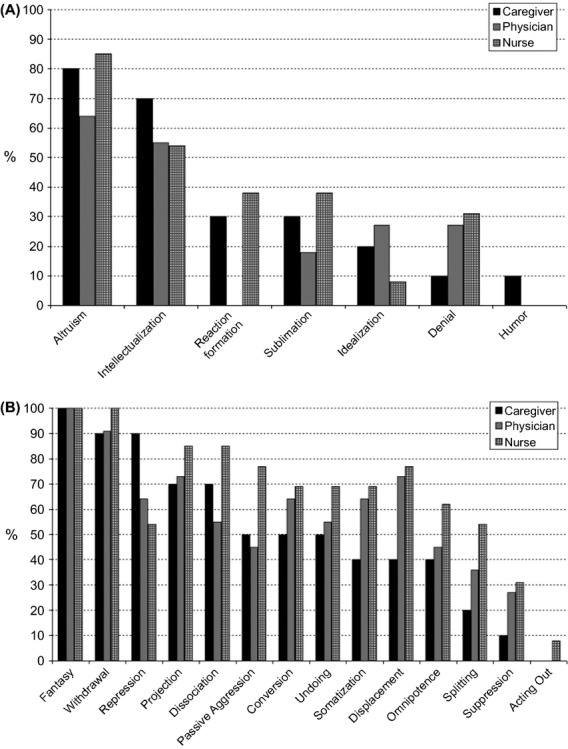
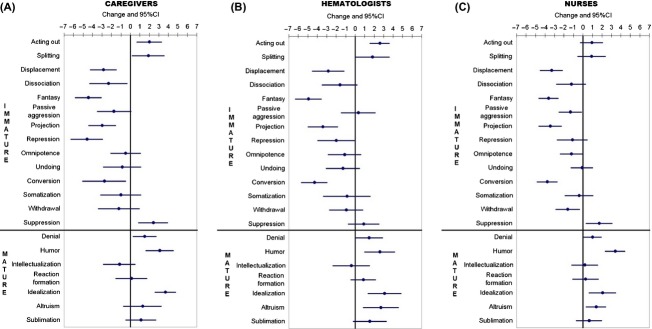
There is much evidence demonstrating that psychosocial interventions in caregivers and oncological staff produce an improvement in their patients' quality of life. The aim of this explorative study was to evaluate the effect of a new approach in promoting more functional ways to face stressful situations in the constellation of people around patients: caregivers, physicians and nurses. Thirty-four subjects were divided into three groups: 10 caregivers, 11 physicians, and 13 nurses. A "Balint Group" method modified according to a mindfulness technique was used as the intervention. Three assessment tools were administered to the participants at baseline, during, and after completion of the study: the Response Evaluation Measure (REM-71), the Satisfaction Profile (SAT-P), and the Group Climate Questionnaire (GCQ). Mean values of defense mechanisms determined by the REM-71 were compared with those of the standard population. At baseline, we observed a prevalence of immature defenses in the three groups, with mean values above those in the standard population. After the psychological intervention, a tendency to normalization of the mean values was observed, indicating the development of more adaptive ways of using defense mechanisms and the effectiveness of the intervention. Group climate, assessed through the GCQ, showed an increase in the "Engagement" factor and a decline in the "Conflict" factor in all groups. This study suggests that group treatment focused on changing personal responses to stressful situations can induce more adaptive strategies enabling caregivers, hematologists, and nurses to help patients better and thereby improve their quality of life.
有大量证据表明,对照顾者和肿瘤学工作人员进行心理社会干预可以提高患者的生活质量。本探索性研究的目的是评估一种新方法的效果,该方法旨在促进照顾者、医生和护士等患者周围人群更有效地应对压力情境。34 名受试者分为三组:10 名照顾者、11 名医生和 13 名护士。采用一种根据正念技术修改的“巴林特小组”方法作为干预措施。在研究开始前、进行中和结束时,向参与者使用了三种评估工具:反应评估量表(REM-71)、满意度量表(SAT-P)和小组气候问卷(GCQ)。通过 REM-71 确定的防御机制的平均值与标准人群的平均值进行了比较。在基线时,我们观察到三组均存在不成熟防御机制的流行,其平均值高于标准人群。经过心理干预后,平均数值趋于正常,表明使用防御机制的方式更加适应,干预效果显著。通过 GCQ 评估的小组氛围显示,所有组的“参与”因素增加,“冲突”因素减少。本研究表明,专注于改变个人对压力情境反应的小组治疗可以促使照顾者、血液学家和护士采用更适应的策略,从而更好地帮助患者,提高他们的生活质量。