Institute of Anatomy, Ludwig-Maximilian-University Munich, Germany.
Investigating Institute of Molecular Biological System Transfer, Tehran, Iran.
PLoS One. 2014 Jan 3;9(1):e85397. doi: 10.1371/journal.pone.0085397. eCollection 2014.
Treatment of colorectal cancer (CRC) remains a clinical challenge, as more than 15% of patients are resistant to 5-Fluorouracil (5-FU)-based chemotherapeutic regimens, and tumor recurrence rates can be as high as 50-60%. Cancer stem cells (CSC) are capable of surviving conventional chemotherapies that permits regeneration of original tumors. Therefore, we investigated the effectiveness of 5-FU and plant polyphenol (curcumin) in context of DNA mismatch repair (MMR) status and CSC activity in 3D cultures of CRC cells.
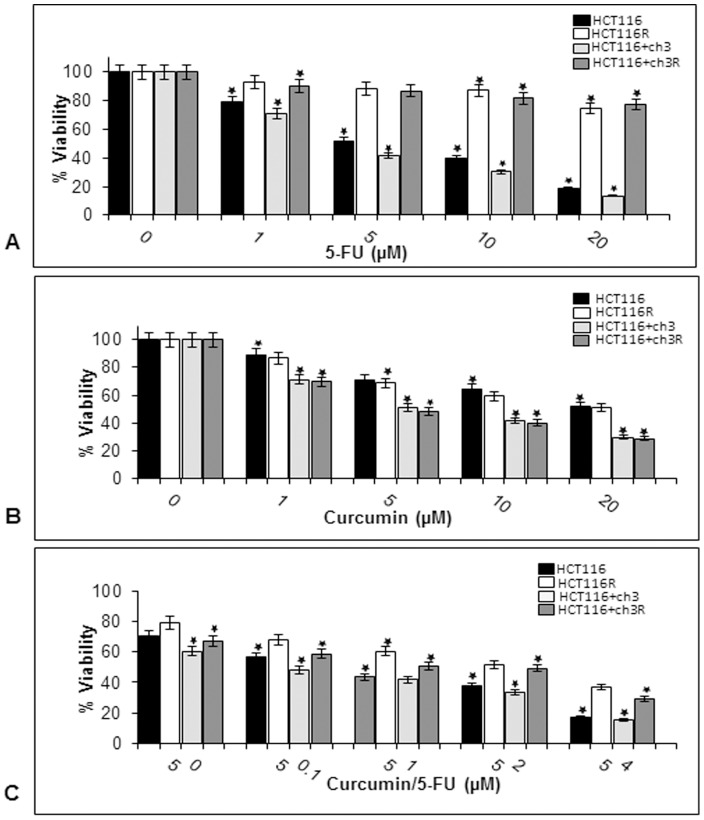
High density 3D cultures of CRC cell lines HCT116, HCT116+ch3 (complemented with chromosome 3) and their corresponding isogenic 5-FU-chemo-resistant derivative clones (HCT116R, HCT116+ch3R) were treated with 5-FU either without or with curcumin in time- and dose-dependent assays.
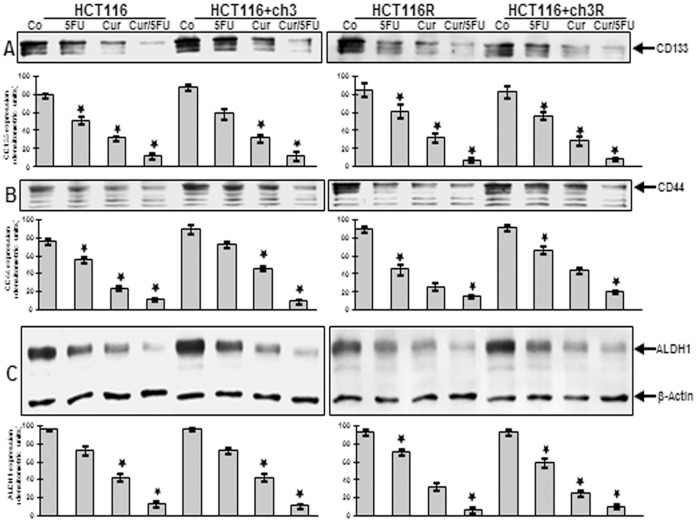
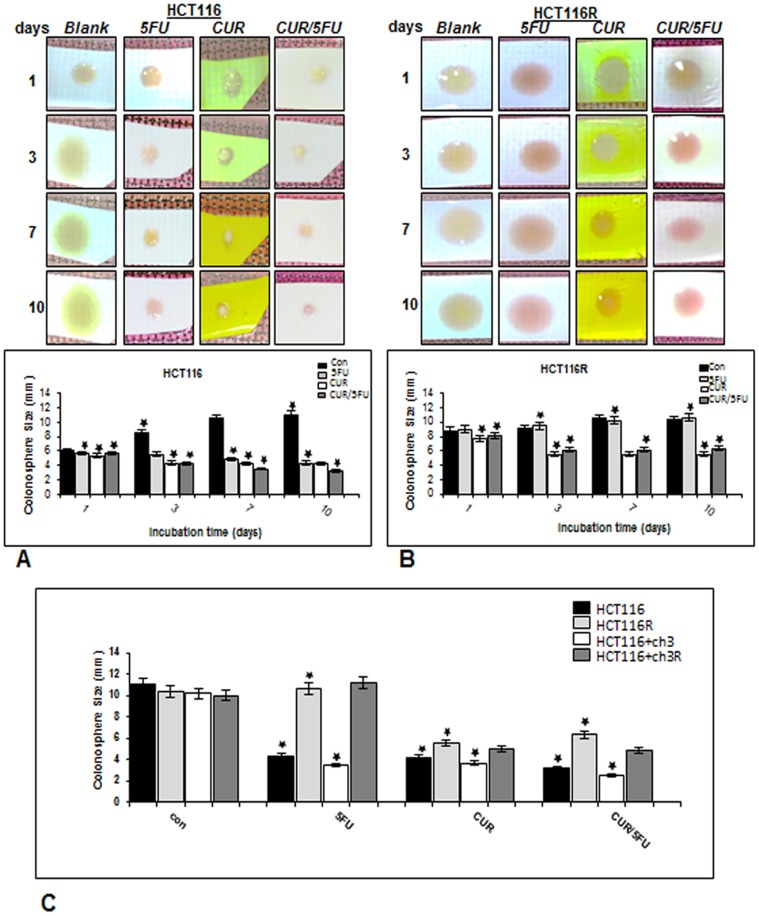
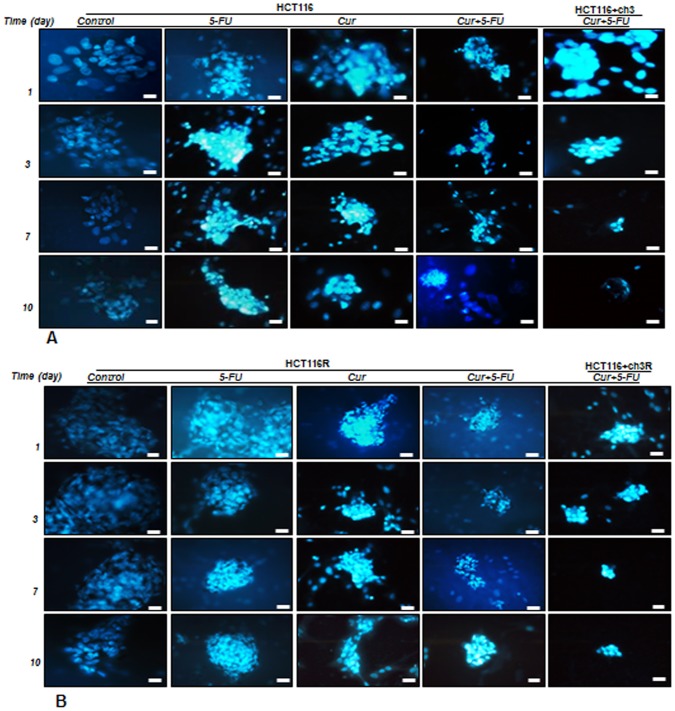
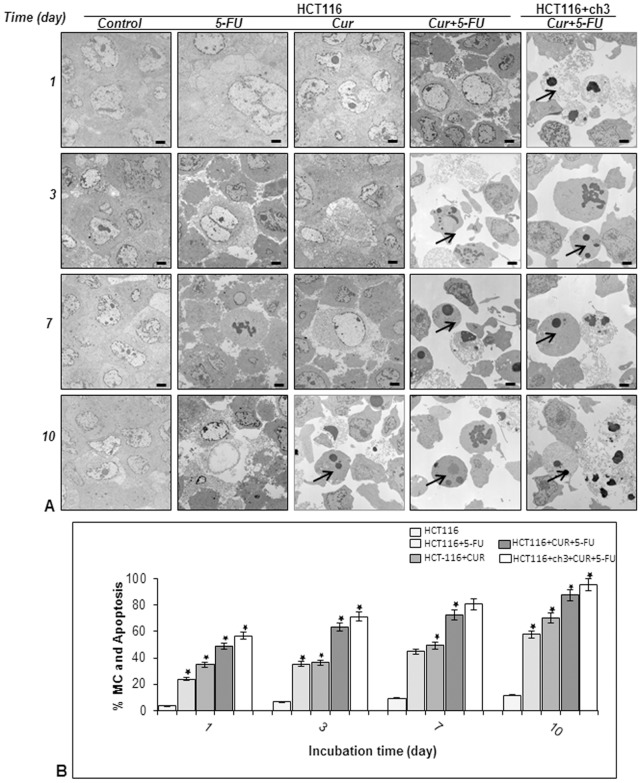
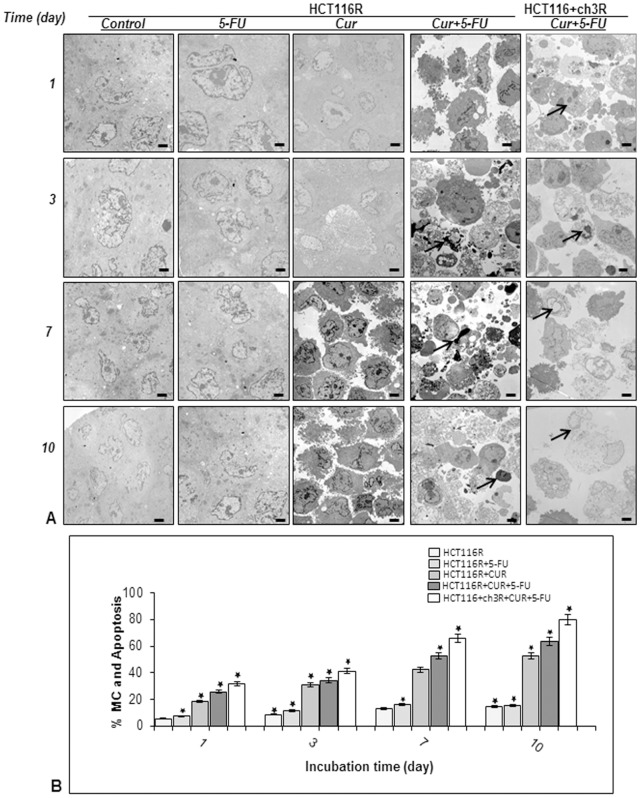
Pre-treatment with curcumin significantly enhanced the effect of 5-FU on HCT116R and HCR116+ch3R cells, in contrast to 5-FU alone as evidenced by increased disintegration of colonospheres, enhanced apoptosis and by inhibiting their growth. Curcumin and/or 5-FU strongly affected MMR-deficient CRC cells in high density cultures, however MMR-proficient CRC cells were more sensitive. These effects of curcumin in enhancing chemosensitivity to 5-FU were further supported by its ability to effectively suppress CSC pools as evidenced by decreased number of CSC marker positive cells, highlighting the suitability of this 3D culture model for evaluating CSC marker expression in a close to vivo setting.
Our results illustrate novel and previously unrecognized effects of curcumin in enhancing chemosensitization to 5-FU-based chemotherapy on DNA MMR-deficient and their chemo-resistant counterparts by targeting the CSC sub-population. (246 words in abstract).
结直肠癌(CRC)的治疗仍然是一个临床挑战,超过 15%的患者对基于 5-氟尿嘧啶(5-FU)的化疗方案耐药,肿瘤复发率高达 50-60%。癌症干细胞(CSC)能够在允许原始肿瘤再生的常规化疗中存活。因此,我们研究了在 CRC 细胞的 3D 培养中,5-FU 和植物多酚(姜黄素)在 DNA 错配修复(MMR)状态和 CSC 活性方面的有效性。
使用 CRC 细胞系 HCT116、HCT116+ch3(用染色体 3 补充)及其相应的 5-FU 化疗耐药衍生克隆(HCT116R、HCT116+ch3R)的高密度 3D 培养物,在时间和剂量依赖性测定中用 5-FU 或用 5-FU 和姜黄素处理。
与单独使用 5-FU 相比,用姜黄素预处理显著增强了 5-FU 对 HCT116R 和 HCR116+ch3R 细胞的作用,表现为结肠球体的崩解增加、凋亡增强和生长抑制。姜黄素和/或 5-FU 强烈影响高密度培养物中的 MMR 缺陷型 CRC 细胞,但 MMR 功能正常的 CRC 细胞更敏感。姜黄素通过有效抑制 CSC 池来增强对 5-FU 的化疗敏感性,这一点得到了证实,因为 CSC 标志物阳性细胞的数量减少,突出了这种 3D 培养模型在接近体内环境下评估 CSC 标志物表达的适用性。
我们的结果表明,姜黄素在增强基于 5-FU 的化疗对 DNA MMR 缺陷型及其耐药对应物的化疗敏感性方面具有新的和以前未被认识到的作用,其作用机制是通过靶向 CSC 亚群。(摘要中 246 个字)