Institute of Anatomy, Ludwig-Maximilian-University Munich, 80336 Munich, Germany.
J Biol Chem. 2011 Aug 12;286(32):28556-66. doi: 10.1074/jbc.M111.256180. Epub 2011 Jun 13.
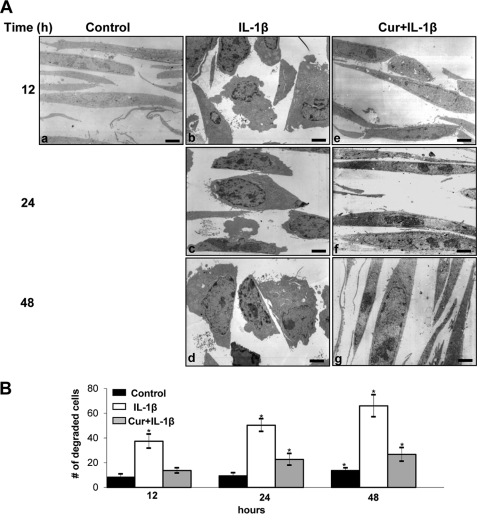
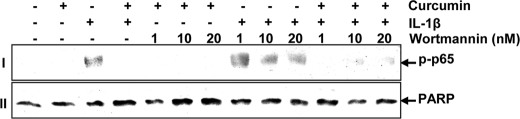
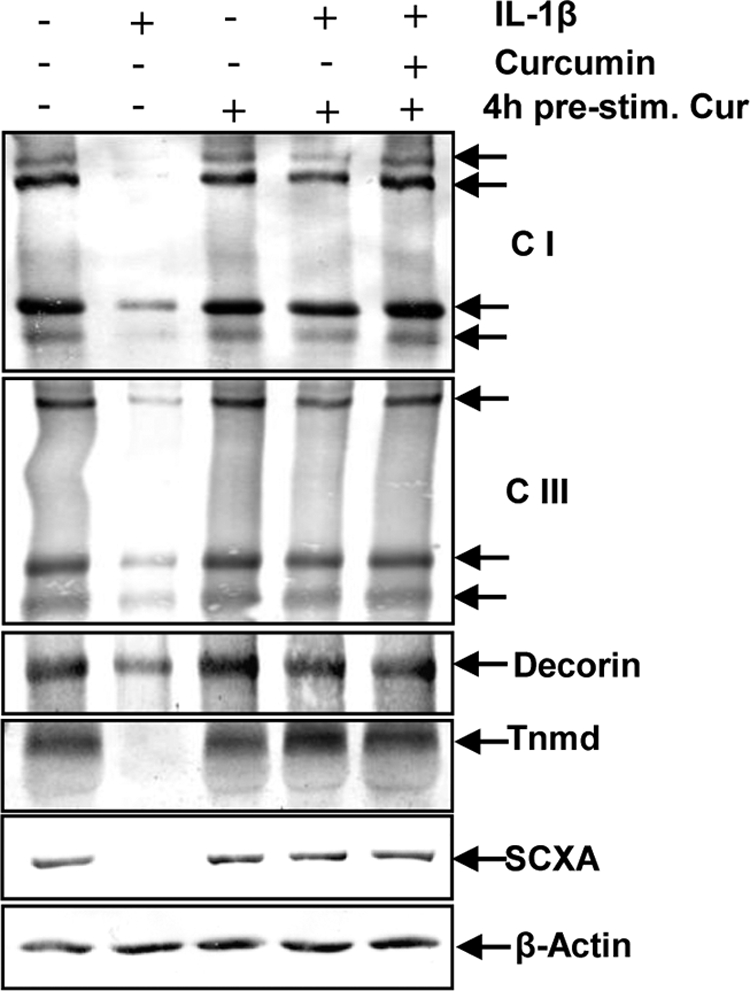
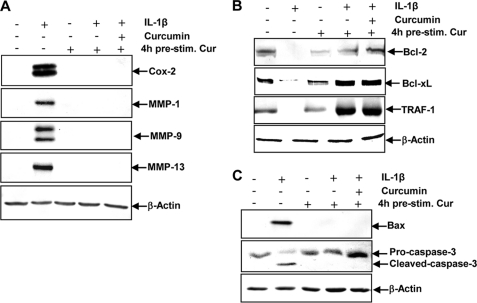
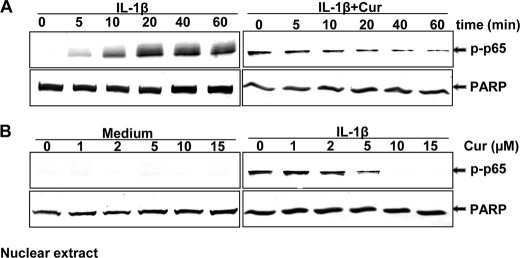
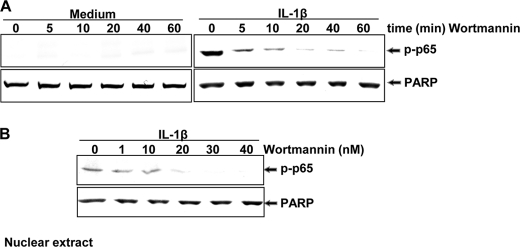
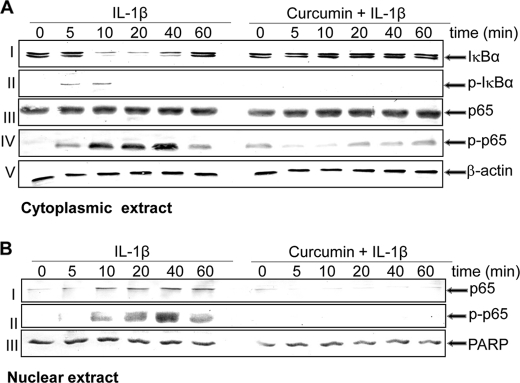
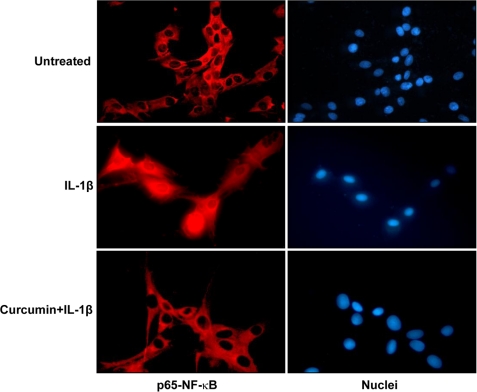
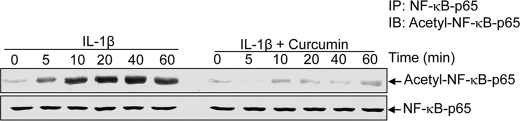
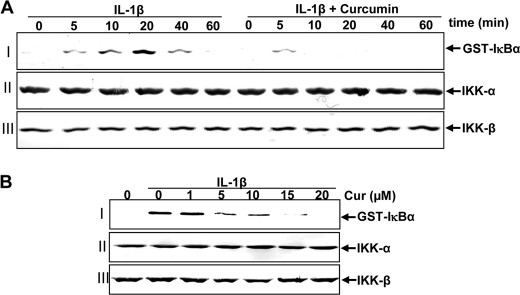
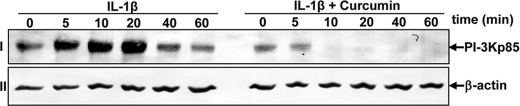
Inflammatory processes play essential roles in the pathogenesis of tendinitis and tendinopathy. These events are accompanied by catabolic processes initiated by pro-inflammatory cytokines such as interleukin-1β (IL-1β) and tumor necrosis factor-α (TNF-α). Pharmacological treatments for tendinitis are restricted to the use of non-steroidal anti-inflammatory drugs. Recent studies in various cell models have demonstrated that curcumin targets the NF-κB signaling pathway. However, its potential for the treatment of tendinitis has not been explored. Herein, we used an in vitro model of human tenocytes to study the mechanism of curcumin action on IL-1β-mediated inflammatory signaling. Curcumin at concentrations of 5-20 μm inhibited IL-1β-induced inflammation and apoptosis in cultures of human tenocytes. The anti-inflammatory effects of curcumin included down-regulation of gene products that mediate matrix degradation (matrix metalloproteinase-1, -9, and -13), prostanoid production (cyclooxygenase-2), apoptosis (Bax and activated caspase-3), and stimulation of cell survival (Bcl-2), all known to be regulated by NF-κB. Furthermore, curcumin suppressed IL-1β-induced NF-κB activation via inhibition of phosphorylation and degradation of inhibitor of κBα, inhibition of inhibitor of κB-kinase activity, and inhibition of nuclear translocation of NF-κB. Furthermore, the effects of IL-1β were abrogated by wortmannin, suggesting a role for the phosphatidylinositol 3-kinase (PI-3K) pathway in IL-1β signaling. Curcumin suppressed IL-1β-induced PI-3K p85/Akt activation and its association with IKK. These results demonstrate, for the first time, a potential role for curcumin in treating tendon inflammation through modulation of NF-κB signaling, which involves PI-3K/Akt and the tendon-specific transcription factor scleraxis in tenocytes.
炎症过程在肌腱炎和腱病的发病机制中起着至关重要的作用。这些事件伴随着由促炎细胞因子如白细胞介素-1β(IL-1β)和肿瘤坏死因子-α(TNF-α)引发的分解代谢过程。肌腱炎的药物治疗仅限于使用非甾体抗炎药。最近在各种细胞模型中的研究表明,姜黄素靶向 NF-κB 信号通路。然而,其治疗肌腱炎的潜力尚未得到探索。在此,我们使用人肌腱细胞的体外模型研究姜黄素对 IL-1β 介导的炎症信号的作用机制。浓度为 5-20 μm 的姜黄素抑制了人肌腱细胞培养物中 IL-1β 诱导的炎症和细胞凋亡。姜黄素的抗炎作用包括下调介导基质降解(基质金属蛋白酶-1、-9 和 -13)、前列腺素生成(环氧化酶-2)、细胞凋亡(Bax 和激活的 caspase-3)和刺激细胞存活(Bcl-2)的基因产物,所有这些都被认为受 NF-κB 调节。此外,姜黄素通过抑制 IκBα 的磷酸化和降解、抑制 IκB 激酶活性和抑制 NF-κB 的核易位来抑制 IL-1β 诱导的 NF-κB 激活。此外,wortmannin 消除了 IL-1β 的作用,表明磷脂酰肌醇 3-激酶(PI-3K)途径在 IL-1β 信号转导中起作用。姜黄素抑制了 IL-1β 诱导的 PI-3K p85/Akt 激活及其与 IKK 的结合。这些结果首次表明,姜黄素通过调节 NF-κB 信号通路在治疗肌腱炎症方面具有潜在作用,该通路涉及 PI-3K/Akt 和肌腱特异性转录因子肌腱蛋白 X。