Keenan Research Centre in the Li Ka Shing Knowledge Institute, St Michael's Hospital, Toronto, Ontario, Canada.
Department of Primary Care Health Sciences, University of Oxford, Oxford, United Kingdom ; Undergraduate Medical Education, Faculty of Medicine, University of Calgary, Calgary, Alberta, Canada.
PLoS One. 2014 Jan 8;9(1):e84790. doi: 10.1371/journal.pone.0084790. eCollection 2014.
Pharmaceutical advertisements have been argued to provide revenue that medical journals require but they are intended to alter prescribing behaviour and they are known to include low quality information. We determined whether a difference exists in the current level of pharmaceutical advertising in print general medical journals, and we estimated the revenue generated from print pharmaceutical advertising.
Six print general medical journals in Canada, the United States, and the United Kingdom were sampled between 2007 and 2012. The number of advertisements and other journal content in selected issues of the Canadian Medical Association Journal (CMAJ), Canadian Family Physician (CFP), Journal of the American Medical Association (JAMA), New England Journal of Medicine (NEJM), British Medical Journal (BMJ), and Lancet were determined. Revenue gained from pharmaceutical advertising was estimated using each journal's 2013 advertising price list.
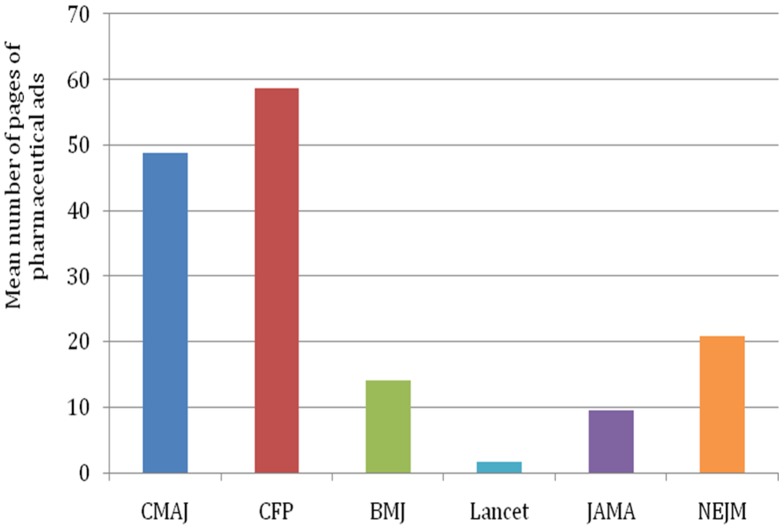
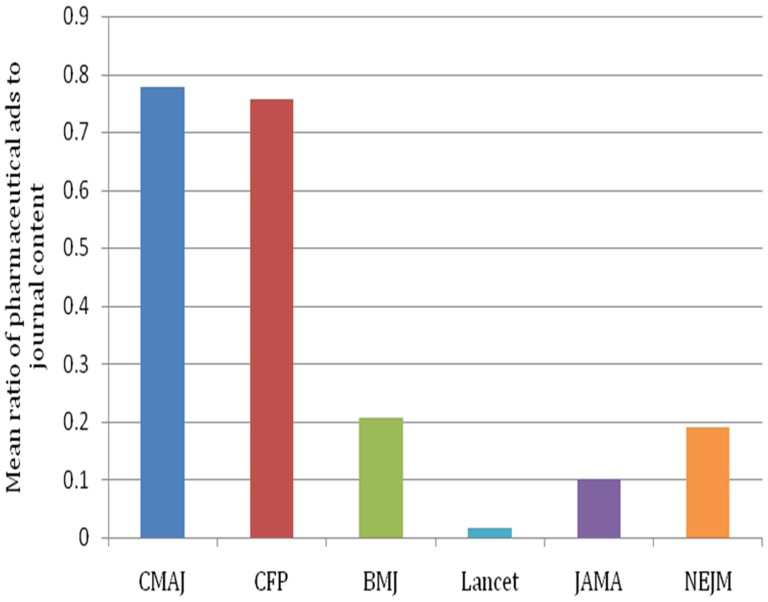
The two Canadian journals sampled (CMAJ, CFP) contained five times more advertisements than the two American journals (JAMA, NEJM), and two British journals (BMJ, Lancet) (p<0.0001). The estimated annual revenue from pharmaceutical advertisements ranged from £0.025 million (for Lancet) to £3.8 million (for JAMA). The cost savings due to revenue from pharmaceutical advertising to each individual subscriber ranged from £0.02 (for Lancet) to £3.56 (for CFP) per issue.
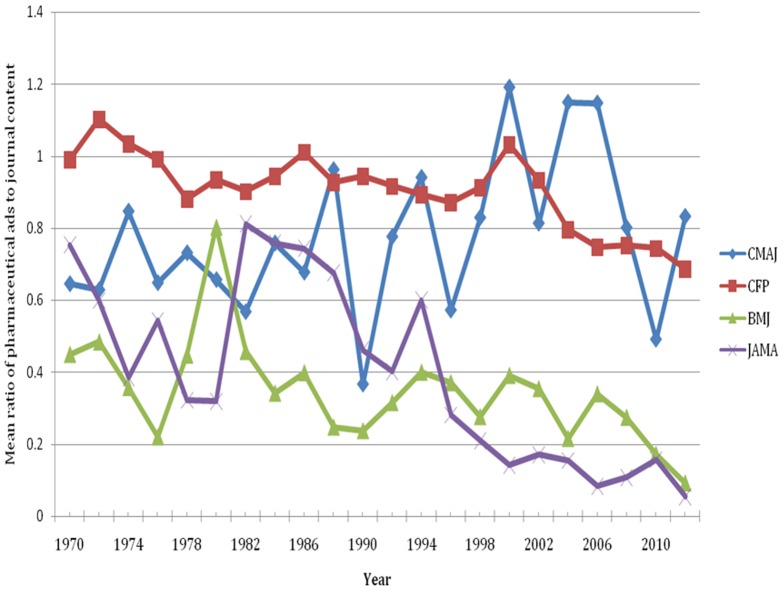
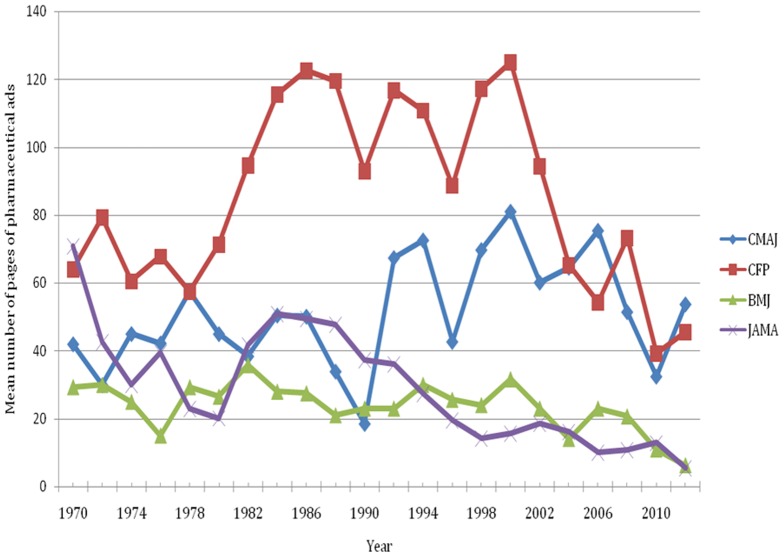
The volume of pharmaceutical advertisements differs between general medical journals, with the two Canadian journals sampled containing the most advertisements. International and temporal variations suggest that there is an opportunity for all general medical journals to reduce the number of pharmaceutical advertisements, explore other sources of revenue, and increase transparency regarding sources of revenue.
人们认为药品广告可以为医学期刊提供所需的收入,但这些广告旨在改变处方行为,而且其中包含低质量的信息。我们旨在确定印刷型普通医学期刊中当前药品广告的水平是否存在差异,并评估印刷型药品广告带来的收入。
我们于 2007 年至 2012 年期间在加拿大、美国和英国抽取了 6 种印刷型普通医学期刊。对《加拿大医学会杂志》(CMAJ)、《加拿大家庭医生》(CFP)、《美国医学会杂志》(JAMA)、《新英格兰医学杂志》(NEJM)、《英国医学杂志》(BMJ)和《柳叶刀》(Lancet)选定期次中的广告数量和其他期刊内容进行了确定。我们利用各期刊 2013 年的广告价目表来估算药品广告带来的收入。
我们抽取的两种加拿大期刊(CMAJ、CFP)中的广告数量是两种美国期刊(JAMA、NEJM)的 5 倍,也是两种英国期刊(BMJ、Lancet)的 5 倍(p<0.0001)。药品广告带来的年收入范围从 Lancet 的 0.025 百万英镑到 JAMA 的 3.8 百万英镑不等。由于药品广告收入,每个订户每期的节省成本从 Lancet 的 0.02 英镑到 CFP 的 3.56 英镑不等。
普通医学期刊之间的药品广告数量存在差异,我们抽取的两种加拿大期刊中的广告数量最多。国际和时间上的差异表明,所有普通医学期刊都有机会减少药品广告数量,探索其他收入来源,并提高收入来源的透明度。